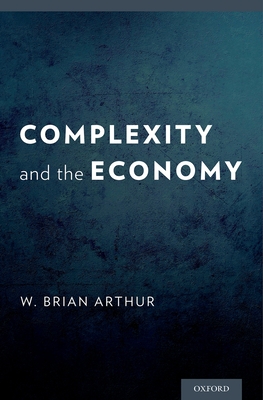
Complexity and the Economy
暫譯: 複雜性與經濟學
Arthur, W. Brian
- 出版商: Oxford University Press
- 出版日期: 2014-10-30
- 售價: $3,210
- 貴賓價: 9.5 折 $3,049
- 語言: 英文
- 頁數: 240
- 裝訂: Hardcover - also called cloth, retail trade, or trade
- ISBN: 0199334293
- ISBN-13: 9780199334292
-
相關分類:
經濟學 Economy
海外代購書籍(需單獨結帳)
商品描述
Economics is changing. In the last few years it has generated a number of new approaches. One of the most promising - complexity economics - was pioneered in the 1980s and 1990s by a small team at the Santa Fe Institute. Economist and complexity theorist W. Brian Arthur led that team, and in this book he collects many of his articles on this new approach. The traditional framework sees behavior in the economy as in an equilibrium steady state. People in the economy face well-defined problems and use perfect deductive reasoning to base their actions on. The complexity framework, by contrast, sees the economy as always in process, always changing. People try to make sense of the situations they face using whatever reasoning they have at hand, and together create outcomes they must individually react to anew. The resulting economy is not a well-ordered machine, but a complex evolving system that is imperfect, perpetually constructing itself anew, and brimming with vitality.
The new vision complements and widens the standard one, and it helps answer many questions: Why does the stock market show moods and a psychology? Why do high-tech markets tend to lock in to the dominance of one or two very large players? How do economies form, and how do they continually alter in structure over time?
The papers collected here were among the first to use evolutionary computation, agent-based modeling, and cognitive psychology. They cover topics as disparate as how markets form out of beliefs; how technology evolves over the long span of time; why systems and bureaucracies get more complicated as they evolve; and how financial crises can be foreseen and prevented in the future.
商品描述(中文翻譯)
經濟學正在改變。在過去幾年中,它產生了許多新的方法。其中一個最有前景的——複雜性經濟學——是在1980年代和1990年代由聖塔菲研究所的一小組人員開創的。經濟學家和複雜性理論家W. Brian Arthur領導了該團隊,在這本書中,他收集了許多關於這一新方法的文章。傳統框架將經濟中的行為視為處於均衡穩態。經濟中的人們面對明確的問題,並使用完美的演繹推理來基於此做出行動。相比之下,複雜性框架將經濟視為一個不斷進行、始終變化的過程。人們試圖利用手頭的推理來理解他們所面臨的情況,並共同創造出他們必須個別重新反應的結果。由此產生的經濟不是一個有序的機器,而是一個複雜的演變系統,這個系統是不完美的,持續不斷地自我構建,充滿活力。
這一新視野補充並擴展了標準的經濟學觀點,並幫助回答許多問題:為什麼股市會顯示情緒和心理?為什麼高科技市場往往會鎖定一兩個非常大的主導者?經濟是如何形成的,並且隨著時間的推移如何不斷改變其結構?
這裡收集的論文是最早使用進化計算、基於代理的建模和認知心理學的研究之一。它們涵蓋了各種不同的主題,例如市場如何從信念中形成;技術如何在長時間跨度中演變;為什麼系統和官僚機構在演變過程中變得更加複雜;以及如何預見和防止未來的金融危機。
作者簡介
作者簡介(中文翻譯)
W. Brian Arthur 是一位領先的經濟學家和複雜性理論家。他是薛姆培特經濟學獎和拉格朗日複雜性科學獎的得主。