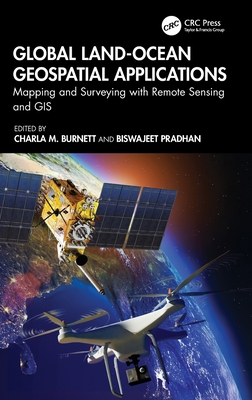
Integrating AI Techniques into the Design and Development of Smart Cyber-Physical Systems: Defense, Biomedical, Infrastructure, and Transportation
暫譯: 將 AI 技術整合至智慧型 Cyber-Physical Systems 的設計與開發:防禦、生醫、基礎設施與運輸
Mala, D. Jeya, Dhanapal, Anto Cordelia Tanislaus Antony, Sthapit, Saurav
- 出版商: CRC
- 出版日期: 2026-10-16
- 售價: $2,690
- 貴賓價: 9.5 折 $2,555
- 語言: 英文
- 頁數: 314
- 裝訂: Quality Paper - also called trade paper
- ISBN: 1032789611
- ISBN-13: 9781032789613
-
相關分類:
Machine Learning、物聯網 IoT
尚未上市,無法訂購
商品描述
Building on the knowledge of risks, vulnerabilities, and safety measures associated with cyber-physical systems, this book focuses on adapting artificial intelligence (AI) techniques to smart cyber-physical systems application development. The future is going to see cyber-physical systems in almost every aspect of life, so a book that focuses on shedding light on the design, development, and security aspects of cyber-physical systems in more crucial domains such as defense, healthcare, biomedical, smart city applications, is needed.
Integrating AI Techniques into the Design and Development of Smart Cyber-Physical Systems: Defense, Biomedical, Infrastructure, and Transportation offers an introductory exploration of the fundamental theories and concepts of AI and machine learning (ML) that are utilized in the building of dependable cyber-physical systems. It brings the ideas of advanced design and development and empowered security measures to cyber-physical systems. By focusing on the application of AI in cyber-physical systems design as well as security aspects, an improvement in reliability and advancements can be explored. Also included are the latest findings and advancements as well as case studies and illustrative examples on the design and development of smart cyber-physical systems.
This resource is highly valuable for those employed in educational institutions, research laboratories, enterprises, and government agencies, as well as for students seeking novel ideas in the realm of smart cyber-physical systems design.
商品描述(中文翻譯)
本書建立在對網宇實體系統(cyber-physical systems)相關風險、漏洞與安全措施的認識之上,著重探討如何將人工智慧(artificial intelligence, AI)技術應用於智慧網宇實體系統的開發。未來,網宇實體系統將出現在生活的幾乎各個層面,因此,有必要透過一本專著,深入闡明網宇實體系統在國防、醫療、 生物醫學、智慧城市應用等關鍵領域中的設計、開發與安全面向。
《將 AI 技術整合至智慧網宇實體系統的設計與開發:國防、生物醫學、基礎設施與運輸》介紹了建構可靠網宇實體系統所運用的人工智慧與機器學習(machine learning, ML)基本理論與概念。本書將先進的設計與開發理念,以及強化的安全措施導入網宇實體系統。透過聚焦於 AI 在網宇實體系統設計中的應用及其安全面向,讀者可以探討如何提升系統可靠性並推動技術進步。本書也收錄最新的研究成果與技術發展,以及智慧網宇實體系統設計與開發相關的案例研究和說明性範例。
對於任職於教育機構、研究實驗室、企業與政府機關的人員,以及尋求智慧網宇實體系統設計領域創新構想的學生而言,本書是一項極具價值的資源。
作者簡介
Dr. D. Jeya Mala is currently working as a Professor in the School of Computer Science and Engineering (SCOPE), Vellore Institute of Technology, Chennai, Tamil Nadu, India. She has more than 21 years of teaching and research and 4 years of industrial experience. She has completed a funded project from the Govt. of India and is doing several consultancy projects as well. Recently she is selected as a member of the National Level Workgroup on Quantum by TEC, Govt. of India, she is an Expert Evaluation Committee member for AICTE-NEAT to evaluate educational courses and software products for AICTE, the Govt. of India, and also an evaluator for Smart India Hackathon- a mega event of AICTE, Govt. of India. Dr. Mala has been granted a design patent and has published a utility patent under IP, Govt. of India. She has published three edited books and one textbook and more than 60 papers in reputed, refereed journals and conferences along with 15+ book chapters. Her MOOC course for Udemy has more than 2900 learners' enrollment and her textbook has been placed in several national and international university curriculums. She has received "Best Faculty of the year award -2024 (under specific innovations category) from Computer Society of India, "Best Techno Faculty Award" from ICTACT, Govt. of Tamil Nadu, and several other laurels and recognitions from reputed Govt. bodies and organizations. She is a member of professional bodies like IEEE, ACM, etc. and she forms the editorial and reviewer boards of international journals and conferences. Dr. Mala is listed in the "Who's Who list of the SEBASE repository" of the University College of London, UK for her research work in the area of Search Based Software Engineering. Her area of research includes Artificial Intelligence, Machine Learning, Deep Learning, Explainable AI (XAI), Software Engineering, Cyber Physical Systems, Cyber Security, etc.
Dr. Anto Cordelia Tanislaus Antony Dhanapal is an accomplished Assistant Professor in the Department of Chemical Science at Universiti Tunku Abdul Rahman (UTAR), Malaysia. With over two decades of academic and research experience across India and Malaysia, she specializes in food science, nutrigenomics, and AI-driven precision nutrition. Holding a PhD in Food Science and Nutrition, Dr. Dhanapal is currently advancing the integration of artificial intelligence in precision nutrition, focusing on developing virtual digital twins and data-driven approaches to personalize dietary recommendations. She has spearheaded numerous research projects, securing 11 competitive grants in the last five years. Dr. Dhanapal has published over 60 research papers and book chapters, and her groundbreaking work has earned international recognition, including the UK-Malaysia Higher Institution Partnership Award. She is also a passionate advocate for public health, actively engaging in initiatives like the GENEY program to promote precision nutrition among Malaysian youth, further exemplifying her dedication to research, education, and societal well-being.
Dr. Saurav Sthapit is currently working as an Assistant Professor (Research) at the Centre for Computational Science and Mathematical Modeling, Coventry University, UK. Before that, he was a Research Fellow in Cyber Systems Engineering at WMG at the University of Warwick. He received his BE degree in Electronics and Communication Engineering from Tribhuvan University, Nepal, his MSc degree in Embedded Systems from the University of Kent, England, and his Ph.D. degree from the Institute for Digital Communications, within the School of Engineering, University of Edinburgh, Scotland. Dr. Sthapit has more than 15 years of experience in industry and teaching and has published more than 10 research papers in reputed international journals. His research interests include Reinforcement Learning, Embedded Systems, IOT, Signal Processing, Simulation and modeling, Machine Learning, Computer Vision, Game theory, Operational research, Optimization, Automotive, and cyber security.
Dr Anita Khadka is an Assistant Professor at the University of Warwick. Her research area involves Responsible AI investigating AI Resilience, and Assurance. She has contributed to several EPSRC-funded projects, including those on Robotic Artificial Intelligence in Nuclear (RAIN) and FAIRSPACE investigating the impact of adversarial attacks and developing defensive strategies to mitigate them. She focuses her research mainly on critical infrastructure including Healthcare, and Nuclear where the consequences of Adversarial Attacks can be high. She has published numerous papers in high-quality journals and conferences including ACM Computing Surveys, AeroSpace, and RecSys Conferences and has also secured grants funded by the University of Warwick and Sprite+. Dr Khadka has taught and supervised students across various levels, including undergraduate, Master's, and MSc apprenticeship programs, with a focus on Cybersecurity and Artificial Intelligence. She was an Assistant Professor at Northeastern University, London where she also held the Program Lead position for the MSc in AI and Data Science degree. She obtained her MSc in Intelligent Systems and Robotics from the University of Essex in 2012 and her Ph.D. in Computer Science from The Open University in 2020. She has extensive experience in both academia and industry.
作者簡介(中文翻譯)
Dr. D. Jeya Mala 目前任教於印度泰米爾納德邦 Chennai 的 Vellore Institute of Technology(VIT)電腦科學與工程學院(School of Computer Science and Engineering, SCOPE),擔任教授。她擁有超過 21 年的教學與研究經驗,以及 4 年的業界經驗。她曾完成一項由印度政府資助的研究計畫,目前也承接多項顧問計畫。近期,她獲印度政府電信工程中心(Telecommunication Engineering Centre, TEC)選為國家級 Quantum 工作小組成員;同時也是 AICTE-NEAT 的專家評估委員,負責為印度政府的 All India Council for Technical Education(AICTE)評估教育課程與軟體產品;此外,她也是 Smart India Hackathon 的評審,該活動為印度政府 AICTE 主辦的大型競賽。Mala 博士已獲印度政府核發設計專利,並在智慧財產權(IP)領域取得一項實用新型專利。她曾出版 3 本編著書與 1 本教科書,並在知名且具同儕審查制度的期刊與會議上發表超過 60 篇論文,以及 15 篇以上的書籍章節。她在 Udemy 開設的 MOOC 課程已有超過 2,900 名學員註冊,其教科書也已納入多所國內外大學的課程大綱。她曾獲 Computer Society of India 頒發「2024 年度最佳教師獎」(特定創新類別)、印度泰米爾納德邦 ICTACT 頒發的「最佳科技教師獎」,以及多個知名政府機構與組織所頒發的其他獎項與肯定。她是 IEEE、ACM 等專業組織的會員,並擔任國際期刊與會議的編輯及審稿委員。Mala 博士因在搜尋式軟體工程(Search Based Software Engineering)領域的研究成果,獲列入英國 University College of London 的 SEBASE repository「Who's Who 名錄」。她的研究領域包括人工智慧(Artificial Intelligence)、機器學習(Machine Learning)、深度學習(Deep Learning)、可解釋人工智慧(Explainable AI, XAI)、軟體工程(Software Engineering)、資訊物理系統(Cyber Physical Systems)、網路安全(Cyber Security)等。
Dr. Anto Cordelia Tanislaus Antony Dhanapal 是馬來西亞 Universiti Tunku Abdul Rahman(UTAR)化學科學系的優秀助理教授。她在印度與馬來西亞累積超過 20 年的學術與研究經驗,專長領域包括食品科學、營養基因體學(nutrigenomics)以及人工智慧驅動的精準營養。Dhanapal 博士擁有食品科學與營養學博士學位,目前致力於推動人工智慧在精準營養領域的整合,重點研究包括開發虛擬數位孿生(virtual digital twins),以及運用資料驅動的方法,為個人化飲食建議提供支援。她主導了多項研究計畫,並在過去 5 年內成功取得 11 項競爭型研究補助。Dhanapal 博士已發表超過 60 篇研究論文與書籍章節,其突破性研究成果獲得國際肯定,包括英國-馬來西亞高等教育機構合作獎(UK-Malaysia Higher Institution Partnership Award)。她同時也是公共衛生的積極倡議者,積極參與 GENEY 計畫等相關活動,致力於在馬來西亞青少年族群中推廣精準營養,充分展現她對研究、教育與社會福祉的投入。
Dr. Saurav Sthapit 目前任教於英國 Coventry University 計算科學與數學建模中心(Centre for Computational Science and Mathematical Modeling),擔任研究助理教授。在此之前,他曾於 University of Warwick 的 WMG 擔任網路系統工程研究員。他取得尼泊爾 Tribhuvan University 電子與通訊工程學士學位、英國 University of Kent 嵌入式系統碩士學位,以及蘇格蘭 University of Edinburgh 工程學院數位通訊研究所的博士學位。Sthapit 博士擁有超過 15 年的業界與教學經驗,並在知名國際期刊上發表超過 10 篇研究論文。他的研究興趣包括強化學習(Reinforcement Learning)、嵌入式系統(Embedded Systems)、物聯網(IoT)、訊號處理(Signal Processing)、模擬與建模(Simulation and Modeling)、機器學習(Machine Learning)、電腦視覺(Computer Vision)、賽局理論(Game Theory)、作業研究(Operations Research)、最佳化(Optimization)、汽車工程(Automotive)及網路安全(Cyber Security)。
Dr Anita Khadka 是 University of Warwick 的助理教授。她的研究領域為負責任人工智慧(Responsible AI),主要探討人工智慧韌性(AI Resilience)與人工智慧保證(AI Assurance)。她參與了多項由 EPSRC 資助的研究計畫,包括核能領域機器人人工智慧(Robotic Artificial Intelligence in Nuclear, RAIN)計畫,以及 FAIRSPACE 計畫;後者旨在研究對抗式攻擊(adversarial attacks)的影響,並發展降低其威脅的防禦策略。她的研究主要聚焦於醫療、核能等關鍵基礎設施領域,因為在這些領域中,對抗式攻擊可能造成嚴重後果。她已在高品質期刊與會議發表多篇論文,包括 ACM Computing Surveys、AeroSpace,以及 RecSys Conferences,並取得由 University of Warwick 與 Sprite+ 資助的研究補助。Khadka 博士曾教授並指導不同階段的學生,包括大學部、碩士班與 MSc 學徒制課程,專長聚焦於網路安全與人工智慧。她曾任職於 Northeastern University, London,並擔任人工智慧與資料科學碩士學位課程的課程負責人(Program Lead)。她於 2012 年取得 University of Essex 智慧系統與機器人學碩士學位,並於 2020 年取得 The Open University 電腦科學博士學位。她在學術界與業界皆擁有豐富經驗。