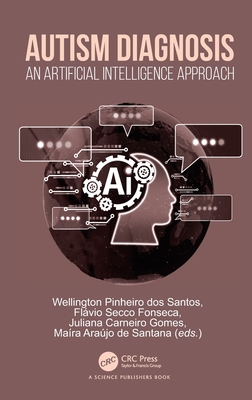
Autism Diagnosis: An Artificial Intelligence Approach
暫譯: 自閉症診斷:人工智慧方法
Santos, Wellington Pinheiro Dos, Secco Fonseca, Flávio, Carneiro Gomes, Juliana
- 出版商: CRC
- 出版日期: 2026-02-19
- 售價: $6,270
- 貴賓價: 9.5 折 $5,956
- 語言: 英文
- 頁數: 200
- 裝訂: Hardcover - also called cloth, retail trade, or trade
- ISBN: 1032851201
- ISBN-13: 9781032851204
-
相關分類:
Machine Learning
海外代購書籍(需單獨結帳)
相關主題

商品描述
The book explores the prevalence of ASD and the challenges associated with its early detection. Recognizing the limitations of existing diagnostic methods, the volume emphasizes the need for a multidisciplinary approach, utilizing the collective strengths of artificial intelligence (AI), biomedical engineering, and applied neuroscience. This convergence promises not only to enhance diagnostic accuracy but also to streamline the process, facilitating timely interventions for improved treatment.
Key Features:
- Illustrates the latest advancements in AI, biomedical engineering, and applied neuroscience, providing readers with a comprehensive overview of cutting-edge technologies in autism detection.
- Integrates diverse perspectives from leading experts, merging the fields of AI, biomedical engineering, and neuroscience to present a unified and multidisciplinary approach to autism diagnosis.
- Demonstrates the practical applications of innovative diagnostic tools, from machine learning algorithms to biomedical devices, offering real-world insights and case studies for effective implementation.
- Explores the future directions of autism detection, discussing emerging technologies and ethical considerations.
- Guides readers through a journey of discovery, unraveling the complexities of autism spectrum disorders, and empowering healthcare professionals, researchers, and students with actionable knowledge for enhanced diagnosis and support.
商品描述(中文翻譯)
本書探討自閉症譜系障礙(ASD)的普遍性及其早期檢測所面臨的挑戰。認識到現有診斷方法的局限性,本書強調需要採用多學科的方法,利用人工智慧(AI)、生醫工程和應用神經科學的集體優勢。這種融合不僅有望提高診斷準確性,還能簡化過程,促進及時介入以改善治療效果。
主要特色:
- 說明人工智慧、生醫工程和應用神經科學的最新進展,為讀者提供自閉症檢測尖端技術的全面概述。
- 整合來自領先專家的多元觀點,將人工智慧、生醫工程和神經科學領域融合,呈現統一且多學科的自閉症診斷方法。
- 展示創新診斷工具的實際應用,從機器學習算法到生醫設備,提供有效實施的現實見解和案例研究。
- 探討自閉症檢測的未來方向,討論新興技術和倫理考量。
- 引導讀者踏上探索之旅,揭開自閉症譜系障礙的複雜性,並賦予醫療專業人員、研究人員和學生可行的知識,以增強診斷和支持。
作者簡介
Wellington Pinheiro dos Santos is the Head of the Department of Biomedical Engineering at the Federal University of Pernambuco (UFPE) and the Coordinator of the Biomedical Computing Laboratory at UFPE. He holds a Bachelor's degree in Electrical and Electronic Engineering (2001) and a Master's degree in Electrical Engineering (2003) from UFPE, and earned his PhD in Electrical Engineering from the Federal University of Campina Grande in 2009. At UFPE, Dr. dos Santos is actively involved in both undergraduate and graduate programs in Biomedical Engineering. Since 2009, he has also been a member of the Graduate Program in Computer Engineering at the Escola Politécnica de Pernambuco, Universidade de Pernambuco. Additionally, he is a Researcher at the Institute of the Economic-Industrial Complex (ICEIS), where he coordinates the Biomedical Computing and Bioengineering axes. He is a member of the Brazilian Society of Biomedical Engineering (SBEB), the Brazilian Society of Computational Intelligence (SBIC), the Brazilian Society for Health Informatics (SBIS), and the International Federation of Medical and Biological Engineering (IFMBE).
Flávio Secco Fonsêca earned his degree in Mechatronics Engineering from the University of Pernambuco in 2017. Currently, he works as a faculty member in the Analysis and Systems Development courses at the Universidade Tiradentes (UNIT). Previously, he was a professor at the Center for Education for Vocational Education (CEPEP). With a focus on Mechatronics and the steel industry, he has experience in Mechanical Engineering. He holds a master's degree in Computer Engineering from the University of Pernambuco (POLI/UPE), conducting research in emotion recognition through voice signals and affective computing. Currently pursuing a Ph.D. at the same institution, he is also part of the Biomedical Computing research group at the Federal University of Pernambuco (UFPE), conducting studies on autism and machine learning. His interests extend to the development of digital games and research in the fields of Educational Technologies, Artificial Intelligence, Health, and Design.
Juliana Carneiro Gomes is a Biomedical Engineer from the Federal University of Pernambuco (UFPE-2016) with a sandwich period under the Science Without Borders program (CAPES) in the United States. During this time, she completed an academic year at Mercer University and worked as a researcher at the Advanced Imaging Algorithms and Instrumentation Laboratory (AIAI Lab) at Johns Hopkins University School of Medicine, gaining experience in Computed Tomography (CT) Image Processing. She holds a Master's degree in Biomedical Engineering from CTG/UFPE (2019), focusing on Electrical Impedance Tomography (EIT) image reconstruction using Artificial Neural Networks. Currently a Ph.D. holder in Computer Engineering at the University of Pernambuco (UPE) and a member of the Biomedical Computing Research Group - UFPE, her research emphasizes applied Neuroscience. Juliana has also served as a substitute professor in the Physics Department at UFPE and was a student representative on the National Commission for Higher Education Assessment (CONAES). Currently, Juliana is a postdoctoral researcher at the Department of Biomedical Engineering (UFPE), a temporary faculty member of the Graduate Program in Biomedical Engineering (UFPE), and a faculty member in the Specialization in Data Science and Digital Health (UFPE).
Dr. Maíra Araújo de Santana is a biomedical engineer specializing in artificial intelligence applications in healthcare. She earned her Bachelor's degree in Biomedical Engineering from the Federal University of Pernambuco (UFPE), Brazil, in 2017. During her undergraduate studies, she spent an academic year at the University of Alabama at Birmingham in the United States and worked as a researcher at Duke University's Carl E. Ravin Advanced Imaging Laboratories (RAI Labs), where she developed expertise in medical image processing. Dr. Santana holds a Master's degree in Biomedical Engineering (2020) and a PhD in Computer Engineering (2023) from UFPE. She is currently a postdoctoral researcher and a faculty member in the Specialization in Data Science and Digital Health at the Department of Biomedical Engineering at UFPE. She is a member of the Biomedical Computing Research Group at UFPE, focusing her research on artificial intelligence applied to health. Her work encompasses areas such as pattern recognition for early diagnosis of breast cancer, affective computing, and applied neuroscience.
作者簡介(中文翻譯)
**Wellington Pinheiro dos Santos** 是佩南布哥聯邦大學 (UFPE) 生醫工程系的系主任及生醫計算實驗室的協調員。他於2001年獲得電機與電子工程學士學位,並於2003年獲得電機工程碩士學位,均來自UFPE,並於2009年在坎皮納格蘭德聯邦大學獲得電機工程博士學位。在UFPE,Dr. dos Santos 積極參與生醫工程的本科及研究生課程。自2009年以來,他也成為佩南布哥州立大學 (Universidade de Pernambuco) 工程學院研究生計畫的成員。此外,他是經濟工業綜合體研究所 (ICEIS) 的研究員,負責生醫計算和生物工程的研究方向。他是巴西生醫工程學會 (SBEB)、巴西計算智能學會 (SBIC)、巴西健康資訊學會 (SBIS) 和國際醫學與生物工程聯合會 (IFMBE) 的成員。
**Flávio Secco Fonsêca** 於2017年獲得佩南布哥大學的機電工程學位。目前,他在提拉登特斯大學 (UNIT) 的分析與系統開發課程擔任教職。之前,他曾在職業教育教育中心 (CEPEP) 擔任教授。專注於機電工程和鋼鐵產業,他在機械工程方面擁有經驗。他擁有佩南布哥大學 (POLI/UPE) 的計算機工程碩士學位,研究主題為通過語音信號進行情感識別和情感計算。目前,他在同一機構攻讀博士學位,並且是佩南布哥聯邦大學 (UFPE) 生醫計算研究小組的成員,進行自閉症和機器學習的研究。他的興趣還擴展到數位遊戲的開發以及教育科技、人工智慧、健康和設計等領域的研究。
**Juliana Carneiro Gomes** 是佩南布哥聯邦大學 (UFPE-2016) 的生醫工程師,曾在美國參加「無國界科學」計畫 (CAPES) 的交流學習。在此期間,她在美瑟大學完成了一個學年,並在約翰霍普金斯大學醫學院的先進影像演算法與儀器實驗室 (AIAI Lab) 擔任研究員,獲得了計算機斷層掃描 (CT) 影像處理的經驗。她擁有CTG/UFPE的生醫工程碩士學位 (2019),研究重點為使用人工神經網路進行電阻抗斷層成像 (EIT) 的影像重建。目前,她在佩南布哥大學 (UPE) 獲得計算機工程博士學位,並是UFPE生醫計算研究小組的成員,她的研究強調應用神經科學。Juliana 也曾在UFPE物理系擔任代課教授,並擔任全國高等教育評估委員會 (CONAES) 的學生代表。目前,Juliana 是UFPE生醫工程系的博士後研究員,生醫工程研究生計畫的臨時教職員,以及數據科學與數位健康專業的教職員。
**Dr. Maíra Araújo de Santana** 是一位專注於人工智慧在醫療保健中應用的生醫工程師。她於2017年在巴西佩南布哥聯邦大學 (UFPE) 獲得生醫工程學士學位。在本科期間,她在美國阿拉巴馬州伯明翰大學度過了一個學年,並在杜克大學的卡爾·E·拉文先進影像實驗室 (RAI Labs) 擔任研究員,發展了醫學影像處理的專業知識。Dr. Santana 擁有生醫工程碩士學位 (2020) 和計算機工程博士學位 (2023),均來自UFPE。她目前是UFPE生醫工程系的博士後研究員及數據科學與數位健康專業的教職員。她是UFPE生醫計算研究小組的成員,專注於人工智慧在健康領域的應用。她的研究涵蓋早期乳腺癌診斷的模式識別、情感計算和應用神經科學等領域。