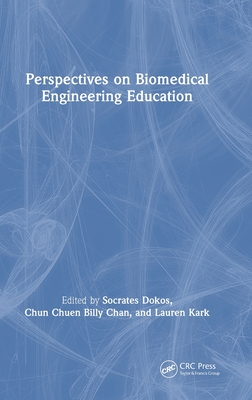
Perspectives on Biomedical Engineering Education
暫譯: 生物醫學工程教育的觀點
Dokos, Socrates, Chan, Chun Chuen Billy, Kark, Lauren
相關主題


商品描述
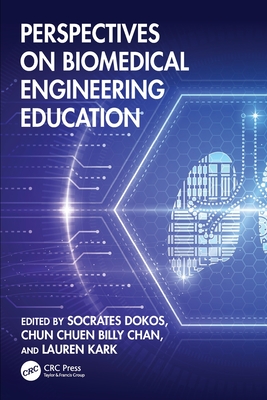
This book presents state-of-the-art pedagogical approaches to biomedical engineering education within a global context. The book also provides practical guides on adapting pedagogies and designing learning activities in the biomedical engineering classroom that suits undergraduate and postgraduate programs.
Perspectives on Biomedical Engineering Education is the first book of its kind to focus on applications of pedagogical approaches for dissecting and examining complex concepts in Biomedical Engineering in today's modern classrooms in higher education. The book first introduces the historical background and development of biomedical engineering. Its second section focuses on leading scholars' knowledge and experience in applying various pedagogies, including biodesign, design thinking, capstones, and prototyping. The final section distills expert insights into practical pedagogical guidelines on biomedical engineering education for university teaching and academic staff and readers alike who are interested in biomedical engineering education.
The book is primarily written for a wide audience from junior to senior biomedical engineering academic staff, who will find new ideas to adapt the relevant pedagogy into their classroom. Industry professionals and any readers interested in biomedical engineering or related fields would also find the material relevant.
商品描述(中文翻譯)
這本書在全球背景下介紹了生物醫學工程教育的最先進教學方法。書中還提供了實用指南,幫助調整教學法並設計適合本科生和研究生課程的生物醫學工程課堂學習活動。
《生物醫學工程教育的觀點》是首本專注於教學方法應用的書籍,旨在剖析和檢視當今高等教育中生物醫學工程的複雜概念。書中首先介紹了生物醫學工程的歷史背景和發展。第二部分則聚焦於領先學者在應用各種教學法方面的知識和經驗,包括生物設計、設計思維、畢業專題和原型製作。最後一部分提煉了專家的見解,提供了針對大學教學和學術人員的生物醫學工程教育實用教學指導,對於對生物醫學工程教育感興趣的讀者也同樣適用。
本書主要面向從初級到高級的生物醫學工程學術人員,幫助他們在課堂中適應相關的教學法。行業專業人士以及任何對生物醫學工程或相關領域感興趣的讀者也會發現這些材料具有相關性。
作者簡介
Socrates Dokos is part-time Associate Professor in the School of Biomedical Engineering UNSW, where his research has focused on the development of computational models for various biomedical engineering applications, including neurostimulators, visual prostheses, transcranial electric stimulators, cardiac defibrillators, left ventricular assist devices and artificial mitral valves. He has collaborated with several medical device companies using computational modelling to better understand and improve their device performance and has sole-authored the teaching text: "Modelling Organs, Tissues, Cells and Devices Using Matlab and COMSOL Multiphysics (Springer, 2017), which has achieved over 60K individual chapter downloads worldwide. He is an education-focussed academic, having served as Learning and Teaching Director of Biomedical Engineering at UNSW for several years until 2021.
Chun Chuen Billy Chan is an academic at UNSW School of Education. He earned his PhD in Education (Learning Sciences) from The University of Sydney and has over 15 years of experience teaching TESOL and EAP at both international and local universities. Drawing on learning sciences, he focuses on curriculum and pedagogy design, bringing innovative perspectives to inter-, multi-, and transdisciplinary education and research programs. His primary research interests include curriculum and pedagogy development and design, AI pedagogy, equity and inclusive education, multimodal literacy, critical thinking, and learning sciences. Through this work, he aims to deepen our understanding of evolving educational contexts and to foster transformative learning experiences for diverse student populations.
Lauren Kark is Deputy Head of School (Academic) at the Graduate School of Biomedical Engineering, University of New South Wales. She is an education-focused academic with teaching expertise in biomechanics and assistive technology. Her work integrates technical learning with social impact, informed by her leadership of service-learning programs in both domestic and international contexts. Lauren recently led the development of a new four-year undergraduate degree in biomedical engineering at UNSW. This work reflects her broader academic interests in curriculum design, disciplinarity, and the role of interdisciplinary thinking in engineering education.
作者簡介(中文翻譯)
蘇格拉底·多科斯是新南威爾士大學生物醫學工程學院的兼任副教授,他的研究專注於為各種生物醫學工程應用開發計算模型,包括神經刺激器、視覺義肢、經顱電刺激器、心臟去顫器、左心室輔助裝置和人工二尖瓣。他與多家醫療器械公司合作,利用計算建模來更好地理解和改善其設備性能,並獨立撰寫了教學文本《使用 Matlab 和 COMSOL Multiphysics 建模器官、組織、細胞和設備》(Springer, 2017),該書在全球已獲得超過 60,000 次單章下載。他是一位以教育為重心的學者,曾擔任新南威爾士大學生物醫學工程學習與教學主任,直到 2021 年。
陳俊全是新南威爾士大學教育學院的學者。他在悉尼大學獲得教育(學習科學)博士學位,並在國際和本地大學教授 TESOL 和 EAP 超過 15 年。基於學習科學,他專注於課程和教學設計,為跨學科、多學科和跨學科的教育和研究計劃帶來創新視角。他的主要研究興趣包括課程和教學的發展與設計、人工智慧教學、公平與包容性教育、多模態素養、批判性思維和學習科學。通過這項工作,他旨在加深我們對不斷演變的教育背景的理解,並促進多元學生群體的變革性學習經驗。
勞倫·卡克是新南威爾士大學生物醫學工程研究所的副院長(學術)。她是一位以教育為重心的學者,擁有生物力學和輔助技術的教學專長。她的工作將技術學習與社會影響相結合,受到她在國內和國際背景下服務學習計劃領導的啟發。勞倫最近主導了新南威爾士大學生物醫學工程新四年本科學位的開發。這項工作反映了她對課程設計、學科性以及跨學科思維在工程教育中角色的更廣泛學術興趣。