相關主題


商品描述
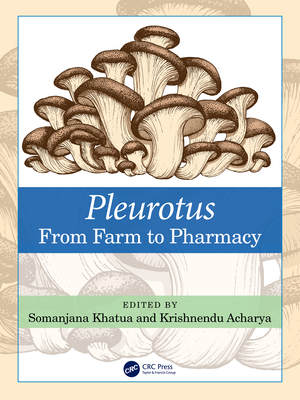
Long ago, Pleurotus mushrooms (commonly known as oyster mushrooms) were discovered growing naturally on decaying logs across Asia and Europe. Valued for their delicate flavor and revered in traditional medicine, they were believed to boost immunity and promote heart health. As the demand for sustainable food sources grew, it was found that Pleurotus species could be cultivated easily on agricultural wastes like wheat straw and cotton stalks. This made them an ideal candidate for low-cost, eco-friendly farming, supporting food security, and rural livelihoods. Further, modern scientific research validated their status as a superfood, revealing a rich nutritional profile, including high-quality protein, dietary fiber, B-complex vitamins, essential minerals, and a range of bioactive compounds such as β-glucans and phenolics. These compounds impart a wide range of therapeutic properties, including antioxidant, anticancer, antidiabetic, immunomodulatory, and other health-promoting effects. Today, Pleurotus mushrooms have transcended their traditional roles to become key ingredients in functional foods, dietary supplements, and even green nanotechnology, symbolizing the fusion of ancient wisdom with modern science.
Key Features:
- The book explores the historical and cultural significance of Pleurotus mushrooms in traditional medicine, aligns it with current scientific evidence, and provides detailed descriptions of their morphological characteristics.
- It offers a comprehensive guide to sustainable oyster mushroom farming, from mycelial culture and spawn production to agro-waste-based cultivation and postharvest management, promoting waste-to-wealth models and eco-friendly agriculture.
- The book highlights the rich nutritional profile and therapeutic potential of Pleurotus mushrooms, with practical sections on culinary applications and traditional recipes. The book also discusses biofortification strategies to enhance micronutrient content, helping combat hidden hunger and promote dietary wellness.
- It illustrates the emerging role of Pleurotus mushrooms in green nanotechnology, detailing eco-friendly nanoparticle synthesis methods and their promising medicinal applications in antioxidant, antimicrobial, and anticancer therapies.
- The book promotes low-cost cultivation and value-added product development, supporting food security, rural income generation, and women-led entrepreneurship. It includes a market analysis of the growing global demand for Pleurotus products and potential avenues for small-scale businesses.
商品描述(中文翻譯)
很久以前,Pleurotus 蘑菇(通常稱為平菇)在亞洲和歐洲的腐爛樹幹上自然生長。由於其細膩的風味和在傳統醫學中的崇高地位,人們相信它們能增強免疫力並促進心臟健康。隨著對可持續食物來源需求的增加,發現 Pleurotus 物種可以輕鬆地在農業廢棄物上培養,例如小麥稈和棉花莖。這使它們成為低成本、環保農業的理想候選者,支持食品安全和農村生計。此外,現代科學研究證實了它們作為超級食品的地位,揭示了豐富的營養成分,包括高品質的蛋白質、膳食纖維、B族維生素、必需礦物質以及一系列生物活性化合物,如β-葡聚糖和酚類化合物。這些化合物賦予了廣泛的治療特性,包括抗氧化、抗癌、抗糖尿病、免疫調節及其他促進健康的效果。如今,Pleurotus 蘑菇已超越其傳統角色,成為功能性食品、膳食補充劑甚至綠色納米技術中的關鍵成分,象徵著古老智慧與現代科學的融合。
主要特點:
- 本書探討了 Pleurotus 蘑菇在傳統醫學中的歷史和文化意義,並將其與當前的科學證據相結合,提供了其形態特徵的詳細描述。
- 本書提供了可持續平菇農業的綜合指南,涵蓋了菌絲培養和種子生產到基於農業廢棄物的栽培和收後管理,促進廢物轉化為財富的模式和環保農業。
- 本書強調了 Pleurotus 蘑菇的豐富營養成分和治療潛力,並包含實用的烹飪應用和傳統食譜部分。書中還討論了增強微量營養素含量的生物強化策略,幫助對抗隱性饑餓並促進膳食健康。
- 本書闡述了 Pleurotus 蘑菇在綠色納米技術中的新興角色,詳細介紹了環保納米顆粒合成方法及其在抗氧化、抗微生物和抗癌療法中的有前景的醫療應用。
- 本書促進低成本的栽培和增值產品開發,支持食品安全、農村收入生成和女性主導的創業。它還包括對全球對 Pleurotus 產品日益增長的需求的市場分析,以及小型企業的潛在發展途徑。
作者簡介
Dr. Somanjana Khatua is an assistant professor in the Department of Botany, University of Allahabad, Uttar Pradesh, India. She pursued a master's in botany and Ph.D. from the University of Calcutta. Earlier, she was appointed by the West Bengal Education Service and posted at Krishnagar Government College. The areas of her research interest include drug development, immunology, carbohydrate biology, natural products, medical mycology, and functional food. To date, she has published 93 papers in different peer-reviewed journals such as Current Research in Biotechnology, Phytotherapy Research, Biodegradation, Chemico-Biological Interactions, Food and Function, Frontiers in Pharmacology, Scientific Reports, PLOS ONE, the Journal of Pharmacy and Pharmacology, PeerJ, Carbohydrate Polymers, Carbohydrate Research, and the International Journal of Biological Macromolecules. She has 83 papers in Scopus and 1,922 Scopus citations, as well as 2,426 Google Scholar citations. Her h-index is 26 (Scopus) and 30 (Google Scholar), while her Google Scholar i10 index is 54. She has received many awards, such as the Woman Botanist Award 2020 from the Indian Botanical Society and the Outstanding Paper Award from the Government of West Bengal, India. She has been included in the top 2% of scientists list in the Elsevier (Stanford University) ranking in 2023. She delivers many invited lectures in different colleges across India.
Prof. Krishnendu Acharya pursued a master's in botany from the University of Calcutta. He then completed M.Tech. and Ph.D. from Jadavpur University. Prof. Acharya joined the University of Calcutta as Lecturer in Botany in 2004 and was promoted to Professor in 2012. To date, he has supervised 24 students for Ph.D. and published 520 research articles and 10 books. He has 12,955 Scopus citations and 17,945 Google Scholar citations. His h-index is 59 (Scopus) and 66 (Google Scholar), while his Google Scholar i10 index is 308. He was ranked first among the top 100 authors of state universities based on the Indian Citation Index 2016 by the Confederation of Indian Industry (CII). He has been listed on Elsevier's (Stanford University) list of the world's top 2% of scientists for the last four years. Prof. Acharya has been elected as Fellow of the West Bengal Academy of Science and Technology, the Linnean Society of London, the Mycological Society of India, the Indian Mycological Society, and the International College of Nutrition, Canada. He has received many awards, including the Sir Edwin John Butler Memorial Award, the Patel Memorial Award, the Global Achievement in the Field of Phyllosphere Biology, and the Prof. K. Natarajan Memorial Award. He is on the editorial boards of many national and international journals. Prof. Acharya actively and regularly engages in lecturing at different seminars, universities, and colleges to boost young minds and inspire students. Beyond his academic roles and various administrative responsibilities, Prof. Acharya is actively promoting self-sustainability through entrepreneurship. His low-cost organic cultivation technology development has directly benefited over 1,800 farmers, further demonstrating his commitment to improving lives through sustainable practices.
作者簡介(中文翻譯)
索曼詹娜·卡圖亞博士是印度烏塔爾邦阿拉哈巴德大學植物學系的助理教授。她在加爾各答大學獲得植物學碩士及博士學位。她曾被西孟加拉教育服務任命,並在克里希納加爾政府學院任職。她的研究興趣包括藥物開發、免疫學、碳水化合物生物學、天然產品、醫學真菌學和功能性食品。迄今為止,她在不同的同行評審期刊上發表了93篇論文,如當前生物技術研究、植物療法研究、生物降解、化學-生物相互作用、食品與功能、藥理學前沿、科學報告、PLOS ONE、藥學與藥理學期刊、PeerJ、碳水化合物聚合物、碳水化合物研究和國際生物大分子期刊。她在Scopus上有83篇論文和1,922次引用,以及2,426次Google Scholar引用。她的h指數為26(Scopus)和30(Google Scholar),而她的Google Scholar i10指數為54。她獲得了許多獎項,如2020年印度植物學會的女性植物學家獎和印度西孟加拉政府的優秀論文獎。她在2023年被列入Elsevier(史丹佛大學)排名的前2%科學家名單。她在印度各大學發表了許多受邀講座。
克里希嫩杜·阿查里教授在加爾各答大學獲得植物學碩士學位,隨後在賈達夫普爾大學完成M.Tech.和博士學位。阿查里教授於2004年加入加爾各答大學擔任植物學講師,並於2012年晉升為教授。迄今為止,他已指導24名博士生,並發表了520篇研究文章和10本書籍。他在Scopus上有12,955次引用和17,945次Google Scholar引用。他的h指數為59(Scopus)和66(Google Scholar),而他的Google Scholar i10指數為308。他在2016年由印度工業聯合會(CII)根據印度引用指數排名的州立大學前100名作者中名列第一。他在過去四年中被列入Elsevier(史丹佛大學)全球前2%科學家名單。阿查里教授被選為西孟加拉科學與技術學院、倫敦林奈學會、印度真菌學會、印度真菌學會和加拿大國際營養學院的院士。他獲得了許多獎項,包括愛德溫·約翰·巴特勒紀念獎、帕特爾紀念獎、葉面生物學領域的全球成就獎和K. Natarajan紀念獎。他是許多國內外期刊的編輯委員會成員。阿查里教授積極參與各種研討會、大學和學院的講座,以激勵年輕人和啟發學生。除了學術角色和各種行政職責外,阿查里教授還積極推動通過創業實現自我可持續性。他所開發的低成本有機栽培技術已直接惠及超過1,800名農民,進一步展示了他通過可持續實踐改善生活的承諾。