相關主題


商品描述
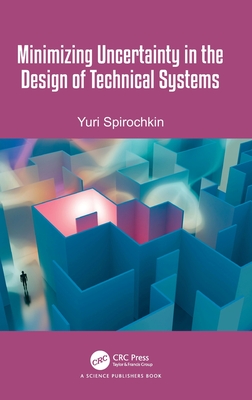
This book addresses the problem of uncertainty faced by designers of aircraft, space and aerospace vehicles, nuclear power plants or other complex and safety-critical technical systems. Uncertainty ranges from stochastic variations in known variables - system properties and loads applied in normal operating conditions - to the lack of knowledge about all possible adverse events during the service life and the behavior of the system in such situations. Errors in forecasting extreme impacts not covered by available statistics, or completely unknown events, combined with the inability of the system to withstand them, create a threat of an accident or catastrophe with significant material losses, damage to the environment and fatal consequences for human life or health. Such a threat must be minimized using appropriate design methods.
Traditional design methodology relies on assumptions about future operation that are based on previous experience and formalized using probabilistic models or deterministic safety factors corresponding to certain probabilities. As a result of its application, the designed technical systems operate reliably and safely in predictable conditions. However, this methodology is inadequate for tasks in which uncertainty is primarily due to unknown factors - tasks that arise, for example, in the development of probes for deep space missions, planetary bases, suborbital transport systems, or power plants functioning on new principles. The book analyzes existing approaches to minimizing uncertainty at the design stage and identifies their shortcomings, that complicate ensuring safety in difficult to predict operating conditions. To overcome these shortcomings, a promising design concept is proposed: Smart ProActive Resilient System (SPARS). It combines well-known approaches that form defense in depth against predictable adverse events with the capabilities of modern technologies, including artificial intelligence, and bionic ideas aimed at ensuring resilience to unforeseen dangers. This concept is illustrated using an example from design practice - the analysis of emergency landing of an aerospace vehicle.
The book is interdisciplinary in nature and contributes to the development of the philosophy of design.
商品描述(中文翻譯)
本書探討飛機、太空與航太載具、核電廠,以及其他複雜且攸關安全之技術系統的設計者所面臨的不確定性問題。不確定性涵蓋的範圍,從已知變數的隨機變動——例如系統特性,以及正常運作條件下所承受的負載——到無法掌握使用壽命期間所有可能發生的不利事件,以及系統在這些情況下的行為。對於現有統計資料未涵蓋的極端衝擊,或完全未知的事件,如果預測發生錯誤,加上系統無法承受這些衝擊,便可能引發事故或災難,造成重大財產損失、環境破壞,以及危及人類生命或健康的致命後果。必須運用適當的設計方法,將這類威脅降至最低。
傳統設計方法依賴對未來運作情況的假設;這些假設建立在過往經驗之上,並透過機率模型或對應特定機率的確定性安全係數加以形式化。採用這種方法所設計的技術系統,能在可預測的條件下可靠且安全地運作。然而,對於不確定性主要源自未知因素的任務而言,這種方法並不充分。例如,深空任務探測器、行星基地、次軌道運輸系統,或採用全新原理運作的發電廠等開發工作,便屬於這類任務。
本書分析現有於設計階段降低不確定性的方法,並指出其中的缺點;這些缺點使得在難以預測的運作條件下確保系統安全更加困難。為克服這些不足,本書提出一項具發展潛力的設計概念:Smart ProActive Resilient System(SPARS,智慧主動式韌性系統)。此概念結合了各種廣為人知的方法,透過對可預測的不利事件建立縱深防禦(defense in depth),同時運用包括人工智慧在內的現代技術,以及旨在確保系統能夠抵禦未預見危害的仿生學理念。書中以設計實務中的一個案例說明此概念,即分析航太載具的緊急降落情境。
本書具備跨學科特性,並有助於推動設計哲學的發展。
作者簡介
Yuri Spirochkin is an engineer, researcher and author with extensive experience in the aerospace and nuclear power industries. He graduated from the N.E. Bauman Moscow Higher Technical School (now the N.E. Bauman Moscow State Technical University). At the beginning of his career, he took part in the design of the Soviet space transport system Energia-Buran. He created the mathematical model of the Buran shuttle and carried out research of its possible emergency landing. In the early 2000s, he was involved in R&D in the field of bioengineering. He later worked in the Russian nuclear power industry, participating in rulemaking, design and life cycle management of nuclear power plant equipment and piping. For several years he was a visiting expert to the International Atomic Energy Agency. Currently he serves as an expert at the International Consultancy and Analysis Agency "Aviation Safety", focusing on aerospace engineering issues. His publications include a chapter in an edited volume, three books and numerous articles, as well as several patents.
作者簡介(中文翻譯)
Yuri Spirochkin 是一位工程師、研究人員與作家,在航空太空與核能產業擁有豐富經驗。他畢業於 N.E. Bauman Moscow Higher Technical School(現為 N.E. Bauman Moscow State Technical University)。職業生涯初期,他參與了蘇聯 Energia-Buran 太空運輸系統的設計。他建立了 Buran 太空梭的數學模型,並研究其可能的緊急迫降方案。2000 年代初期,他投入生物工程領域的研發工作。之後,他進入俄羅斯核能產業,參與核電廠設備與管線的法規制定、設計及生命週期管理。數年期間,他曾擔任 International Atomic Energy Agency 的訪問專家。目前,他在 International Consultancy and Analysis Agency 'Aviation Safety' 擔任專家,專注於航空太空工程相關議題。他的出版作品包括一部編輯文集中的章節、三本書籍與 numerous articles,此外還擁有數項專利。