Philosophy of Artificial Intelligence: From Turing to Large Language Models
暫譯: 人工智慧的哲學:從圖靈到大型語言模型
Gillies, Donald, Gillies, Marco
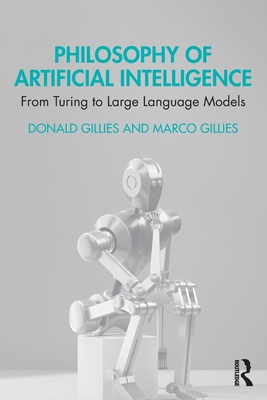
- 出版商: Routledge
- 出版日期: 2026-09-30
- 售價: $2,470
- 貴賓價: 9.5 折 $2,346
- 語言: 英文
- 頁數: 20
- 裝訂: Quality Paper - also called trade paper
- ISBN: 1041106211
- ISBN-13: 9781041106210
-
相關分類:
Large language model
海外代購書籍(需單獨結帳)
相關主題


商品描述
Artificial intelligence presents deep and important philosophical questions, ranging from whether computers can think, whether large language models truly understand language, and whether AI can be creative, to moral and political issues, criminal justice, health, and the future of work.
In this much-needed book, Donald and Marco Gillies, a philosopher and computer scientist respectively, introduce and examine some of these key topics in philosophy and science of AI, including:
- Alan Turing's imitation game and the beginnings of AI and expert systems.
- Induction and logic-based machine learning.
- Bayesianism and AI.
- The development of neural networks and deep learning.
- AI and moral issues, including social media and political radicalisation.
- Generative AI and the arts.
- Is an AI superintelligence possible?
- AI and the future of work.
Adopting a balanced historical and philosophical approach, Philosophy of Artificial Intelligence: From Turing to Large Language Models is ideal for those embarking on the study of this exciting topic, whether coming from philosophy or computer science. It provides a clear and engaging introduction to artificial intelligence.
商品描述(中文翻譯)
人工智慧提出了深刻且重要的哲學問題,範圍從電腦是否能思考、大型語言模型是否真正理解語言、人工智慧是否能具創造力,到道德與政治問題、刑事司法、健康以及未來的工作。
在這本急需的書中,哲學家唐納德·吉利斯(Donald Gillies)和電腦科學家馬可·吉利斯(Marco Gillies)分別介紹並探討了人工智慧哲學與科學中的一些關鍵主題,包括:
- 艾倫·圖靈(Alan Turing)的模仿遊戲及人工智慧與專家系統的起源。
- 基於歸納法和邏輯的機器學習。
- 貝葉斯主義(Bayesianism)與人工智慧。
- 神經網絡和深度學習的發展。
- 人工智慧與道德問題,包括社交媒體和政治激進化。
- 生成式人工智慧與藝術。
- 人工智慧超智能是否可能?
- 人工智慧與未來的工作。
採用平衡的歷史與哲學方法,《人工智慧哲學:從圖靈到大型語言模型》非常適合那些開始研究這一激動人心主題的人,無論是來自哲學還是計算機科學。它提供了對人工智慧的清晰且引人入勝的介紹。
作者簡介
Donald Gillies studied mathematics and philosophy at Cambridge as an undergraduate. In 1966 he began graduate studies in Professor Sir Karl Popper's department at the London School of Economics, and he completed his PhD on the foundations of probability in 1970 with Professor Imre Lakatos as supervisor. From 1968 to 1971, he was a Fellow of King's College, Cambridge, and thereafter followed a career at London University until his retirement in 2009. He is currently Emeritus Professor of Philosophy of Science and Mathematics at University College London. Donald Gillies developed an interest in the philosophy of AI in the 1990s, participating in two AI projects, as well as organizing two further projects in the philosophy of AI.
Marco Gillies is a Professor of Computing at Goldsmiths, University of London, and an expert on AI virtual humans for virtual reality. After completing his PhD at the University of Cambridge, he did post-doctoral work, and, in 2005, he published one of the first papers to apply machine learning to virtual humans. At Goldsmiths, a creative university famous for the Young British Artists Movement, he has helped pioneer the application of AI to the arts, including founding the Creative Computing Degree in 2008. His work since then has focused on human-centred and interdisciplinary AI, including working with dancers, psychologists, game developers, clinicians, and education researchers. His current work focuses on augmenting large language models (LLMs) with body language for natural communication.
作者簡介(中文翻譯)
唐納德·吉利斯(Donald Gillies)在劍橋大學攻讀數學和哲學的本科學位。1966年,他在倫敦政治經濟學院的卡爾·波普教授(Professor Sir Karl Popper)所屬的系所開始研究生學習,並於1970年在伊姆雷·拉卡托斯教授(Professor Imre Lakatos)的指導下完成了有關概率基礎的博士學位。從1968年到1971年,他是劍橋大學國王學院的研究員,隨後在倫敦大學展開職業生涯,直到2009年退休。他目前是倫敦大學學院的科學與數學哲學名譽教授。唐納德·吉利斯在1990年代對人工智慧(AI)的哲學產生了興趣,參與了兩個AI項目,並組織了另外兩個有關AI哲學的項目。
馬可·吉利斯(Marco Gillies)是倫敦大學金史密斯學院的計算機教授,專注於虛擬現實中的AI虛擬人類。完成劍橋大學的博士學位後,他進行了博士後研究,並在2005年發表了第一篇將機器學習應用於虛擬人類的論文之一。在金史密斯學院,這所以英國年輕藝術家運動而聞名的創意大學,他幫助開創了AI在藝術領域的應用,包括於2008年創立創意計算學位。自那時以來,他的工作專注於以人為中心的跨學科AI,包括與舞者、心理學家、遊戲開發者、臨床醫生和教育研究者的合作。他目前的工作重點是通過肢體語言增強大型語言模型(LLMs),以實現自然的交流。