相關主題


商品描述
Sample surveys is a major source of statistical information in economics and finance. When policymakers, researchers, and analysts need targeted data-based evidence, surveys can be deployed quickly, at relatively low cost, tailored to specific policy questions and used to capture information that other data sources often miss--subjective dimensions such as perceptions, expectations, values, and attitudes. From economics and finance to social and living conditions, surveys generate robust, decision-ready insights. And when based on representative samples, they yield accurate estimates for many finite populations, from households and individuals to businesses or financial institutions.
At the same time, the survey environment is changing rapidly. The growth of administrative and digital data sources, combined with survey fatigue and stronger concerns about confidentiality, has led to declining response rates and increasing operational difficulties, challenging the relevance of the survey instrument and raising questions about how surveys should be designed and used.
Even so, surveys are not obsolete, but they must evolve within a multi-source statistical ecosystem. For example, mixed-mode data collection can better match respondent preferences; greater use of administrative records can shorten questionnaires and improve precision; and modern data science tools--including AI--can support more efficient production and analysis.
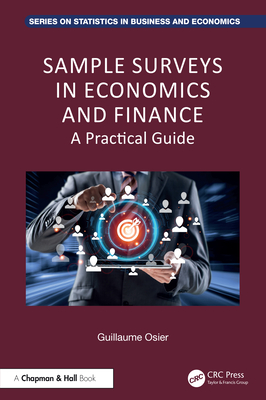
This book provides a practical guide to survey work from design to analysis. It presents the theoretical foundations of probability-based sampling and inference, while emphasising the real constraints of survey operations--budget, time, staffing and respondent burden. It is intended for readers who need both methodological grounding and workable approaches for producing accurate estimates in statistical practice.
Key Features:
- Promote sample surveys as a core data source for research and decision-making in economics and finance.
- Serve as a practical handbook for academics and practitioners, covering both survey design and analysis methods.
- Illustrate key theoretical concepts with numerical applications using dedicated R packages for survey analysis.
- Explain how modern data science tools--including AI--can reshape survey design, implementation, and inference in the years ahead.
商品描述(中文翻譯)
樣本調查是經濟學和金融學中統計資訊的重要來源。當政策制定者、研究人員和分析師需要針對性的數據證據時,調查可以迅速部署,成本相對較低,並針對特定的政策問題進行量身定制,捕捉其他數據來源常常忽略的資訊——主觀維度,如感知、期望、價值觀和態度。從經濟學和金融學到社會和生活條件,調查產生了穩健的、可供決策的見解。而當基於代表性樣本時,它們為許多有限的群體提供準確的估算,從家庭和個人到企業或金融機構。
同時,調查環境正在迅速變化。行政和數位數據來源的增長,加上調查疲勞和對保密性的更強關注,導致回應率下降和操作困難增加,挑戰了調查工具的相關性,並引發了關於調查應如何設計和使用的問題。
儘管如此,調查並非過時,但必須在多來源的統計生態系統中進化。例如,混合模式數據收集可以更好地匹配受訪者的偏好;更大程度地使用行政記錄可以縮短問卷並提高精確度;而現代數據科學工具——包括人工智慧——可以支持更高效的生產和分析。
本書提供了一個從設計到分析的調查工作實用指南。它介紹了基於概率的抽樣和推斷的理論基礎,同時強調調查操作的實際限制——預算、時間、人力資源和受訪者負擔。它旨在為需要方法論基礎和可行方法以在統計實踐中產生準確估算的讀者提供幫助。
主要特點:
- 推廣樣本調查作為經濟學和金融學研究及決策的核心數據來源。
- 作為學術界和實務界的實用手冊,涵蓋調查設計和分析方法。
- 通過使用專門的 R 套件進行調查分析,展示關鍵理論概念的數值應用。
- 解釋現代數據科學工具——包括人工智慧——如何在未來幾年重塑調查設計、實施和推斷。
作者簡介
Guillaume Osier is a statistician at the National Institute of Statistics and Economic Studies of the Grand Duchy of Luxembourg (STATEC), where he leads the Living Conditions Unit within the Social Statistics Department. He also teaches survey statistics as an adjunct lecturer at the University of Luxembourg.
作者簡介(中文翻譯)
Guillaume Osier 是盧森堡大公國國家統計與經濟研究所(STATEC)的統計學家,他在社會統計部門負責生活條件單位的工作。他同時也是盧森堡大學的兼任講師,教授調查統計學。