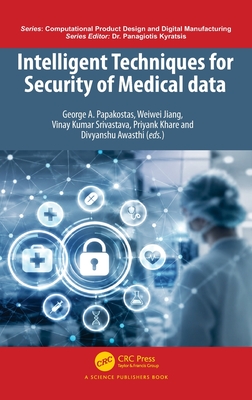
Intelligent Techniques for Security of Medical Data
暫譯: 醫療資料安全的智慧技術
Papakostas, George A., Jiang, Weiwei, Srivastava, Vinay Kumar
- 出版商: CRC
- 出版日期: 2026-11-03
- 售價: $5,550
- 貴賓價: 9.5 折 $5,272
- 語言: 英文
- 頁數: 368
- 裝訂: Hardcover - also called cloth, retail trade, or trade
- ISBN: 104114623X
- ISBN-13: 9781041146230
-
相關分類:
資訊安全、Machine Learning、區塊鏈 Blockchain
尚未上市,無法訂購
相關主題

商品描述
The rapid digital transformation of healthcare has created unprecedented opportunities for improving patient outcomes, operational efficiency, and accessibility of medical services. At the same time, the increasing reliance on connected devices, cloud infrastructures, and data-driven decision-making has introduced significant challenges related to security, privacy, trust, and regulatory compliance. Emerging technologies such as artificial intelligence, machine learning, blockchain, federated learning, post-quantum cryptography, and neuromorphic computing are playing a pivotal role in addressing these challenges while enabling the next generation of intelligent healthcare systems. Their potential extends from secure data sharing and privacy-preserving analytics to predictive diagnostics, personalized medicine, remote patient monitoring, and autonomous healthcare applications.
The book is intended for undergraduate and postgraduate students, researchers, academicians, healthcare professionals, cybersecurity practitioners, AI engineers, data scientists, and industry experts working in the fields of artificial intelligence, cybersecurity, healthcare informatics, medical data analytics, blockchain technologies, Internet of Things (IoT), and intelligent healthcare systems. It also serves as a valuable reference for professionals seeking to understand the practical implementation of advanced computational and security technologies in modern healthcare environments.
Key Features:
-
Explores novel cutting-edge techniques for the protection of health data. - Provides a better understanding and analysis of the telemedicine applications with these techniques.
- Discusses the integration of intelligent systems with cutting edge techniques for e- health care management.
- Reviews the development of the different state of the art techniques for social good.
- Examines how the developed techniques will result in better remote health care services with improved and efficient diagnosis.
商品描述(中文翻譯)
醫療照護的快速數位轉型,為改善患者治療成效、營運效率及醫療服務可及性創造了前所未有的機會。然而,對聯網裝置、雲端基礎架構及資料驅動決策日益增加的依賴,也帶來與安全性、隱私、信任及法規遵循相關的重大挑戰。人工智慧(artificial intelligence)、機器學習(machine learning)、區塊鏈(blockchain)、聯邦式學習(federated learning)、後量子密碼學(post-quantum cryptography)及類神經形態運算(neuromorphic computing)等新興技術,在因應這些挑戰的同時,也為下一代智慧醫療系統提供了關鍵支援。這些技術的應用潛力涵蓋安全資料共享、隱私保護分析、預測性診斷、個人化醫療、遠距患者監測,以及自主式醫療應用。
本書適合大學部與研究所學生、研究人員、學術界人士、醫療專業人員、資安實務工作者、AI 工程師、資料科學家,以及從事人工智慧、資安、醫療資訊學、醫療資料分析、區塊鏈技術、物聯網(Internet of Things, IoT)與智慧醫療系統等領域的產業專家閱讀。本書亦可作為專業人士的重要參考資料,協助讀者了解先進運算與資安技術在現代醫療環境中的實際應用。
主要特色:
• 探討保護健康資料的新穎前沿技術。
• 協助讀者深入了解並分析運用這些技術的遠距醫療應用。
• 討論將智慧系統與尖端技術整合,以進行電子醫療(e-healthcare)管理。
• 回顧各種最先進技術的發展,以及其對社會公益的貢獻。
• 檢視這些技術如何帶來更完善的遠距醫療服務,並提升診斷品質與效率。
作者簡介
Prof. George A. Papakostas has a Diploma (1999), MSc (2002), and PhD (2007) in electrical and computer engineering from the Democritus University of Thrace (DUTh), Greece. He is now a tenured Full Professor with the Department of Informatics, DUTh, Kavala, Greece. He has 15 years of experience in large-scale systems design, as a senior software engineer and a technical manager. He is also the Head of the Machine Learning and Vision (MLV) Research Group. He has authored more than 300 publications in indexed journals, international conferences, and book chapters, one book (in Greek), two edited volumes, and ten journal special issues. His publications have more than 7300 citations with an H-index of 46 (Google Scholar). Prof. Papakostas is a top 2% of researchers worldwide for the years 2022, 2023 and 2024 in the field of "Artificial Intelligence & Image Processing" according to the Stanford/Elsevier List. His research interests include machine learning, computer/machine vision, pattern recognition, and computational intelligence. He is a member of the IAENG, MIR Labs, EUCogIII, and the Technical Chamber of Greece (TEE). He has served as a reviewer for numerous journals and conferences.
Dr. Weiwei Jiang has a BSc (2013) and PhD (2018) from the Department of Electronic Engineering, Tsinghua University, Beijing, China. He is currently an assistant professor with the School of Information and Communication Engineering, Beijing University of Posts and Telecommunications, and Key Laboratory of Universal Wireless Communications, Ministry of Education, China. His current research interests include artificial intelligence, machine learning, big data, wireless communication and edge computing. He has published more than 60 academic papers in IEEE Trans and other journals, with more than 3500 citations in Google Scholar. He is a Top 2% scientist in Stanford's List in 2023 and 2024. In addition to his research endeavours, Dr. Jiang actively engages with scholarly journals as an editor. He is also the Guest Editor for many journals.
Prof. Vinay Kumar Srivastava has a BE in Electronics and Telecommunication Engineering (1989) from Government Engineering College Rewa, MP, India, a MTech in Communication Engineering from IIT BHU (1991), Varanasi, India, and a PhD in Electrical Engineering (2001) from IIT Kanpur, India. After spending a brief period in Indian Telephone Industries Limited, Naini, Allahabad, as an Assistant Executive Engineer, he joined Motilal Nehru National Institute of Technology, Allahabad, India, as a Lecturer in 1992, where he became an Assistant Professor in 2001, Associate Professor in 2006 and Professor in 2010. He has about thirty years of teaching and research experience. He has supervised several B Tech projects, M Tech Theses, and PhD Theses. His research areas include signal and image processing, digital image watermarking, compression, multimedia security, and data hiding.
Dr. Priyank Khare has a BTech in Electronics & Communication Engineering (2009) from Uttar Pradesh Technical University, MTech in Digital Systems (2014), and a PhD in Electronics & Communication Engineering from the Motilal Nehru National Institute of Technology, Allahabad, India. He is currently an assistant professor in the electronics and communication engineering department at the Indian Institute of Information Technology in Ranchi, India. His research interests include digital image processing, digital image watermarking, multimedia security, and data hiding techniques.
Dr. Divyanshu Awasthi has a BTech in ECE from the University of Allahabad, India (2018), MTech in Signal Processing from Motilal Nehru National Institute of Technology Allahabad, India (2021), and a PhD from the Department of Electronics and Communication Engineering at Motilal Nehru National Institute of Technology Allahabad, India. Currently he an assistant professor in GLA University Mathura, India. He is working on projects related to Digital Image Watermarking. His areas of interest are digital image processing, signal processing, data hiding, cryptography, and deep learning.
作者簡介(中文翻譯)
George A. Papakostas 教授於 1999 年取得希臘 Democritus University of Thrace(DUTh)的電機與電腦工程學士學位(Diploma),2002 年取得碩士學位(MSc),並於 2007 年取得博士學位(PhD)。目前,他是希臘 Kavala 的 Democritus University of Thrace(DUTh)資訊學系終身職正教授。他曾擔任資深軟體工程師與技術經理,在大型系統設計方面擁有 15 年經驗。他也是 Machine Learning and Vision(MLV)研究群的負責人。他已在具索引期刊、國際研討會及書籍章節中發表超過 300 篇論文,出版 1 本書(希臘文)、2 部編著,以及 10 期期刊特刊。他的出版成果已獲得超過 7,300 次引用,H-index 為 46(Google Scholar)。根據 Stanford/Elsevier List,Papakostas 教授在 2022、2023 及 2024 年均名列全球「Artificial Intelligence & Image Processing」領域前 2% 的研究人員。他的研究興趣包括 machine learning、computer/machine vision、pattern recognition 及 computational intelligence。他是 IAENG、MIR Labs、EUCogIII 及 Technical Chamber of Greece(TEE)的會員。他曾擔任多本期刊與多場研討會的審稿人。
Weiwei Jiang 博士於 2013 年取得中國北京 Tsinghua University 電子工程系學士學位(BSc),並於 2018 年取得博士學位(PhD)。目前,他是 Beijing University of Posts and Telecommunications 資訊與通信工程學院,以及中國教育部 Universal Wireless Communications 重點實驗室的助理教授。他目前的研究興趣包括 artificial intelligence、machine learning、big data、wireless communication 及 edge computing。他已在 IEEE Trans 及其他期刊發表超過 60 篇學術論文,並在 Google Scholar 獲得超過 3,500 次引用。他於 2023 及 2024 年入選 Stanford 全球前 2% 科學家名單。除了從事研究工作之外,Jiang 博士也積極參與學術期刊的編輯工作,並擔任多本期刊的客座編輯。
Vinay Kumar Srivastava 教授於 1989 年取得印度中央邦 Rewa 的 Government Engineering College Rewa 電子與電信工程學士學位(BE),1991 年取得印度 Varanasi 的 IIT BHU 通信工程碩士學位(MTech),並於 2001 年取得印度 IIT Kanpur 電機工程博士學位(PhD)。他曾在 Indian Telephone Industries Limited 位於 Naini、Allahabad 的據點擔任助理執行工程師,之後於 1992 年加入印度 Allahabad 的 Motilal Nehru National Institute of Technology,擔任講師;2001 年升任助理教授,2006 年升任副教授,並於 2010 年升任教授。他擁有約 30 年的教學與研究經驗,曾指導多項 BTech 專題、MTech 論文及博士論文。他的研究領域包括 signal and image processing、digital image watermarking、compression、multimedia security 及 data hiding。
Priyank Khare 博士於 2009 年取得 Uttar Pradesh Technical University 的電子與通信工程學士學位(BTech),2014 年取得數位系統碩士學位(MTech),並於印度 Allahabad 的 Motilal Nehru National Institute of Technology 取得電子與通信工程博士學位(PhD)。目前,他是印度 Ranchi 的 Indian Institute of Information Technology 電子與通信工程系助理教授。他的研究興趣包括 digital image processing、digital image watermarking、multimedia security 及 data hiding techniques。
Divyanshu Awasthi 博士於 2018 年取得印度 University of Allahabad 的電子與通信工程學士學位(BTech),2021 年取得印度 Motilal Nehru National Institute of Technology Allahabad 的 signal processing 碩士學位(MTech),並於該校電子與通信工程系取得博士學位(PhD)。目前,他是印度 Mathura 的 GLA University 助理教授。他目前從事與 Digital Image Watermarking 相關的研究計畫。他的研究興趣包括 digital image processing、signal processing、data hiding、cryptography 及 deep learning。