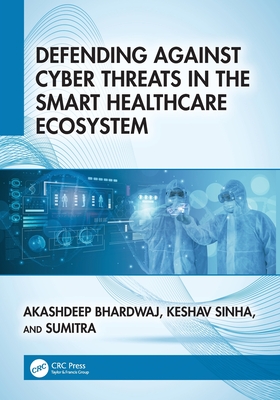
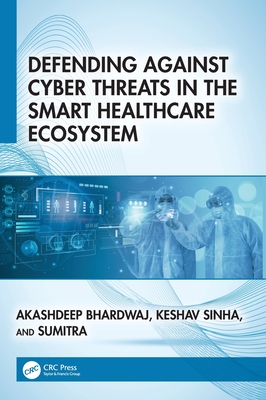
Defending Against Cyber Threats in the Smart Healthcare Ecosystem
暫譯: 防禦智慧醫療生態系統中的網路威脅
Bhardwaj, Akashdeep, Sinha, Keshav, Sumitra
- 出版商: CRC
- 出版日期: 2026-11-25
- 售價: $6,040
- 貴賓價: 9.5 折 $5,738
- 語言: 英文
- 頁數: 332
- 裝訂: Hardcover - also called cloth, retail trade, or trade
- ISBN: 1041250029
- ISBN-13: 9781041250029
-
相關分類:
Penetration-test、Wireshark、Machine Learning
尚未上市,無法訂購
相關主題

商品描述
This book offers a practical guide to securing smart Internet of Things (IoT)-based healthcare devices against cyber threats through hands-on tools, threat modeling, risk scoring, and artificial intelligence (AI)-enhanced defenses.
Healthcare is undergoing rapid digital transformation, with smart IoT devices from wearable monitors to implantable sensors integrated deeply into patient care and hospital workflows. While these innovations improve efficiency and outcomes, they also introduce new and severe cyber threats. Attackers now exploit vulnerabilities in IoT firmware, protocols, and networks, leading to risks that threaten patient safety, privacy, and trust. This book provides a practical, cyber-threat-focused guide to securing healthcare IoT environments. Unlike existing titles that emphasize general healthcare IT or clinical applications of AI, this volume focuses squarely on the cybersecurity challenges of IoT medical systems and shows how AI techniques can be leveraged to target and mitigate these threats. The chapters progress logically from real-world threat incidents to architectural vulnerabilities and then to applied AI-based detection techniques. Readers are guided through:
- Analyzing IoT-specific threats in healthcare environments.
- Identifying vulnerabilities in devices and communication protocols.
- Using AI/machine learning (ML) methods for intrusion and malware detection.
- Applying threat modeling frameworks with AI-based risk scoring.
- Implementing federated learning (FL) to preserve patient privacy in collaborative detection.
- Designing Zero Trust architectures (ZTAs) adapted to healthcare IoT networks.
- Applying explainable and ethical AI methods for transparent security decision-making.
Each chapter combines conceptual depth with practical labs, datasets, and exercises. Readers build hands-on skills using tools such as TensorFlow, PyTorch, Flower, Wireshark, and Nmap, and experiment with benchmark datasets such as CICIDS2017, BoT-IoT, and CVE/National Vulnerability Database (NVD) vulnerabilities. By bridging theory with practice, this book serves as a professional reference for cybersecurity practitioners, a hands-on textbook for postgraduate courses, and a research guide for academics. Its dual orientation ensures relevance in industry, research, and education, preparing readers to secure the digital frontiers of modern healthcare.
商品描述(中文翻譯)
本書透過實作工具、威脅建模、風險評分,以及 AI 強化防禦機制,提供一套實用指南,協助讀者防護以智慧型物聯網(Internet of Things, IoT)為基礎的醫療裝置,抵禦網路威脅。
醫療產業正快速進行數位轉型,從穿戴式監測器到植入式感測器,各種智慧型 IoT 裝置已深度整合至病患照護與醫院工作流程中。這些創新雖能提升效率與醫療成果,卻也帶來全新且嚴重的網路威脅。如今,攻擊者會利用 IoT 韌體、通訊協定與網路中的漏洞,造成危及病患安全、隱私與信任的風險。本書提供一套以網路威脅為核心、實用導向的醫療 IoT 環境防護指南。不同於著重一般醫療 IT 或 AI 臨床應用的既有書籍,本書聚焦於 IoT 醫療系統所面臨的網路安全挑戰,並說明如何運用 AI 技術,有針對性地處理與降低這些威脅。本書各章依循清晰的邏輯,從真實世界的威脅事件,逐步探討架構漏洞,再進入 AI 應用式偵測技術。讀者將依序學習:
• 分析醫療環境中 IoT 特有的威脅。
• 識別裝置與通訊協定中的漏洞。
• 使用 AI/機器學習(machine learning, ML)方法進行入侵與惡意軟體偵測。
• 搭配 AI 型風險評分,應用威脅建模框架。
• 實作聯邦學習(federated learning, FL),在協同偵測過程中保護病患隱私。
• 設計適用於醫療 IoT 網路的零信任架構(Zero Trust architectures, ZTAs)。
• 應用可解釋且符合倫理的 AI 方法,實現透明的安全決策。
每一章都兼具概念深度與實務實驗、資料集及練習。讀者將使用 TensorFlow、PyTorch、Flower、Wireshark 與 Nmap 等工具培養實作技能,並針對 CICIDS2017、BoT-IoT,以及 CVE/國家漏洞資料庫(National Vulnerability Database, NVD)中的漏洞等基準資料集進行實驗。本書串聯理論與實務,可作為網路安全從業人員的專業參考書、研究所課程的實作型教材,以及學術研究者的研究指南。其兼具產業、研究與教育的雙重定位,確保內容具備廣泛的應用價值,並協助讀者為現代醫療的數位疆域建立安全防線。
作者簡介
Dr. Akashdeep Bhardwaj is working as Professor and Director of Cybersecurity Centre of Excellence at UPES, Dehradun, India and is the CEO of Global Cybersecurity Association (GCA). An eminent IT Industry expert in areas such as Cybersecurity, Digital Forensics and IT Operations, Dr. Akashdeep mentors graduate, master's and doctoral students and leads several projects. Dr. Akashdeep is a Post-Doctoral from Majmaah University, Saudi Arabia, Ph.D. in Computer Science, Post Graduate Diploma in Management (equivalent to MBA), and holds an Engineering Degree in Computer Science. Dr. Akashdeep has published over 200 research including journal manuscripts, copyrights, patents and books in highly referred international publications. Dr. Akashdeep worked as Technology Leader for several multinational organizations during his time in the IT industry. Dr. Akashdeep is certified in multiple technologies including Compliance Audits, Cybersecurity, and industry certifications in Microsoft, Cisco, and VMware technologies.
Dr. Keshav Sinha is an Assistant professor specializing in Cryptography and Network Security, with research focused on developing secure environments for Multimedia Transmission. His contributions extend beyond cryptography into Soft Computing, Humanities, and Cyber Policy, emphasizing innovation and flexibility in computer science. With a strong academic background and numerous publications in reputable conferences and journals, he has established himself as a dedicated researcher and educator. His expertise in cryptography and cybersecurity, coupled with his interdisciplinary approach, has positioned him as a thought leader in the field. His work in emerging security frameworks, regulatory challenges, and AI-driven cryptographic advancements continues to shape the future of digital security.
Dr. Sumitra is an Assistant Professor at UPES, Dehradun, India. She earned her Ph.D. from the Birla Institute of Technology and Science (BITS) Pilani, India. Her research primarily focuses on IoT security, artificial intelligence and machine learning (AI/ML), and federated learning. Dr. Sumitra has contributed extensively to the field through publications in reputed international journals, including the Journal of Network and Computer Applications and Internet of Things. Her research excellence was recognized with the Outstanding Research Article Award at the Doctoral Colloquium, BITS Pilani, for her work titled "RPL: An Explainable AI-based Routing Protocol for the Internet of Mobile Things."
作者簡介(中文翻譯)
Dr. Akashdeep Bhardwaj 目前擔任印度德拉敦 UPES 的教授兼 Cybersecurity Centre of Excellence 主任,同時也是 Global Cybersecurity Association (GCA) 的執行長。他是 IT 產業中網路安全、數位鑑識與 IT 營運等領域的知名專家,指導大學部、碩士班及博士班學生,並領導多項專案。Dr. Akashdeep 曾於沙烏地阿拉伯 Majmaah University 擔任博士後研究員,擁有 Computer Science 博士學位、管理學研究所學位(相當於 MBA),以及 Computer Science 工程學位。他已在具高度聲望的國際出版品中發表超過 200 篇研究成果,包括期刊論文、著作權、專利及書籍。任職 IT 產業期間,Dr. Akashdeep 曾擔任多家跨國組織的技術領導者。他取得多項技術認證,包括 Compliance Audits 與 Cybersecurity 認證,以及 Microsoft、Cisco 和 VMware 技術相關的業界認證。
Dr. Keshav Sinha 是一名專精於 Cryptography 與 Network Security 的助理教授,研究重點是為多媒體傳輸打造安全的環境。他的研究貢獻不僅涵蓋密碼學,也延伸至 Soft Computing、人文學科與 Cyber Policy,強調 Computer Science 領域中的創新與彈性。憑藉深厚的學術背景,以及在知名會議與期刊上發表的大量研究成果,他已成為一名投入研究與教育工作的學者。他在密碼學與網路安全方面的專業,加上跨學科的研究方法,使他成為該領域的思想領袖。他在新興安全架構、法規挑戰,以及 AI 驅動的密碼學發展方面的研究,持續形塑數位安全的未來。
Dr. Sumitra 是印度德拉敦 UPES 的助理教授。她取得印度 Birla Institute of Technology and Science (BITS) Pilani 的博士學位。她的研究主要聚焦於 IoT security、artificial intelligence and machine learning (AI/ML),以及 federated learning。Dr. Sumitra 透過在 Journal of Network and Computer Applications、Internet of Things 等知名國際期刊發表研究成果,對該領域做出廣泛貢獻。她的研究成就獲得肯定,並於 BITS Pilani 的 Doctoral Colloquium 中以〈RPL: An Explainable AI-based Routing Protocol for the Internet of Mobile Things〉一文榮獲 Outstanding Research Article Award。