相關主題


商品描述
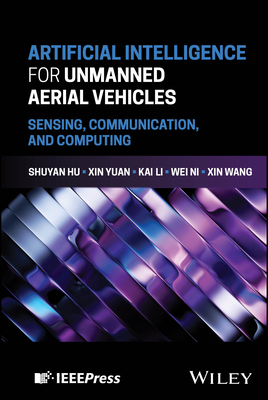
In-depth exploration of machine learning techniques applied to UAV operations and communications, highlighting areas of potential growth and research gaps
Artificial Intelligence for Unmanned Aerial Vehicles provides a comprehensive overview of machine learning (ML) techniques used in unmanned aerial vehicle (UAV) operations, communications, sensing, and computing. It emphasizes key components of UAV activity to which ML can significantly contribute including perception and feature extraction, feature interpretation and regeneration, trajectory and mission planning, and aerodynamic control and operation.
The book considers the notion of security in the UAV network primarily in terms of its underlying rationale. This book also includes a detailed analysis of UAV behavior with respect to time and explores online machine learning-based solutions for UAV-assisted IoT networks.
Additional topics include:
- Joint cruise control and data collection
- Resilience in an AI-aided UAV network against multiple attacks, introducing a flexible and adaptive threshold to alleviate malicious conduct
- Quantification of influencing attributes, quantification of weights affiliated with these attributes, and movement tracking of malicious UAVs
- Integration of contextual information, threshold definitions, and time-variant behavior analysis
Artificial Intelligence for Unmanned Aerial Vehicles is an essential up-to-date reference on the subject for researchers, professors, graduate and senior undergraduate students, and industry professionals in the field.
商品描述(中文翻譯)
深入探討應用於無人機操作和通信的機器學習技術,突顯潛在增長領域和研究空白
無人機的人工智慧 提供了無人機(UAV)操作、通信、感測和計算中使用的機器學習(ML)技術的全面概述。它強調了無人機活動的關鍵組成部分,機器學習可以顯著貢獻的領域,包括感知和特徵提取、特徵解釋和再生、軌跡和任務規劃,以及空氣動力學控制和操作。
本書考慮了無人機網絡中安全性的概念,主要從其基本原理的角度進行探討。本書還包括對無人機行為的詳細分析,並探索基於在線機器學習的無人機輔助物聯網(IoT)網絡解決方案。
其他主題包括:
- 聯合巡航控制和數據收集
- 在AI輔助的無人機網絡中對抗多重攻擊的韌性,引入靈活和自適應的閾值以減輕惡意行為
- 影響屬性的量化、與這些屬性相關的權重量化,以及惡意無人機的運動追蹤
- 上下文信息的整合、閾值定義和時間變化行為分析
無人機的人工智慧 是該領域研究人員、教授、研究生和高年級本科生以及行業專業人士的重要最新參考資料。
作者簡介
Shuyan Hu, PhD, is an Associate Professor with the College of Electronics and Information Engineering at Tongji University, Shanghai, China.
Xin Yuan, PhD, is a Senior Research Scientist at CSIRO and an Adjunct Senior Lecturer at the University of New South Wales, Sydney, NSW, Australia.
Kai Li, PhD, serves as a Visiting Research Scientist with the School of Electrical Engineering and Computer Science, TU Berlin, Germany, and is also a Senior Research Scientist with Real-Time and Embedded Computing Systems Research Centre (CISTER), Porto, Portugal.
Wei Ni, PhD, is a Senior Principal Research Scientist at CSIRO and a Conjoint Professor at the University of New South Wales, Sydney, NSW, Australia.
Xin Wang, PhD, is a Professor with the College of Future Information Technology at Fudan University, Shanghai, China.
作者簡介(中文翻譯)
胡書燕,博士,為中國上海同濟大學電子與信息工程學院的副教授。
袁鑫,博士,為澳大利亞新南威爾士大學(University of New South Wales)資深研究科學家及兼任高級講師,位於悉尼,新南威爾士州。
李凱,博士,擔任德國柏林工業大學(TU Berlin)電氣工程與計算機科學學院的訪問研究科學家,同時也是葡萄牙波爾圖實時與嵌入式計算系統研究中心(CISTER)的資深研究科學家。
倪偉,博士,為澳大利亞新南威爾士大學(University of New South Wales)資深首席研究科學家及兼任教授,位於悉尼,新南威爾士州。
王鑫,博士,為中國上海復旦大學未來信息技術學院的教授。