相關主題


商品描述
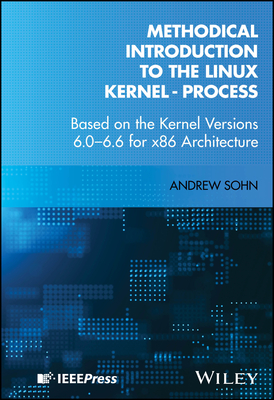
Trace the full lifecycle of a Linux kernel - process
The kernel powers the Internet, the Cloud, servers training large language models on NVIDIA and AMD GPUs, Android devices, and IoT platforms, yet its rapid evolution makes systematic study difficult. Methodical Introduction to the Linux Kernel - Process guides readers from the user interface through the deepest kernel layers, covering versions up to 6.6, explaining how processes are created, populated, scheduled, context-switched, and executed.
The book traces the manifestation of a single new process from zero when no pre-existing process exists, detailing every key event and epoch in that progression. It examines the relationship between newly created processes and existing ones, clarifying mutual impacts. Readers gain the process management knowledge needed to customize the kernel and design secure, robust middleware and applications.
Readers will also find:
- An overview marking the key events and epochs in the complete process lifecycle from creation through execution
- Detailed analysis of kernel data structures that are populated when a new process is built from the ground up
- Coverage of scheduling mechanisms and context-switching procedures that govern how processes share processor time on modern hardware
- Guidance on making informed decisions about kernel customization to meet specific embedded system or application requirements
Written for graduate and senior undergraduate students in electrical engineering and computer science, this book also serves Android developers, IoT developers, embedded systems programmers, GPU programmers building large language models, and device driver writers seeking deep knowledge of Linux kernel process management.
完整追蹤 Linux kernel process 的生命週期
Linux kernel 驅動著 Internet、Cloud、在 NVIDIA 與 AMD GPU 上訓練大型語言模型的伺服器、Android 裝置,以及 IoT 平台;然而,其快速演進也讓系統化研究變得相當困難。《Methodical Introduction to the Linux Kernel - Process》將帶領讀者從使用者介面一路深入 kernel 最底層,涵蓋截至 6.6 版的內容,並說明程序(process)如何建立、填充、排程、進行內容切換,以及執行。
本書追蹤單一新程序在不存在任何既有程序的初始狀態下,如何從零開始形成,詳細說明其發展過程中的每一個關鍵事件與階段。本書也探討新建立的程序與既有程序之間的關係,釐清彼此所產生的影響。讀者將獲得程序管理所需的知識,以便自訂 kernel,並設計安全、穩健的 middleware 與應用程式。
讀者還將學到:
• 完整程序生命週期的概觀,標示從建立到執行過程中的關鍵事件與階段
• 詳細分析從零建立新程序時所填充的 kernel 資料結構
• 說明現代硬體上控制程序共享處理器時間的排程機制與內容切換程序
• 指導讀者如何針對特定的嵌入式系統或應用程式需求,做出明智的 kernel 自訂決策
本書適合電機工程與 computer science 領域的研究生及高年級大學生閱讀,也適合希望深入了解 Linux kernel 程序管理的 Android 開發者、IoT 開發者、嵌入式系統程式設計師、建置大型語言模型的 GPU 程式設計師,以及裝置驅動程式開發者。
以上中文內容由 AI 翻譯作者簡介
Andrew Sohn received a B.S. in Electrical Engineering, an M.S. and a Ph.D. in Computer Engineering, all from the University of Southern California in Los Angeles, California. He was a NASA fellow, National Science Foundation fellow, and an invited scientist at the Lawrence Berkeley National Laboratory. Andrew co-founded and ran a Silicon Valley-based venture capital-backed software company that developed an elastic, on-demand computing infrastructure for enterprises. He has published numerous scientific papers in flagship conference proceedings and journals, including ACM/IEEE Supercomputing and IEEE transactions. He is currently with the Computer Science Department of the New Jersey Institute of Technology, where he is an associate professor. He is the recipient of the 2018 NJIT Alumni Association Award for teaching excellence.
Andrew Sohn 於加州洛杉磯的 University of Southern California 取得電機工程學士學位、電腦工程碩士學位及博士學位。他曾獲 NASA fellowship 與 National Science Foundation fellowship,並曾受邀擔任 Lawrence Berkeley National Laboratory 的科學家。Andrew 共同創辦並經營一家位於 Silicon Valley、由創投支持的軟體公司,該公司為企業開發具彈性且可隨需使用的運算基礎架構。他曾在多個重要會議論文集與期刊發表眾多科學論文,包括 ACM/IEEE Supercomputing 及 IEEE transactions。目前,他任職於 New Jersey Institute of Technology 的 Computer Science Department,擔任副教授。他曾獲頒 2018 NJIT Alumni Association Award for teaching excellence。
以上中文內容由 AI 翻譯