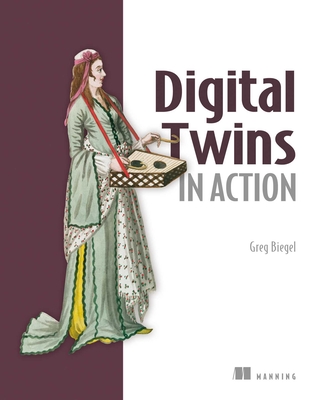
Digital Twins in Action (Paperback)
暫譯: 實戰數位孿生 (平裝本)
Biegel, Greg
- 出版商: Manning
- 出版日期: 2026-08-25
- 售價: $2,800
- 貴賓價: 9.5 折 $2,660
- 語言: 英文
- 頁數: 344
- 裝訂: Quality Paper - also called trade paper
- ISBN: 1633434656
- ISBN-13: 9781633434653
-
相關分類:
物聯網 IoT、Machine Learning
海外代購書籍(需單獨結帳)
買這商品的人也買了...
-
 嵌入式系統設計實務-電路與驅動程式
$250$225 -
 $1,710Using SQLite (Paperback)
-
 ASP.NET 本質論
$520$410 -
 $700Professional Scrum Development with Microsoft Visual Studio 2012 (Paperback)
-
 $474系統分析與設計 : 敏捷疊代方法 (原書第6版)
-
 IoT Solutions in Microsoft's Azure IoT Suite: Data Acquisition and Analysis in the Real World
$3,510$3,334 -
 $957深度學習
-
 演算法之美:隱藏在資料結構背後的原理 (C++版)
$650$507 -
 $534JSON 實戰
-
 $283大數據技術
-
 手機攝影必學 BOOK:用OX帶你學會拍人物、食物、風景等情境照片
$398$298 -
 創意競擇:從賈伯斯黃金年代的軟體設計機密流程,窺見蘋果的創意方法、本質與卓越關鍵
$460$391 -
 Web 開發者一定要懂的駭客攻防術 (Web Security for Developers: Real Threats, Practical Defense)
$420$331 -
 資料科學的統計實務 : 探索資料本質、扎實解讀數據,才是機器學習成功建模的第一步
$599$539 -
 Martin Fowler 的企業級軟體架構模式:軟體重構教父傳授 51個模式,活用設計思考與架構決策 (Patterns of Enterprise Application Architecture)
$800$624 -
 我懂了!專案管理 (暢銷紀念版)
$400$316 -
 電腦視覺機器學習實務|建立端到端的影像機器學習 (Practical Machine Learning for Computer Vision: End-To-End Machine Learning for Images)
$780$616 -
 $2,070Learning Blazor: Build Single-Page Apps with Webassembly and C# (Paperback)
-
 ASP.NET Core Razor Pages in Action (Paperback)
$2,160$2,052 -
 超圖解 ESP32 應用實作
$820$647 -
 無瑕的程式碼 軟體工匠篇:程式設計師必須做到的紀律、標準與倫理 (Clean Craftsmanship: Disciplines, Standards, and Ethics)
$720$561 -
 從源頭就優化 - 動手開發自己的編譯器實戰
$880$695 -
 UX 商業價值實現之道|打造成功的數位產品服務 (UX for Business: How to Design Valuable Digital Companies)
$780$616 -
 建構可擴展系統|設計分散式架構 (Foundations of Scalable Systems: Designing Distributed Architectures)
$780$616 -
 10 倍速!AI Skill 全攻略:建立 Skill 驅動 AI 系統,打造從學術研究到專案開發的自動化工作流
$1,000$780
相關主題

商品描述
Get the eBook free when you register your print book at Manning.
"Makes the theory tangible and the tools accessible, from a single sensor to a city-scale system."
--Anthony Townsend, Cornell University
A "digital twin" is a virtual replica of a physical system that allows operations engineers to perform predictive maintenance, run risk-free simulations, and make smart, data-driven decisions. Digital Twins in Action teaches you how to combine methods from software development, data science, robotics, and visual design to create a powerful integrated platform. It uses both standard open sources tools and commercial frameworks. Grounded firmly in practical reality, it clarifies a topic clouded by marketing speak and vague definitions.
This hands-on book for software developers and automation engineers guides you step-by-step as you build a small-scale twin you can run in your office or home environment. Author and industry veteran Greg Biegel introduces essential mental models like the "Opportunity-to-Data" Mapping Chain and the Minimum Viable Digital Representation (MVDR) to ensure your design serves concrete goals. Across 10 in-depth chapters, you will learn to prioritize diverse information sources, extract legacy documents using OCR, deploy physical sensor networks over LoRaWAN or Wi-Fi, and organize real-time streams with standardized MQTT topic hierarchies. Reviewer Sanjay Basu, PhD, VP of Gen AI and GPU Infrastructure at Oracle remarked, "Digital Twins in Action takes you from a five-dollar temperature sensor to an AI agent making autonomous decisions!"
Because accurate visual simulations are an integral part of a digital twin, this book dives into modeling and visualization techniques that make virtual systems accessible to both humans and machines. You'll master data integration across relational databases, Parquet files, and Delta tables. Then, you'll construct a semantic model of reality using ontologies and knowledge graphs in Memgraph, render responsive 2D dashboards using Grafana, and locate 3D mesh models geospatially on an interactive digital globe using CesiumJS and WebGL.
Modern digital twins rely on advanced data analysis, integrating inference and simulation. You will build supervised image classifiers to act as virtual sensors, use unsupervised Isolation Forests for anomaly detection, and apply AutoGluon for time-series forecasting. You'll also explore continuous and discrete event simulations and learn how to construct autonomous AI agents that reason, plan, and optimize physical behaviors. Finally, you will learn to secure the cyber-physical boundary so you can confidently deploy, monitor, and scale a resilient, auditable digital twin.
What's inside
- Model physical environments using semantic knowledge graphs and ontologies
- How to deploy hybrid IoT sensor networks and stream real-time data
- Integrate predictive machine learning, physics simulations, and AI agents
- The five-level digital twin maturity model
About the reader
For software developers, data engineers, and architects who know the basics of machine learning. No prior experience in visual design or industrial automation required.
About the author
Greg Biegel has designed and built digital twins in production for over 20 years. His extensive industry experience includes six years spent developing a state-of-the-art industrial digital twin platform from the ground up for a leading Australian energy producer.
Table of Contents
1 Bridging the physical and digital worlds
2 Mapping physical systems to digital representations
3 Sensing the real world
4 Data integration and management
5 Modeling reality
6 2D Visualization and insight
7 Spatial context and 3D insight
8 Integrating inference and intelligence
9 Predicting outcomes with simulation
10 Digital twins in production
A Building a LoRaWAN network
B Building a custom IoT sensor
C Capturing a 3D model using photogrammetry
商品描述(中文翻譯)
註冊您在 Manning 購買的紙本書,即可免費取得電子書。
「讓理論變得具體,也讓工具更容易使用,涵蓋從單一感測器到城市規模系統的各種情境。」
--Anthony Townsend,Cornell University
「數位孿生」是實體系統的虛擬複本,讓營運工程師能夠進行預測性維護、執行零風險模擬,並做出智慧且以資料為依據的決策。《Digital Twins in Action》將教導您如何結合軟體開發、資料科學、機器人學與視覺設計的方法,打造強大的整合平台。本書同時運用標準的開放原始碼工具與商用框架。內容紮根於實務,釐清這個經常被行銷話術與模糊定義遮蔽的主題。
本書是寫給軟體開發人員與自動化工程師的實作指南,將一步步帶領您建構一個可在辦公室或家中環境執行的小型數位孿生。作者兼業界資深人士 Greg Biegel 介紹「機會到資料」對映鏈(Opportunity-to-Data Mapping Chain)以及最小可行數位表示(Minimum Viable Digital Representation,MVDR)等重要心智模型,確保您的設計能服務於明確的實際目標。在 10 個深入探討的章節中,您將學會如何排列多元資訊來源的優先順序、使用 OCR 擷取舊有文件、透過 LoRaWAN 或 Wi-Fi 部署實體感測器網路,以及運用標準化的 MQTT 主題階層組織即時資料串流。Oracle 生成式 AI 與 GPU 基礎架構副總裁 Sanjay Basu 博士如此評論:「《Digital Twins in Action》會帶您從五美元的溫度感測器,一路走到能自主做出決策的 AI 代理程式!」
由於精確的視覺模擬是數位孿生不可或缺的一環,本書深入探討各種建模與視覺化技術,讓人類與機器都能理解虛擬系統。您將精通關聯式資料庫、Parquet 檔案與 Delta 表格之間的資料整合。接著,您會運用本體(ontologies)與 Memgraph 中的知識圖譜,建立現實世界的語意模型;使用 Grafana 製作具備響應能力的 2D 儀表板;並透過 CesiumJS 與 WebGL,在互動式數位地球儀上以地理空間方式定位 3D 網格模型。
現代數位孿生仰賴進階資料分析,並整合推論與模擬功能。您將建構監督式影像分類器,讓它們充當虛擬感測器;使用非監督式 Isolation Forest 進行異常偵測;並運用 AutoGluon 執行時間序列預測。您也將探索連續事件模擬與離散事件模擬,並學習如何建構能夠推理、規劃及最佳化實體行為的自主 AI 代理程式。最後,您將學習如何保護網路與實體系統之間的邊界,從而放心地部署、監控及擴展具備韌性的可稽核數位孿生。
內容包括
- 使用語意知識圖譜與本體建模實體環境
- 如何部署混合式 IoT 感測器網路並串流即時資料
- 整合預測式機器學習、物理模擬與 AI 代理程式
- 數位孿生的五級成熟度模型
適合讀者
本書適合具備機器學習基礎的軟體開發人員、資料工程師與架構師。不要求具備視覺設計或工業自動化的先備經驗。
作者簡介
Greg Biegel 已設計並建構投入正式生產環境的數位孿生超過 20 年。他豐富的業界經驗包括花費六年時間,從零開始為澳洲一家領先的能源生產商開發最先進的工業數位孿生平台。
目錄
1 連結實體世界與數位世界
2 將實體系統對映至數位表示
3 感知真實世界
4 資料整合與管理
5 建模現實世界
6 2D 視覺化與洞察
7 空間脈絡與 3D 洞察
8 整合推論與智慧
9 使用模擬預測結果
10 將數位孿生投入正式生產環境
A 建構 LoRaWAN 網路
B 建構自訂 IoT 感測器
C 使用攝影測量擷取 3D 模型
作者簡介
Greg Biegel has been building digital representations of physical systems for large organizations for over 20 years, including 6 years creating a state of the art industrial digital twin platform for a leading Australian energy producer. He holds Computer Science degrees from Rhodes University, South Africa and Trinity College, Dublin.
作者簡介(中文翻譯)
Greg Biegel 為大型組織建構實體系統的數位表示已有超過 20 年的經驗,其中包括花費 6 年時間,為澳洲領先的能源生產商打造最先進的工業數位孿生(industrial digital twin)平台。他擁有南非 Rhodes University 與都柏林 Trinity College 的 Computer Science 學位。