Securing the Autonomous Supply Chain: Defending the new attack surface of agentic operations across the physical-digital convergence
暫譯: 保護自主供應鏈:防禦實體與數位融合下代理式營運的新攻擊面
Schwenger, Mj
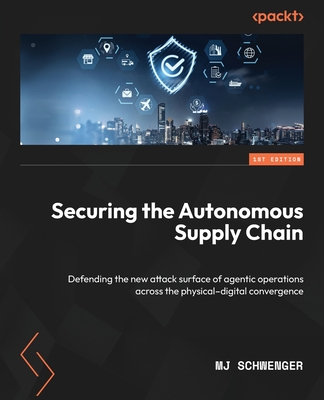
- 出版商: Packt Publishing
- 出版日期: 2026-09-30
- 售價: $1,730
- 貴賓價: 9.5 折 $1,643
- 語言: 英文
- 頁數: 708
- 裝訂: Quality Paper - also called trade paper
- ISBN: 1806386577
- ISBN-13: 9781806386574
-
相關分類:
資訊安全、Large language model
海外代購書籍(需單獨結帳)
相關主題

商品描述
The autonomous supply chain is the emerging attack surface of the next decade. When AI decisions can drive physical action, the execution perimeter becomes the new security boundary. Explore the threat chain across the physical-digital convergence through a practical approach to implementation, with 17 customizable artifacts from the ASCR blueprint to turn security strategy into action.
Key Features:
- Map the new attack surface from agentic decisions to physical consequences
- Secure the agentic execution chain from decision to physical action
- Turn security strategy into action with practical, customizable artifacts
Book Description:
As agentic systems progress from human-approved decisions to semi-autonomous and autonomous execution, the security target is changing. The critical question is no longer only how AI can be compromised, but how to secure the execution boundary when an agentic system can acquire the authority to affect physical operations. Agentic operations create a new attack surface across the Physical-Digital Convergence, where digital intelligence can drive physical action through autonomous execution. The Execution Perimeter defines where execution authority must be validated before decisions become physical actions.
This book traces the Threat Chain from AI reasoning through connectivity and actuation to physical consequences. It moves from threat analysis to securing, validating, deploying, monitoring, and responding to agentic systems, using four threat scenarios and integrated attack models to demonstrate the security challenges of autonomous operations.
By the end of the book, you will learn how to secure agentic execution chains, validate execution authority, and build resilient security architectures across the Physical-Digital Convergence. The ASCR Blueprint provides a practical path from strategy to implementation, with 17 reusable artifacts spanning risk intelligence, technical enforcement, operational response, and governance.
What You Will Learn:
- Trace the threat chain from AI reasoning to physical consequence
- Identify and intercept attacks across the agentic execution chain
- Secure MCP gateways, agent identity, lineage, telemetry, and evidence
- Use digital twins to test agents before physical execution
- Build an Agentic Security Operations Center (ASOC)
- Apply the Secure Agentic Development Lifecycle (SADLC)
- Align security with EU AI Act, NIS2, IEC 62443, and NIST AI RMF
- Apply the ASCR Blueprint and 17 artifacts across risk and response
Who this book is for:
This book is for security architects, CISOs, security and technology leaders, AI/ML and application security engineers, OT/ICS engineers, cloud security professionals, and compliance practitioners responsible for securing, governing, or auditing agentic systems in production. Consultants will also benefit from the reusable frameworks and customizable artifacts throughout the book.
Basic security architecture knowledge is recommended; familiarity with AI/ML and OT/ICS is helpful. Cross-domain context is established where required.
Table of Contents
- The Agentic Revolution: From Copilots to Autonomous Execution
- The Physical AI Security Landscape - The Cyber-Physical Systems Threat Chain
- The Agentic Threat Matrix - Attacks on Intelligence and Coordination
- The Hardware and Edge Attack Surface - Attacks
- Securing Models, Data, and Decision Provenance
- The Secure Agentic Development Lifecycle
- Identity Continuity and Access Control Across the CPS Stack
- The Agentic Security Operations Center (ASOC)
(N.B. Please use the Read Sample option to see further chapters
商品描述(中文翻譯)
自主供應鏈是未來十年新興的攻擊面。當 AI 的決策能夠驅動實體行動時,執行邊界便成為新的安全邊界。透過實用的實作方法,探索實體—數位融合(Physical-Digital Convergence)中的威脅鏈,並運用 ASCR Blueprint 提供的 17 項可自訂成品,將安全策略轉化為實際行動。
主要特色:
- 從代理式(agentic)決策到實體後果,描繪全新的攻擊面
- 保護從決策到實體行動的代理式執行鏈
- 運用實用且可自訂的成品,將安全策略轉化為實際行動
書籍簡介:
隨著代理式系統從需要人員核准的決策,逐步發展為半自主與自主執行,安全防護的目標也正在改變。關鍵問題不再只是 AI 如何遭到入侵,而是當代理式系統取得影響實體作業的權限時,如何保護其執行邊界。代理式作業在實體—數位融合領域中創造了新的攻擊面,數位智慧可透過自主執行來驅動實體行動。執行邊界(Execution Perimeter)界定了在決策轉化為實體行動之前,必須驗證執行權限的範圍。
本書追蹤從 AI 推理、連線與致動,到實體後果的威脅鏈。內容涵蓋代理式系統的威脅分析、保護、驗證、部署、監控與回應,並透過四種威脅情境與整合式攻擊模型,示範自主作業所面臨的安全挑戰。
讀完本書後,您將學會如何保護代理式執行鏈、驗證執行權限,並在實體—數位融合環境中建立具韌性的安全架構。ASCR Blueprint 提供一條從策略到實作的實用路徑,並以 17 項可重複使用的成品,涵蓋風險情報、技術強制執行、作業回應與治理。
您將學到:
- 追蹤從 AI 推理到實體後果的威脅鏈
- 識別並攔截代理式執行鏈中的攻擊
- 保護 MCP gateways、代理程式身分、沿革(lineage)、遙測資料與證據
- 使用 digital twins 在實體執行前測試代理程式
- 建立代理式安全營運中心(Agentic Security Operations Center,ASOC)
- 應用安全代理式開發生命週期(Secure Agentic Development Lifecycle,SADLC)
- 讓安全性符合 EU AI Act、NIS2、IEC 62443 與 NIST AI RMF
- 在風險與回應流程中應用 ASCR Blueprint 及其 17 項成品
本書適合對象:
本書適合負責保護、治理或稽核正式環境中代理式系統的安全架構師、CISO、安全與技術主管、AI/ML 與應用程式安全工程師、OT/ICS 工程師、雲端安全專業人員,以及法規遵循實務工作者。顧問也能從本書各章提供的可重複使用框架與可自訂成品中獲益。
建議讀者具備基本安全架構知識;熟悉 AI/ML 與 OT/ICS 將有所幫助。本書會在需要時補充跨領域的背景脈絡。
目錄
- 代理式革命:從 Copilots 到自主執行
- 實體 AI 安全版圖:網路實體系統威脅鏈
- 代理式威脅矩陣:針對智慧與協調機制的攻擊
- 硬體與邊緣攻擊面:攻擊
- 保護模型、資料與決策來源追蹤
- 安全代理式開發生命週期
- CPS 堆疊中的身分連續性與存取控制
- 代理式安全營運中心(Agentic Security Operations Center,ASOC)
(注意:請使用「閱讀試閱本」選項查看後續章節)