Distributed AI Systems: A practical guide to building scalable training, inference, and serving systems for production AI
暫譯: 分散式人工智慧系統:實用指南以建立可擴展的訓練、推論及服務系統以應用於生產人工智慧
Wu, Fuheng, Zhao, Gang
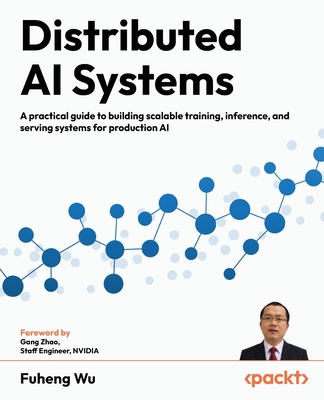
- 出版商: Packt Publishing
- 出版日期: 2026-06-29
- 售價: $1,850
- 貴賓價: 9.5 折 $1,757
- 語言: 英文
- 頁數: 558
- 裝訂: Quality Paper - also called trade paper
- ISBN: 1807301710
- ISBN-13: 9781807301712
-
相關分類:
DeepLearning
海外代購書籍(需單獨結帳)
商品描述
Learn distributed AI through hands-on experience with training frameworks, inference engines, and orchestration tools to build production-ready training, inference, and serving systems for modern large-scale AI.
Free with your book: DRM-free PDF version + access to Packt's next-gen Reader*
Key Features:
- Understand GPU hardware, high-speed interconnects, and parallelism strategies
- Hands-on exercises at the end of every chapter
- Learn distributed training with resource-optimized techniques
- Deploy high-performance inference with advanced optimization and memory management
- Build production serving stacks with job schedulers, orchestration, and observability
Book Description:
As AI models grow to billions and trillions of parameters, distributed systems are essential for training and serving them. Many resources cover fragments of this domain, but none provide a full path from distributed training to inference and production deployment. This book fills that gap with practical, production-focused examples.
It starts with GPU and memory estimation, data preparation, and an overview of GPU architecture, interconnects, and core parallelism strategies. You'll learn training techniques including data parallelism for single and multi-node setups, parameter sharding for memory-efficient scaling, and methods to reduce memory usage in large models.
The next section covers distributed inference and deployment. You'll build high-performance systems using optimized attention, caching, operator fusion, and router-based designs. You'll deploy on schedulers and container platforms with GPU-aware orchestration and assemble production stacks emphasizing reliability, scalability, and observability.
The final section covers benchmarking, performance tuning, and trends like MoE models, edge-cloud coordination, and advanced parallelism. Each chapter includes tested code and debugging guidance.
By the end, you'll be able to build distributed AI systems that scale from a single GPU to large clusters.
What You Will Learn:
- Estimate memory and compute requirements for training and inference
- Understand GPU hardware, interconnects, and parallelism strategies
- Implement distributed training with parallel and sharded techniques
- Build production inference systems with batching and memory management
- Deploy via cluster orchestration with optimized GPU scheduling
- Create production serving stacks with routing and observability
- Benchmark distributed systems using industry-standard methodologies
- Explore emerging model trends, scaling strategies, and future paths
Who this book is for:
This book is designed for ML engineers, AI researchers, and DevOps professionals who need to train or serve large AI models at scale. Platform engineers, HPC cluster administrators, and cloud architects will also find it valuable for advancing their skill sets.
A basic understanding of Python and PyTorch is required to get started. Prior experience with distributed systems, cluster schedulers, or container orchestration is helpful but not necessary - the book introduces these concepts from the ground up, beginning with resource estimation, data preparation, and hardware fundamentals.
Table of Contents
- Introduction to Modern Distributed AI
- GPU Hardware, Networking, and Parallelism Strategies
- Distributed Training with PyTorch DDP
- Scaling with Fully Sharded Data Parallel (FSDP)
- Beyond State Sharding with DeepSpeed and Megatron
- Distributed Inference and vLLM
- Cross-Request Optimization with SGLang
- Running Distributed Training with SLURM
(N.B. Please use the Read Sample option to see further chapters)
商品描述(中文翻譯)
透過實作經驗學習分散式人工智慧,使用訓練框架、推論引擎和編排工具,建立適合生產的訓練、推論和服務系統,以應對現代大規模人工智慧。
購書附贈:無DRM的PDF版本 + 存取Packt的下一代閱讀器*
主要特色:
- 了解GPU硬體、高速互連和並行策略
- 每章結尾都有實作練習
- 學習使用資源優化技術進行分散式訓練
- 使用先進的優化和記憶體管理部署高效能推論
- 建立生產服務堆疊,包含工作排程器、編排和可觀察性
書籍描述:
隨著人工智慧模型的參數數量增長到數十億和數萬億,分散式系統對於訓練和服務這些模型至關重要。許多資源涵蓋了這一領域的片段,但沒有一本書能提供從分散式訓練到推論和生產部署的完整路徑。本書填補了這一空白,提供實用且以生產為重點的範例。
本書從GPU和記憶體估算、數據準備開始,並概述GPU架構、互連和核心並行策略。您將學習訓練技術,包括單節點和多節點設置的數據並行性、用於記憶體高效擴展的參數分片,以及減少大型模型記憶體使用的方法。
接下來的部分涵蓋分散式推論和部署。您將使用優化的注意力機制、快取、運算子融合和基於路由的設計來構建高效能系統。您將在排程器和容器平台上進行部署,使用GPU感知的編排,並組裝強調可靠性、可擴展性和可觀察性的生產堆疊。
最後一部分涵蓋基準測試、性能調整以及像是MoE模型、邊緣雲協調和先進並行性等趨勢。每章都包含經過測試的代碼和除錯指導。
到最後,您將能夠構建從單個GPU擴展到大型集群的分散式人工智慧系統。
您將學到的內容:
- 估算訓練和推論的記憶體和計算需求
- 了解GPU硬體、互連和並行策略
- 實作使用並行和分片技術的分散式訓練
- 建立具有批次處理和記憶體管理的生產推論系統
- 通過集群編排進行優化的GPU排程部署
- 創建具有路由和可觀察性的生產服務堆疊
- 使用行業標準方法對分散式系統進行基準測試
- 探索新興模型趨勢、擴展策略和未來路徑
本書適合對象:
本書專為需要大規模訓練或服務大型人工智慧模型的機器學習工程師、人工智慧研究人員和DevOps專業人士設計。平台工程師、高效能計算集群管理員和雲架構師也會發現本書對提升其技能組合非常有價值。
開始之前需要對Python和PyTorch有基本了解。對分散式系統、集群排程器或容器編排的先前經驗會有幫助,但不是必需的——本書從基礎開始介紹這些概念,包括資源估算、數據準備和硬體基礎知識。
目錄
- 現代分散式人工智慧簡介
- GPU硬體、網路和並行策略
- 使用PyTorch DDP的分散式訓練
- 使用完全分片數據並行(FSDP)進行擴展
- 超越狀態分片的DeepSpeed和Megatron
- 分散式推論和vLLM
- 使用SGLang的跨請求優化
- 使用SLURM運行分散式訓練
(注意:請使用“閱讀範本”選項查看後續章節)