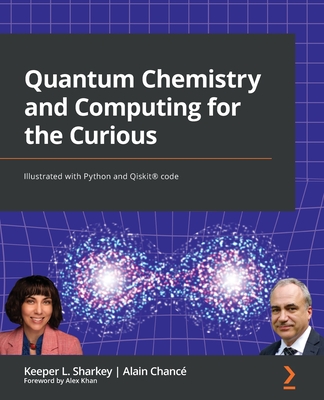
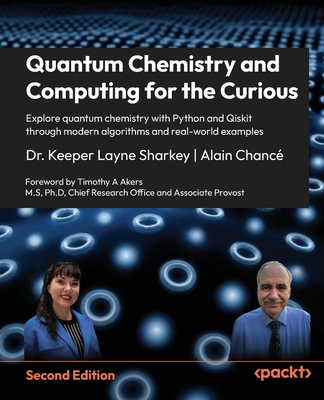
Quantum Chemistry and Computing for the Curious - Second Edition: Explore quantum chemistry with Python and Qiskit through modern algorithms and real-
暫譯: 好奇者的量子化學與計算 - 第二版:透過現代演算法與實際案例,使用 Python 和 Qiskit 探索量子化學
Sharkey, Keeper Layne, Chancé, Alain, Akers, Timothy A.
- 出版商: Packt Publishing
- 出版日期: 2026-07-28
- 售價: $1,700
- 貴賓價: 9.5 折 $1,615
- 語言: 英文
- 頁數: 492
- 裝訂: Quality Paper - also called trade paper
- ISBN: 1807304671
- ISBN-13: 9781807304676
-
相關分類:
量子 Quantum
海外代購書籍(需單獨結帳)
商品描述
Learn quantum chemistry and computing with updated Qiskit workflows, noise-aware simulations, and quantum machine learning techniques using Python, with hands-on learning, turning complex concepts into practical skills.
Key Features:
- Explore new chapters on quantum machine learning and advanced algorithms
- Apply noise-aware quantum chemistry with error mitigation techniques
- Work with updated Qiskit workflows and modern Python examples
Book Description:
Build a solid foundation in quantum chemistry and quantum computing using modern tools, updated frameworks, and practical Python examples. In its second edition, this book enhances the original with new chapters and refreshed workflows aligned with the latest advancements.
You begin with core principles of quantum mechanics, quantum information, and molecular Hamiltonians, updated to incorporate the latest Qiskit capabilities. You then implement hybrid algorithms such as VQE using improved Python workflows. New to this edition, you will explore noise aware quantum chemistry, including error mitigation techniques and optimizer behavior in realistic simulations. The book also introduces quantum machine learning for molecular prediction and a new generation of quantum algorithms for chemistry, including Quantum Phase Estimation (QPE), Quantum Imaginary Time Evolution (QITE), quantum Lanczos and subspace methods, and sampling based approaches such as Sample based Quantum Diagonalization (SQD), Sample based Krylov Quantum Diagonalization (SKQD), and SqDRIFT, which combines SKQD with a qDRIFT style randomized compilation of the Hamiltonian propagator.
By the end of this book, you will be able to model molecular systems and apply modern quantum techniques with confidence.
What You Will Learn:
- Understand quantum mechanics and molecular systems
- Build quantum circuits using Qiskit and Python
- Implement VQE for molecular energy estimation
- Apply error mitigation in noisy quantum systems
- Use optimizers for stable hybrid quantum workflows
- Develop quantum machine learning models for molecules
- Explore advanced algorithms beyond VQE
Who this book is for:
Professionals interested in chemistry and computer science at the early stages of learning or interested in a career of quantum computational chemistry and quantum computing, including advanced high school and college students. Helpful to have high school level chemistry, mathematics (algebra), and programming. An introductory level of understanding Python is sufficient to read the code presented to illustrate quantum chemistry and computing.
Table of Contents
- Introducing Quantum Concepts
- Postulates of Quantum Mechanics
- Quantum Circuit Model of Computation
- Molecular Hamiltonians
- Variational Quantum Eigensolver (VQE) Algorithm
- Noise in Quantum Computation
- QML for Molecular Prediction
- Advanced Algorithms for Chemistry
- Beyond Born-Oppenheimer
- Conclusion
- Glossary
商品描述(中文翻譯)
學習量子化學和計算,使用更新的 Qiskit 工作流程、考慮噪聲的模擬和量子機器學習技術,搭配 Python 的實作學習,將複雜的概念轉化為實用技能。
主要特色:
- 探索有關量子機器學習和先進演算法的新章節
- 應用考慮噪聲的量子化學及錯誤緩解技術
- 使用更新的 Qiskit 工作流程和現代 Python 範例
書籍描述:
使用現代工具、更新的框架和實用的 Python 範例,建立量子化學和量子計算的堅實基礎。在第二版中,本書增強了原有內容,新增章節並更新工作流程,以符合最新的進展。
您將從量子力學、量子資訊和分子哈密頓量的核心原則開始,並更新以納入最新的 Qiskit 功能。接著,您將實作混合演算法,例如使用改進的 Python 工作流程的變分量子特徵求解器 (VQE)。本版新增的內容將探索考慮噪聲的量子化學,包括錯誤緩解技術和在現實模擬中的優化器行為。本書還介紹了用於分子預測的量子機器學習以及新一代的量子化學演算法,包括量子相位估計 (QPE)、量子虛時間演化 (QITE)、量子 Lanczos 和子空間方法,以及基於取樣的方法,如基於取樣的量子對角化 (SQD)、基於取樣的 Krylov 量子對角化 (SKQD) 和 SqDRIFT,該方法將 SKQD 與 qDRIFT 風格的哈密頓量推進器隨機編譯相結合。
在本書結束時,您將能夠自信地建模分子系統並應用現代量子技術。
您將學到的內容:
- 理解量子力學和分子系統
- 使用 Qiskit 和 Python 建立量子電路
- 實作 VQE 以估算分子能量
- 在嘈雜的量子系統中應用錯誤緩解
- 使用優化器以穩定混合量子工作流程
- 為分子開發量子機器學習模型
- 探索超越 VQE 的先進演算法
本書適合對象:
對化學和計算機科學感興趣的專業人士,無論是學習初期或有意從事量子計算化學和量子計算的職業,包括高年級高中生和大學生。具備高中程度的化學、數學(代數)和程式設計知識會有所幫助。對 Python 的初步理解足以閱讀用於說明量子化學和計算的程式碼。
目錄
- 介紹量子概念
- 量子力學的公設
- 量子電路計算模型
- 分子哈密頓量
- 變分量子特徵求解器 (VQE) 演算法
- 量子計算中的噪聲
- 用於分子預測的量子機器學習 (QML)
- 化學的先進演算法
- 超越 Born-Oppenheimer
- 結論
- 詞彙表