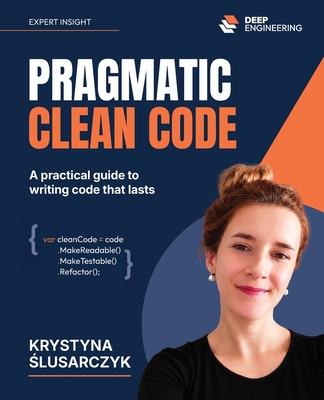
Pragmatic Clean Code: A practical guide to writing code that lasts
暫譯: 實用 Clean Code:撰寫經久耐用程式碼的實戰指南
Ślusarczyk, Krystyna
- 出版商: Packt Publishing
- 出版日期: 2026-09-30
- 售價: $1,860
- 貴賓價: 9.5 折 $1,767
- 語言: 英文
- 頁數: 308
- 裝訂: Quality Paper - also called trade paper
- ISBN: 1808493796
- ISBN-13: 9781808493799
-
相關分類:
Refactoring、Object-oriented、Unit Test 單元測試
海外代購書籍(需單獨結帳)
相關主題

商品描述
Write cleaner, easier-to-maintain code by learning practical refactoring techniques for names, functions, classes, dependencies, and tests
Key Features:
- Write readable, well-structured code that is easy to modify.
- Apply SOLID principles through practical examples.
- Recognize code smells and know when to refactor.
- Turn messy code into maintainable solutions through step-by-step case studies.
- Print or Kindle purchase includes a free PDF eBook.
Book Description:
Most advice about code quality stops at the surface. Use good names. Keep methods short. This book goes further by explaining why clean code principles exist, what they achieve, and how to apply them with practical judgment.
You'll begin with naming and method design before moving into classes and the SOLID principles as tools for everyday design decisions. You'll then explore how coupling, cohesion, reuse, inheritance, and composition affect how easily a system can evolve.
The book also shows why well-designed code tends to be testable code and how dependency injection, unit tests, and mocks make changes safer. Formatting, comments, and other clean-code practices are considered in the situations where they affect maintainability.
Step-by-step refactoring case studies show not only what cleaner code looks like, but why each design decision is made. Although the examples use C#, the principles apply well beyond it, so developers working in other languages will find them useful too.
Written by software developer and programming instructor Krystyna Ślusarczyk, this book emphasizes practical judgment over memorized rules. By the end, you'll be able to identify maintainability problems and refactor code into software that is easier to understand, test, and change.
What You Will Learn:
- Choose clear, expressive, and consistent names
- Design focused functions with effective signatures
- Apply SOLID principles to everyday design decisions
- Reduce coupling between classes and improve cohesion within them
- Organize classes and projects so the codebase is easy to navigate
- Write readable unit tests and improve testability
- Refactor messy C# code to make it readable, testable, and easy to extend
Who this book is for:
This book is for developers who want to write code that is easier to read, modify, and maintain. It is particularly useful for anyone working in messy or legacy codebases who want a systematic approach to improving them, junior developers looking to build strong professional coding habits, and seniors who want to sharpen their skills and lead by example during code reviews. A basic understanding of programming and object-oriented concepts is recommended.
Table of Contents
Understanding clean code
Meaningful names
Writing better methods
Formatting code
Applying the Single Responsibility Principle
Applying the Open-Closed Principle
Applying the Liskov Substitution Principle
Applying the Interface Segregation Principle
Applying the Dependency Inversion Principle
Static methods and dependencies
Designing smaller classes
Organizing classes and projects
Balancing coupling, cohesion, and reuse
Using comments effectively
Writing testable code and clean tests
商品描述(中文翻譯)
透過學習適用於命名、函式、類別、相依性與測試的實用重構技巧,撰寫更乾淨、更容易維護的程式碼
主要特色:
- 撰寫易於閱讀、結構良好且容易修改的程式碼。
- 透過實際範例應用 SOLID 原則。
- 辨識程式碼異味(code smells),並了解何時需要重構。
- 透過逐步案例研究,將雜亂的程式碼轉換成可維護的解決方案。
- 購買紙本書或 Kindle 版本,即免費附贈 PDF 電子書。
書籍簡介:
大多數關於程式碼品質的建議都停留在表面:使用良好的命名、讓方法保持精簡。本書更進一步說明乾淨程式碼原則為何存在、能達成什麼目標,以及如何運用實務判斷加以實踐。
你將從命名與方法設計開始,接著學習如何將類別與 SOLID 原則作為日常設計決策的工具。之後,你會探討耦合、凝聚力、重複使用、繼承與組合,如何影響系統的演進難易度。
本書也會說明,為什麼設計良好的程式碼通常也更容易測試,以及相依性注入、單元測試與 mock 如何讓程式碼變更更加安全。格式設定、註解及其他乾淨程式碼實務,則會在它們確實影響可維護性的情境中加以討論。
逐步重構案例研究不僅展示更乾淨的程式碼看起來是什麼樣子,也說明每項設計決策背後的原因。雖然範例使用 C#,但這些原則並不侷限於 C#,使用其他語言的開發者也能從中獲益。
本書由軟體開發者暨程式設計講師 Krystyna Ślusarczyk 撰寫,強調實務判斷,而非死記規則。讀完本書後,你將能夠辨識可維護性問題,並將程式碼重構成更容易理解、測試與修改的軟體。
你將學會:
- 選擇清楚、具表達力且一致的命名
- 設計職責明確且簽章有效的函式
- 將 SOLID 原則應用於日常設計決策
- 降低類別之間的耦合,並提升類別內部的凝聚力
- 組織類別與專案,讓程式碼庫更容易瀏覽
- 撰寫易於閱讀的單元測試,並提升可測試性
- 重構雜亂的 C# 程式碼,使其更易讀、可測試且容易擴充
適合讀者:
本書適合希望撰寫更容易閱讀、修改與維護之程式碼的開發者。對於在雜亂或舊有程式碼庫中工作、希望採用系統化方法加以改善的人員,本書尤其實用;對於想建立良好專業程式設計習慣的初階開發者,以及希望磨練技能並在程式碼審查中以身作則的資深開發者,本書同樣非常適合。建議讀者具備程式設計與物件導向概念的基本理解。
目錄:
理解乾淨程式碼
具意義的命名
撰寫更好的方法
程式碼格式設定
應用單一職責原則
應用開放封閉原則
應用 Liskov 替換原則
應用介面隔離原則
應用相依性反轉原則
靜態方法與相依性
設計更小型的類別
組織類別與專案
平衡耦合、凝聚力與重複使用
有效使用註解
撰寫可測試的程式碼與乾淨的測試