Mathematics of Machine Learning: Master linear algebra, calculus, and probability for machine learning (Paperback)
暫譯: 機器學習的數學:掌握線性代數、微積分和機率以應用於機器學習 (平裝本)
Danka, Tivadar, Valdarrama, Santiago

- 出版商: Packt Publishing
- 出版日期: 2025-05-30
- 售價: $2,170
- 貴賓價: 9.5 折 $2,061
- 語言: 英文
- 頁數: 730
- 裝訂: Quality Paper - also called trade paper
- ISBN: 1837027870
- ISBN-13: 9781837027873
-
相關分類:
Python
立即出貨 (庫存=1)
買這商品的人也買了...
-
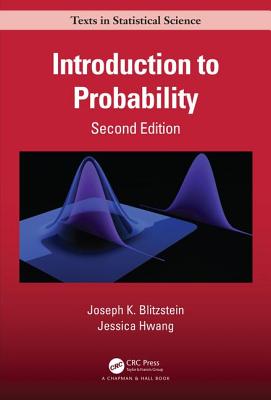 Introduction to Probability, 2/e (Hardcover)
$1,750$1,715 -
 機器學習的統計基礎 : 深度學習背後的核心技術
$680$612 -
 $2,520R for Data Science: Import, Tidy, Transform, Visualize, and Model Data, 2/e (Paperback)
 -
 Veridical Data Science: The Practice of Responsible Data Analysis and Decision Making (Hardcover)
$2,160$2,116 -
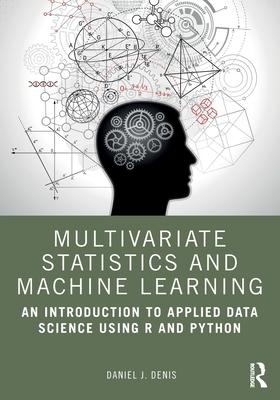 Multivariate Statistics and Machine Learning: An Introduction to Applied Data Science Using R and Python (Paperback)
$2,700$2,565
相關主題


商品描述
Build a solid foundation in the core math behind machine learning algorithms with this comprehensive guide to linear algebra, calculus, and probability, explained through practical Python examples
Purchase of the print or Kindle book includes a free PDF eBook
Key Features:
- Master linear algebra, calculus, and probability theory for ML
- Bridge the gap between theory and real-world applications
- Learn Python implementations of core mathematical concepts
- Purchase of the print or Kindle book includes a free PDF eBook
Book Description:
Mathematics of Machine Learning provides a rigorous yet accessible introduction to the mathematical underpinnings of machine learning, designed for engineers, developers, and data scientists ready to elevate their technical expertise. With this book, you'll explore the core disciplines of linear algebra, calculus, and probability theory essential for mastering advanced machine learning concepts.
PhD mathematician turned ML engineer Tivadar Danka-known for his intuitive teaching style that has attracted 100k+ followers-guides you through complex concepts with clarity, providing the structured guidance you need to deepen your theoretical knowledge and enhance your ability to solve complex machine learning problems. Balancing theory with application, this book offers clear explanations of mathematical constructs and their direct relevance to machine learning tasks. Through practical Python examples, you'll learn to implement and use these ideas in real-world scenarios, such as training machine learning models with gradient descent or working with vectors, matrices, and tensors.
By the end of this book, you'll have gained the confidence to engage with advanced machine learning literature and tailor algorithms to meet specific project requirements.
What You Will Learn:
- Understand core concepts of linear algebra, including matrices, eigenvalues, and decompositions
- Grasp fundamental principles of calculus, including differentiation and integration
- Explore advanced topics in multivariable calculus for optimization in high dimensions
- Master essential probability concepts like distributions, Bayes' theorem, and entropy
- Bring mathematical ideas to life through Python-based implementations
Who this book is for:
This book is for aspiring machine learning engineers, data scientists, software developers, and researchers who want to gain a deeper understanding of the mathematics that drives machine learning. A foundational understanding of algebra and Python, and basic familiarity with machine learning tools are recommended.
Table of Contents
- Vectors and vector spaces
- The geometric structure of vector spaces
- Linear algebra in practice spaces: measuring distances
- Linear transformations
- Matrices and equations
- Eigenvalues and eigenvectors
- Matrix factorizations
- Matrices and graphs
- Functions
- Numbers, sequences, and series
- Topology, limits, and continuity
- Differentiation
- Optimization
- Integration
- Multivariable functions
- Derivatives and gradients
- Optimization in multiple variables
- What is probability?
- Random variables and distributions
- The expected value
- The maximum likelihood estimation
- It's just logic
- The structure of mathematics
- Basics of set theory
- Complex numbers
商品描述(中文翻譯)
透過這本全面的指南,建立機器學習演算法背後核心數學的堅實基礎,內容涵蓋線性代數、微積分和機率,並透過實用的 Python 範例進行說明
購買印刷版或 Kindle 版書籍可獲得免費 PDF 電子書
主要特色:
- 精通機器學習所需的線性代數、微積分和機率論
- 橋接理論與實際應用之間的鴻溝
- 學習核心數學概念的 Python 實作
- 購買印刷版或 Kindle 版書籍可獲得免費 PDF 電子書
書籍描述:
《機器學習的數學》提供了一個嚴謹但易於理解的機器學習數學基礎介紹,專為準備提升技術專業知識的工程師、開發者和數據科學家設計。透過這本書,您將探索線性代數、微積分和機率論這些核心學科,這些學科對於掌握進階機器學習概念至關重要。
轉型為機器學習工程師的數學博士 Tivadar Danka,以其直觀的教學風格吸引了超過 10 萬名追隨者,他將以清晰的方式引導您理解複雜概念,提供您深化理論知識和增強解決複雜機器學習問題能力所需的結構性指導。這本書在理論與應用之間取得平衡,清楚解釋數學構造及其與機器學習任務的直接相關性。透過實用的 Python 範例,您將學會在現實場景中實作和使用這些概念,例如使用梯度下降訓練機器學習模型或處理向量、矩陣和張量。
在本書結束時,您將獲得與進階機器學習文獻互動的信心,並能根據特定項目需求調整演算法。
您將學到的內容:
- 理解線性代數的核心概念,包括矩陣、特徵值和分解
- 掌握微積分的基本原則,包括微分和積分
- 探索多變數微積分中的進階主題,以進行高維度的優化
- 精通基本的機率概念,如分佈、貝葉斯定理和熵
- 透過基於 Python 的實作使數學概念具體化
本書適合對象:
本書適合有志成為機器學習工程師、數據科學家、軟體開發者和研究人員,想要深入了解驅動機器學習的數學。建議具備代數和 Python 的基礎知識,以及對機器學習工具的基本熟悉。
目錄
- 向量與向量空間
- 向量空間的幾何結構
- 實踐中的線性代數:測量距離
- 線性變換
- 矩陣與方程式
- 特徵值與特徵向量
- 矩陣分解
- 矩陣與圖形
- 函數
- 數字、序列與級數
- 拓撲、極限與連續性
- 微分
- 優化
- 積分
- 多變數函數
- 導數與梯度
- 多變數的優化
- 什麼是機率?
- 隨機變數與分佈
- 期望值
- 最大似然估計
- 這只是邏輯
- 數學的結構
- 集合論基礎
- 複數