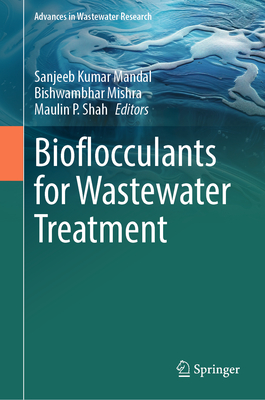
Andean Herpetofauna: Explorations of Diversity, Ecology, and Conservation
暫譯: 安第斯爬蟲兩棲類:多樣性、生態與保育的探索
Urbina-Cardona, J. Nicolás, Navas, Carlos A., Catenazzi, Alessandro
- 出版商: Springer
- 出版日期: 2025-11-22
- 售價: $8,810
- 貴賓價: 9.5 折 $8,369
- 語言: 英文
- 頁數: 361
- 裝訂: Hardcover - also called cloth, retail trade, or trade
- ISBN: 3032000734
- ISBN-13: 9783032000736
海外代購書籍(需單獨結帳)
商品描述
作者簡介
J. Nicolás Urbina-Cardona is an ecologist from the Pontificia Universidad Javeriana in Colombia who obtained his Ph.D. in Biological Sciences from UNAM, Mexico. His research focuses on how human-induced landscape alterations affect neotropical amphibian and reptile assemblages, integrating approaches from community ecology, functional ecology, and landscape ecology. Early in his career, he worked with a conservation NGO contributing to biodiversity conservation public policy, including biodiversity offsets and watershed management plans. For the past 14 years, Dr. Urbina-Cardona has served as associate professor at the Departamento de Ecología y Territorio, Facultad de Estudios Ambientales y Rurales of the Pontificia Universidad Javeriana, where he teaches biodiversity conservation and herpetology. He held the position of regional chair for Colombia of the IUCN Amphibian Specialist Group for a decade, coordinating extinction risk assessments for over 800 species and facilitating their adoption by the Colombian government. He also worked toward consolidating the National Program for the Conservation of Amphibians with the Ministry of Environment and supported updates to the IUCN´s Global Amphibian Conservation Action Plan. Nicolás has published more than 120 scientific articles and book chapters, co-advised 45 Ph.D. and Master's students, and serves as associate editor for three scientific journals in conservation biology. Recently, he has expanded his interests to include scientific communication and outreach.
Carlos A. Navas is a biologist from Universidad de los Andes, Colombia, institution where he also obtained a master's degree. Since these early steps, he has engaged in researching amphibian adaptation to high elevation, also a central topic in his Ph. D. thesis at University of Connecticut. He moved to Brazil, originally to occupy a postdoctoral position at the University of São Paulo and was later hired at the Department of Physiology at the Biosciences Institute. In Brazil Carlos expanded research interests to other models and systems, including arthropods and reptiles, mostly developing projects at the disciplinary convergence among behaviour, physiology, and ecology. Carlos has published about 200 scientific texts including peer reviewed articles, natural history notes, and book chapters, and has advised or co-advised about 25 doctoral students, nationally and internationally. He has occupied administrative positions at his institution, mainly in the context of graduate studies and outreach, and has composed the editorial boards of several journals in the areas of herpetology, physiology, and general science. Carlos maintains his interest in Physiological Ecology, but currently explores other aspects of science, including the perks and pains of interdisciplinary, and the communication of science to young audiences.
Alessandro Catenazzi's research interests are the systematics and conservation of Neotropical amphibians and reptiles and the ecological dimensions of biodiversity. For the first line of research, he works primarily in the Andes and the Amazon. He collaborates with colleagues in museums and other research institutions in describing new species and developing phylogenies of frogs from the mega-diverse eastern slopes of the Andes. He is interested in using phylogenies as a road map to compare physiological traits among species. He is also studying thermal preferences, tolerance to heat, and the influence of temperature on physiological functions, to understand how climate warming will affect these animals. Finally, a major theme of his current research is exploring fungal disease's effects on amphibians' ecology, a group experiencing staggering biodiversity losses worldwide. After documenting the collapse of a species-rich amphibian assemblage, he is interested in developing strategies to mitigate the impact of the fungal disease chytridiomycosis on surviving species.
Carla Piantoni earned her Bachelor's degree in Biological Sciences from the Universidad Nacional del Comahue in Sa n Carlos de Bariloche, Argentina, and her Ph.D. in Sciences at the University of São Paulo, Brazil. Between degrees, she worked as a Research Assistant at the Smithsonian Institution's National Museum of Natural History, where her herpetological research overlapped with studies on marine sponges under Dr. Klaus Rützler, Research Zoologist and Curator of Porifera. During this period, she also edited the Annual Reports of the Caribbean Coral Reef Ecosystem Program (CCRE) and co-authored several publications on the ecology and systematics of marine sponges and other invertebrates. Throughout the years, her initial interest in the life history and thermal ecology of lizards expanded to include experimental approaches in behavioral ecology and evolutionary ecophysiology of ectothermic animals, culminating in research on how individual variability in behavior and eco-physiological preferences may shape responses to novel environments. Currently, Dr. Piantoni is based at the University of Hawaiʻi at Mānoa, where she balances her research with mentoring graduate students, teaching, and coordinating first-year biology labs in the School of Life Sciences. Guiding young students in developing critical thinking has proven to be a significant responsibility, but an exceptionally fulfilling aspect of her academic role.
作者簡介(中文翻譯)
J. Nicolás Urbina-Cardona 是來自哥倫比亞的波士頓大學(Pontificia Universidad Javeriana)生態學家,他在墨西哥的國立自治大學(UNAM)獲得生物科學博士學位。他的研究專注於人類引起的景觀變化如何影響新熱帶的兩棲類和爬行類動物群落,並整合社區生態學、功能生態學和景觀生態學的研究方法。在職業生涯的早期,他曾在一個保育非政府組織工作,為生物多樣性保護公共政策做出貢獻,包括生物多樣性補償和流域管理計劃。在過去的14年中,Urbina-Cardona 博士擔任波士頓大學環境與鄉村研究學院(Facultad de Estudios Ambientales y Rurales)生態與領土系的副教授,教授生物多樣性保護和爬蟲類學。他曾擔任國際自然保護聯盟(IUCN)兩棲類專家小組的哥倫比亞區域主席十年,協調超過800種物種的滅絕風險評估,並促進其被哥倫比亞政府採納。他還致力於與環境部門整合全國兩棲類保護計劃,並支持更新IUCN的全球兩棲類保護行動計劃。Nicolás已發表超過120篇科學文章和書籍章節,指導或共同指導45名博士和碩士生,並擔任三本保育生物學科學期刊的副編輯。最近,他擴展了對科學傳播和外展的興趣。
Carlos A. Navas 是來自哥倫比亞安第斯大學(Universidad de los Andes)的生物學家,並在該校獲得碩士學位。自這些早期步驟以來,他一直從事兩棲類在高海拔環境中的適應研究,這也是他在康涅狄格大學(University of Connecticut)博士論文的核心主題。他移居巴西,最初是擔任聖保羅大學(University of São Paulo)的博士後職位,後來被聘為生物科學研究所(Biosciences Institute)生理學系的教職。在巴西,Carlos 擴展了研究興趣,涵蓋其他模型和系統,包括節肢動物和爬行類動物,主要在行為、生理學和生態學的學科交匯處開展項目。Carlos 已發表約200篇科學文本,包括同行評審的文章、自然歷史筆記和書籍章節,並指導或共同指導約25名國內外博士生。他在其機構擔任過行政職位,主要涉及研究生學習和外展,並參與多本爬蟲類學、生理學和一般科學領域期刊的編輯委員會。Carlos 對生理生態學保持興趣,但目前探索科學的其他方面,包括跨學科的優勢與挑戰,以及向年輕觀眾傳達科學的方式。
Alessandro Catenazzi 的研究興趣包括新熱帶兩棲類和爬行類的系統學與保護,以及生物多樣性的生態維度。在第一條研究線上,他主要在安第斯山脈和亞馬遜地區工作。他與博物館和其他研究機構的同事合作,描述新物種並開發安第斯東坡青蛙的系統發生樹。他對使用系統發生樹作為比較物種生理特徵的路線圖感興趣。他還研究熱偏好、耐熱性以及溫度對生理功能的影響,以了解氣候變暖將如何影響這些動物。最後,他目前研究的一個主要主題是探討真菌疾病對兩棲類生態的影響,這是一個在全球範圍內經歷驚人生物多樣性損失的群體。在記錄一個物種豐富的兩棲類群落崩潰後,他有興趣開發策略以減輕真菌疾病(如壞死性真菌病)對存活物種的影響。
Carla Piantoni 在阿根廷聖卡洛斯巴里洛切的國立科馬胡埃大學(Universidad Nacional del Comahue)獲得生物科學學士學位,並在巴西聖保羅大學獲得科學博士學位。在獲得學位之間,她曾在史密森學會國家自然歷史博物館擔任研究助理,期間她的爬蟲類研究與克勞斯·魯茨勒博士(Dr. Klaus Rützler)下的海綿研究重疊。她在此期間還編輯了加勒比珊瑚礁生態系統計劃(CCRE)的年報,並共同撰寫了幾篇有關海綿和其他無脊椎動物的生態學和系統學的出版物。多年來,她對蜥蜴的生活史和熱生態的初步興趣擴展到行為生態學和變態生理學的實驗方法,最終研究個體行為和生態生理偏好的變異性如何影響對新環境的反應。目前,Piantoni 博士在夏威夷大學馬諾阿校區(University of Hawai'i at Mānoa)工作,平衡她的研究、指導研究生、教學以及協調生命科學學院的第一年生物學實驗室。指導年輕學生發展批判性思維被證明是一項重要的責任,但也是她學術角色中極具成就感的方面。