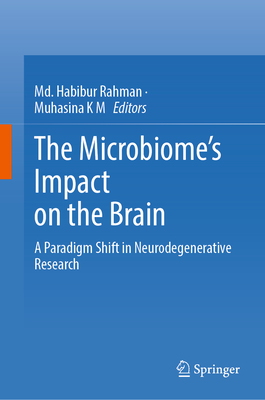
Tools of the Scribe: How Writing Systems, Technology, and Human Factors Interact to Affect the Act of Writing
暫譯: 抄寫者的工具:書寫系統、技術與人因如何互動影響書寫行為
Roark, Brian, Sproat, Richard, Yoon, Su-Youn
- 出版商: Springer
- 出版日期: 2026-01-03
- 售價: $1,920
- 貴賓價: 9.5 折 $1,824
- 語言: 英文
- 頁數: 274
- 裝訂: Hardcover - also called cloth, retail trade, or trade
- ISBN: 3032008301
- ISBN-13: 9783032008305
-
相關分類:
Natural Language Processing
海外代購書籍(需單獨結帳)
相關主題


商品描述
People all around the world now carry out nearly synchronous conversations using text. This puts a premium on efficient writing, something that is easier in some writing systems than others and for some individuals than for others. Fast production of text, however, is not a new problem, and has its roots in typesetting, stenography and assistive technologies. Some of these areas of technological innovation were hugely successful in the West, but were less successful in other parts of the world, such as Asia, where differences in scripts and writing systems made simple solutions to fast text production elusive. Many of these same problems remain today, but the existence of very large text corpora and the advances in AI that this has enabled now permit the use of natural language technology that makes text production faster and more accurate.
This book presents writing technology past and present with a broad focus, discussing both widely used technology as well as technology serving communities of writers with special needs. For example, text is the principal communication modality for many with severe motor disabilities such as cerebral palsy: How does one type if one cannot easily or reliably point to a specific key on a keyboard? Cross cutting the discussion are several themes: How does one's language and script influence the technology and its use? How does the technology interact with the user's motor abilities? How does text input differ when one is writing in one's own language, writing in several languages, or writing in a second language in which one may not be fully competent? And if one's immediate goal is not efficiency but learning, does technology that aids efficient writing also support efficient learning?
This book is the first treatment of writing technology that considers the process of writing from such a broad range of perspectives.
商品描述(中文翻譯)
人們現在在全球範圍內幾乎可以進行同步的文字對話。這使得高效寫作變得至關重要,而這在某些書寫系統中比其他系統更容易,對某些個體來說也比對其他個體更容易。然而,快速產生文本並不是一個新問題,它的根源可以追溯到排版、速記和輔助技術。其中一些技術創新在西方取得了巨大的成功,但在世界其他地方,如亞洲,由於字母和書寫系統的差異,使得快速文本產生的簡單解決方案變得難以實現。許多相同的問題至今仍然存在,但非常龐大的文本語料庫的存在以及這促成的人工智慧進步,現在使得自然語言技術的使用成為可能,從而使文本產生變得更快且更準確。
本書以廣泛的視角介紹過去和現在的寫作技術,討論了廣泛使用的技術以及服務於有特殊需求的寫作者社群的技術。例如,對於許多有嚴重運動障礙(如腦性麻痺)的人來說,文本是主要的交流方式:如果一個人無法輕易或可靠地指向鍵盤上的特定鍵,那麼他們該如何打字?討論中交織著幾個主題:一個人的語言和書寫系統如何影響技術及其使用?技術如何與用戶的運動能力互動?當一個人用自己的語言、用多種語言或用一種可能不完全熟練的第二語言寫作時,文本輸入有何不同?如果一個人的直接目標不是效率而是學習,那麼幫助高效寫作的技術是否也支持高效學習?
本書是第一部從如此廣泛的視角考慮寫作過程的寫作技術著作。
作者簡介
Brian Roark is a research scientist at Google. He received his PhD from Brown University in 2001, and joined the Speech Algorithms Department of AT&T Labs - Research, where his research focused on syntactic processing techniques and statistical language modeling approaches. In 2004, he joined the Center for Spoken Language Understanding of the Oregon Health & Science University, where he expanded his research program to include biomedical applications such as augmentative and alternative communication, brain computer interfaces and automated neuropsychological assessment. He was PI on numerous NSF, NIH and DARPA grants, and published more than 50 papers in journals and major conferences, receiving several best paper awards. He joined Google as a research scientist in 2013, where he continues to research problems in speech, NLP and text entry on mobile devices.
Richard Sproat is a research scientist at Sakana.ai, working on artificial intelligence in language processing, agentic systems and image understanding. He received his PhD in Linguistics from MIT in 1985. He has published in various areas of linguistics and computational linguistics, and he has a particular interest in writing and symbol systems. His prior relevant books in this area include A Computational Theory of Writing Systems (2000), Language, Technology, and Society (2010) and Symbols: An Evolutionary History from the Stone Age to the Future (2023). He was an invited speaker at various international venues, such as the "Signs of Writing" conference (Chicago, 2014; Beijing, 2015), and a keynote speaker at "Grapholinguistics in the 21st Century" (Paris, 2022). Contributor to the Routledge Handbook of the English Writing System (2016), he wrote a chapter (with Amalia Gnanadesikan) on writing systems in the Oxford Bibliographies (2018), and a chapter on writing systems to the Oxford History of Phonology (2022). He is on the editorial board of Written Language and Literacy.
Su-Youn Yoon is a manager of the automated scoring team at EduLab, Inc., Japan. She received her
PhD in Linguistics from University of Illinois at Urbana Champaign in 2009 and joined the NLP and
Speech group at Educational Testing Service (ETS). Her early research centered on scoring non-native speakers' oral proficiency. In the automated speech scoring field, grammar and vocabulary scoring presented notable challenges. Yoon, as one of the pioneering researchers, addressed this by leveraging shallow parsing and vocabulary profiling. Yoon has actively contributed to the improvement of the assessment landscape, particularly in test security. Her research delved into potential risks associated with automated scoring systems, such as test takers' attempts to manipulate the system. In 2019, she left ETS and joined EduLab, Inc, expanding her focus on automated learning solutions for non-native writers. She is developing an automated system to identify priority issues of language learners, offering personalized and actionable feedback. She has published more than 50 papers in journals and major conferences, and authored chapters in Automated Speaking Assessment: Using Language Technologies to Score Spontaneous Speech, published by Routledge (2020).
作者簡介(中文翻譯)
Brian Roark 是 Google 的研究科學家。他於 2001 年在布朗大學獲得博士學位,隨後加入 AT&T Labs - Research 的語音演算法部門,專注於句法處理技術和統計語言模型方法的研究。2004 年,他加入俄勒岡健康與科學大學的口語語言理解中心,擴展了他的研究計畫,涵蓋生物醫學應用,如輔助和替代溝通、腦機介面及自動化神經心理評估。他是多項 NSF、NIH 和 DARPA 資助計畫的主要研究者,並在期刊和主要會議上發表了超過 50 篇論文,獲得多個最佳論文獎。2013 年,他以研究科學家的身份加入 Google,繼續研究語音、自然語言處理 (NLP) 和行動裝置上的文字輸入問題。
Richard Sproat 是 Sakana.ai 的研究科學家,專注於語言處理中的人工智慧、代理系統和圖像理解。他於 1985 年在麻省理工學院獲得語言學博士學位。他在語言學和計算語言學的各個領域發表過論文,特別對書寫和符號系統有濃厚的興趣。他在這一領域的相關著作包括 A Computational Theory of Writing Systems (2000)、Language, Technology, and Society (2010) 和 Symbols: An Evolutionary History from the Stone Age to the Future (2023)。他曾在多個國際會議上擔任邀請演講者,如「書寫的跡象」會議(芝加哥,2014;北京,2015),以及「21 世紀的圖形語言學」的主題演講者(巴黎,2022)。他是 Routledge Handbook of the English Writing System (2016) 的貢獻者,與 Amalia Gnanadesikan 共同撰寫了 Oxford Bibliographies (2018) 中有關書寫系統的章節,並在 Oxford History of Phonology (2022) 中撰寫了有關書寫系統的章節。他是 Written Language and Literacy 的編輯委員會成員。
Su-Youn Yoon 是日本 EduLab, Inc. 自動評分團隊的經理。她於 2009 年在伊利諾伊大學香檳分校獲得語言學博士學位,隨後加入教育測試服務 (ETS) 的 NLP 和語音小組。她早期的研究集中在評分非母語者的口語能力。在自動語音評分領域,語法和詞彙評分面臨顯著挑戰。Yoon 作為先驅研究者之一,通過利用淺層解析和詞彙分析來解決這些問題。Yoon 積極貢獻於評估領域的改進,特別是在考試安全性方面。她的研究深入探討了與自動評分系統相關的潛在風險,例如考生試圖操縱系統的行為。2019 年,她離開 ETS 加入 EduLab, Inc.,擴大了對非母語寫作者自動學習解決方案的關注。她正在開發一個自動化系統,以識別語言學習者的優先問題,提供個性化和可行的反饋。她在期刊和主要會議上發表了超過 50 篇論文,並在 Automated Speaking Assessment: Using Language Technologies to Score Spontaneous Speech, published by Routledge (2020) 中撰寫了章節。