商品描述
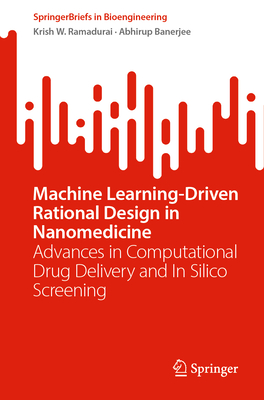
This book explores how machine learning is transforming nanomedicine, with a focus on the rational design of lipid nanoparticles (LNPs) for mRNA-based therapies. Moving beyond traditional, labor-intensive workflows, it highlights AI-driven methods--such as supervised learning, data augmentation, and deep learning--for predictive modeling and in silico screening.
Key topics include chemoinformatics, molecular fingerprinting, and strategies to optimize LNP transfection efficiency and biocompatibility. Real-world applications, including mRNA vaccines and personalized nanomedicines, illustrate the convergence of computational biology and pharmaceutical engineering. It also addresses the ethical considerations and regulatory challenges surrounding AI-driven drug development. This book is intended for researchers, pharmaceutical scientists, computational biologists, and professionals in the biotechnology industry who seek to leverage AI-driven methodologies in nanomedicine development.
商品描述(中文翻譯)
本書探討機器學習如何改變奈米醫學,重點在於針對基於mRNA的療法理性設計脂質奈米顆粒(LNPs)。本書超越傳統的勞動密集型工作流程,強調以人工智慧驅動的方法,例如監督式學習、數據增強和深度學習,用於預測建模和計算機篩選。
主要主題包括化學資訊學、分子指紋識別,以及優化LNP轉染效率和生物相容性的策略。實際應用案例,包括mRNA疫苗和個性化奈米醫藥,展示了計算生物學與藥物工程的融合。本書還探討了圍繞人工智慧驅動的藥物開發的倫理考量和監管挑戰。本書旨在為研究人員、藥物科學家、計算生物學家以及生物技術行業的專業人士提供幫助,幫助他們在奈米醫學開發中利用人工智慧驅動的方法論。
作者簡介
Krish W. Ramadurai is a DPhil student in the Department of Engineering Science at the University of Oxford, a member of St. Hilda's College, and a member of the Multimodal Medical Data Integration & Analysis (MultiMeDIA) Lab at the Institute of Biomedical Engineering (IBME). His research focuses on developing multi-modal AI frameworks for drug development, leveraging hybrid mechanistic-AI models and functional modeling approaches to enhance the translatability and efficacy of next-generation therapeutics. Krish is also a Partner at AIX Ventures, where he oversees technical diligence, deal sourcing, and portfolio operations across the firm's artificial intelligence, healthcare, and life sciences practices. He has led and managed over 45 early- and growth-stage investments, generating a cumulative portfolio enterprise value exceeding $20 billion across multiple top-decile performing funds. Krish has directly supported over 25 pioneering scientific advancements, including the world's first AI-designed drug to enter human clinical trials and the first therapeutic discovered using a 3D-bioprinted tissue model. Additionally, he is a Harvard- and Oxford-trained scientist and biomolecular engineer, and a former researcher at Harvard University and MIT. At Harvard's Belfer Center for Science and International Affairs and the Taubman Center for State and Local Government, he collaborated closely with former United States Secretary of Defense, Dr. Ash Carter, and Nobel Laureate Economist Dr. Michael Kremer, notably contributing to USAID's Development Innovation Ventures Fund. Krish has authored several books on applied engineering and medicine featured by Barnes & Noble, the National Institutes of Health, and leading university libraries worldwide. Krish has served as chairman, director, and board member for over a dozen leading AI companies. He has advised numerous initiatives, including Nucleate, the Defense Innovation Unit (DIU), and the Defense Advanced Research Projects Agency (DARPA). His thought leadership has been featured in leading global media outlets, including The Wall Street Journal, Venture Capital Journal, Yahoo Finance, TechCrunch, Business Insider, Axios, the World Economic Forum, and Nikkei Asia. Abhirup Banerjee is a Royal Society University Research Fellow and Principal Investigator at the Institute of Biomedical Engineering, Department of Engineering Science, University of Oxford. His research lies at the intersection of cardiovascular science, artificial intelligence, and computational modelling, with a focus on digital twins, geometric machine learning, and multimodal data integration for cardiac diagnostics and interventions. He leads the Multimodal Medical Data Integration & Analysis (MultiMeDIA) Lab, where his team develops personalised, predictive models of cardiac anatomy and function using large-scale imaging and physiological datasets. A key aspect of his work involves reconstructing patient-specific 3D/4D cardiac structures from coronary angiography, cardiac MRI, and ECG. His AI-driven pipelines for coronary reconstruction, infarction modelling, and atrial fibrillation mapping are designed for real-time clinical use and have been patented in collaboration with Oxford University Innovation. Dr Banerjee's approach to cardiovascular science is rooted in the application of advanced computational methodologies, including variational autoencoders, point cloud networks, graph-based attention models, and statistical shape analysis. His work exemplifies a commitment to interdisciplinary innovation, translating cutting-edge algorithms into clinically meaningful tools. He has authored over 80 peer-reviewed publications and serves on the Editorial boards of several international journals. His research has been widely presented at leading scientific meetings, contributing to the advancement of data-driven approaches in cardiovascular medicine. He is also actively engaged in public outreach, regularly participating in science exhibitions, open days, and community engagement events to promote awareness of biomedical engineering and digital health.
作者簡介(中文翻譯)
Krish W. Ramadurai 是牛津大學工程科學系的 DPhil 學生,隸屬於聖希爾達學院,並且是生物醫學工程研究所 (IBME) 的多模態醫療數據整合與分析 (MultiMeDIA) 實驗室的成員。他的研究專注於開發多模態人工智慧框架以促進藥物開發,利用混合機制-人工智慧模型和功能建模方法來增強下一代治療藥物的可轉化性和療效。Krish 同時也是 AIX Ventures 的合夥人,負責該公司在人工智慧、醫療保健和生命科學領域的技術盡職調查、交易來源和投資組合運營。他已經主導和管理超過 45 項早期和成長階段的投資,累計投資組合企業價值超過 200 億美元,涵蓋多個表現優異的基金。Krish 直接支持了超過 25 項開創性的科學進展,包括全球首個進入人體臨床試驗的人工智慧設計藥物,以及首個使用 3D 生物列印組織模型發現的治療藥物。此外,他是一位受過哈佛大學和牛津大學訓練的科學家和生物分子工程師,曾在哈佛大學和麻省理工學院擔任研究員。在哈佛的貝爾法中心和陶布曼州及地方政府中心,他與美國前國防部長阿什·卡特博士及諾貝爾經濟學獎得主邁克爾·克雷默博士密切合作,顯著貢獻於美國國際開發署的發展創新風險基金。Krish 已經撰寫了幾本應用工程和醫學的書籍,並在巴恩斯與諾布爾、國家衛生研究院及全球領先的大學圖書館中展示。他曾擔任十多家領先人工智慧公司的主席、董事和董事會成員,並為多個倡議提供建議,包括 Nucleate、國防創新單位 (DIU) 和國防高級研究計劃局 (DARPA)。他的思想領導力曾在《華爾街日報》、《風險投資期刊》、《雅虎財經》、《TechCrunch》、《商業內幕》、《Axios》、《世界經濟論壇》和《日經亞洲》等全球主要媒體上報導。 Abhirup Banerjee 是皇家學會大學研究員及牛津大學工程科學系生物醫學工程研究所的首席研究員。他的研究位於心血管科學、人工智慧和計算建模的交叉點,專注於數位雙胞胎、幾何機器學習和多模態數據整合,以進行心臟診斷和介入。他領導多模態醫療數據整合與分析 (MultiMeDIA) 實驗室,團隊利用大規模影像和生理數據集開發個性化的心臟解剖和功能預測模型。他工作的關鍵方面包括從冠狀動脈造影、心臟 MRI 和心電圖重建患者特定的 3D/4D 心臟結構。他的人工智慧驅動的冠狀動脈重建、心肌梗塞建模和心房顫動映射管道旨在實時臨床使用,並已與牛津大學創新部門合作獲得專利。Banerjee 博士對心血管科學的研究方法根植於先進計算方法的應用,包括變分自編碼器、點雲網絡、基於圖形的注意力模型和統計形狀分析。他的工作體現了對跨學科創新的承諾,將尖端算法轉化為臨床上有意義的工具。他已發表超過 80 篇同行評審的出版物,並在多個國際期刊的編輯委員會中任職。他的研究在主要科學會議上廣泛展示,促進了數據驅動方法在心血管醫學中的發展。他還積極參與公共宣傳,定期參加科學展覽、開放日和社區參與活動,以提高對生物醫學工程和數位健康的認識。