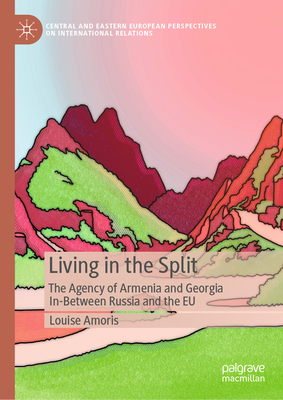
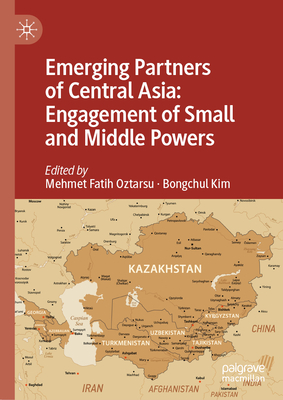
Since the turn of the 2020s, Eastern Europe and the South Caucasus have been the stage of major upheavals - from the Second Nagorno-Karabakh War and the dissolution of the self-proclaimed republic, to massive protests in Belarus and Georgia, and Russia's full-scale invasion of Ukraine. Yet the agency of the "in-between" countries in the EU's and Russia's shared neighbourhood has been largely overlooked in International Relations, where they are often portrayed as passive victims in the hands of regional powers. This book challenges that view, showing how these countries - particularly Armenia and Georgia - can be active agents capable of shaping both their own futures and that of the region. Focusing on the period from 2008 to early 2024, it explores how Armenia and Georgia use their liminal subjectivity in-between two competing regional cores as a resource for agency in the framework of their foreign policy. Strikingly, both countries have significantly reshaped their liminality and related agency over the covered period. Relying on a poststructuralist approach to discourse analysis, this book traces Armenia's and Georgia's evolving identity and foreign policy discourse, revealing how they (re-)articulate their role identity. It highlights how their agency produces both reproductive and subversive effects on hegemonic structures, while creating divisive and connective representations of their regional environment. Inspired by a postcolonial research agenda, this study amplifies the voices of subaltern actors entangled in hierarchical structures. By examining agency through the lens of liminality and its interplay with ontological (in)security, it contributes to the growing trend in International Relations that foregrounds the specific perspectives and agency of countries in the EU's and Russia's neighbourhood - departing from dominant Eurocentric and Russo-centric views on the region.
自2020年代初以來,東歐和南高加索地區成為重大動盪的舞台——從第二次納戈爾諾-卡拉巴赫戰爭和自稱共和國的解散,到白俄羅斯和喬治亞的大規模抗議,以及俄羅斯對烏克蘭的全面入侵。然而,在國際關係中,這些「中間」國家在歐盟和俄羅斯的共同鄰域中的主動性卻大多被忽視,這些國家常常被描繪為區域大國手中的被動受害者。
本書挑戰了這一觀點,展示了這些國家——特別是亞美尼亞和喬治亞——如何成為能夠塑造自身未來及該地區未來的主動行動者。本書聚焦於2008年至2024年初的期間,探討亞美尼亞和喬治亞如何利用其在兩個競爭區域核心之間的邊緣主體性作為其外交政策框架中的行動資源。值得注意的是,這兩個國家在所涵蓋的期間內顯著重塑了其邊緣性及相關的主動性。
本書依賴於後結構主義的話語分析方法,追溯亞美尼亞和喬治亞不斷演變的身份和外交政策話語,揭示它們如何(重新)表達其角色身份。它強調這些國家的主動性如何對霸權結構產生再生產和顛覆性的影響,同時創造出對其區域環境的分裂性和連結性表徵。
受到後殖民研究議程的啟發,本研究放大了被捲入階層結構的下層行動者的聲音。通過從邊緣性及其與本體論(不)安全的相互作用的角度來檢視主動性,本書為國際關係中日益增長的趨勢做出了貢獻,該趨勢突顯了歐盟和俄羅斯鄰域國家的特定視角和主動性,並偏離了對該地區的主導歐洲中心和俄羅斯中心觀點。
以上中文內容由 AI 翻譯