商品描述
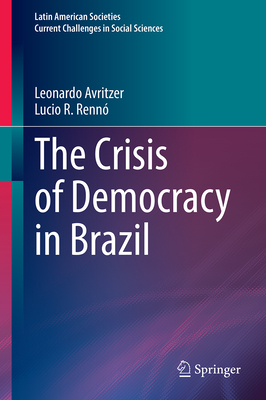
This book fills a void in the existing literature on regime erosion and democratic backsliding by proposing a multidimensional and sequential explanation for the emergence of crisis of democracy using one of the most populous democracies in the world as a case study: Brazil. The book argues that long- and short-term factors combine to explain how democratic systems enter phases of profound instability, increasing system unpredictability and the resurgence of reinvigorated authoritarian enclaves in society. Brazil is an interesting case because it has been portraited by the extant literature as an example of success among Third Wave Democracies in making progress towards a stable regime. Against such interpretations, this book presents evidences that unresolved dilemmas in the transition to democracy during the 1970's became ever more pressing and evident as the system has been shaken by unprecedented political and economic crisis. The vulnerability of Brazilian democracy became explicit with successive episodes that accumulated over the years, especially since 2013, leading to and being crowned by the coming to power of Jair Bolsonaro, a conservative, extreme-right wing President, with clear authoritarian tendencies. Ultimately, as the book narrates, several events that have taken place over the past decade question any idea of normality in the system and that institutions work. Business simply has not been conducted as usual in Brazilian democracy. The Crisis of Democracy in Brazil will be of interest to researchers in the fields of political science and political sociology interested in studying democratic backsliding and the current crisis of democracy all over the world by presenting a case study of how this crisis affected one of the largest democracies in the world.
商品描述(中文翻譯)
本書填補了現有文獻中關於政權侵蝕和民主倒退的空白,通過提出一種多維度和序列性的解釋,來說明民主危機的出現,並以全球人口最多的民主國家之一——巴西作為案例研究。書中主張,長期和短期因素的結合解釋了民主制度如何進入深刻不穩定的階段,增加了系統的不確定性,並使社會中重新活躍的威權主義飛地重新出現。
巴西是一個有趣的案例,因為現有文獻將其描繪為第三波民主國家中在朝向穩定政權方面取得進展的成功範例。針對這種解釋,本書提供了證據,顯示在1970年代向民主過渡中未解決的困境隨著系統受到前所未有的政治和經濟危機的衝擊而變得愈加迫切和明顯。巴西民主的脆弱性在多年累積的連續事件中變得顯而易見,特別是自2013年以來,最終導致並以極右派保守總統賈伊爾·博索納羅的上台為高潮,他具有明顯的威權主義傾向。最終,正如本書所敘述的,過去十年發生的幾個事件質疑了系統中任何正常運作的觀念,以及機構是否有效運作。巴西民主中的商業運作顯然並未如常進行。
《巴西的民主危機》將吸引政治科學和政治社會學領域的研究者,這些研究者對於研究民主倒退和全球當前民主危機感興趣,並通過呈現這一危機如何影響全球最大民主國家之一的案例研究。
作者簡介
Leonardo Avritzer was professor at the Department of Political Science of the Federal University of Minas Gerais (UFMG), Brazil, and is senior visiting researcher at the Institute of Social and Political Studies (IESP), Brazil. Avritzer received his Ph.D. in political sociology from the New School for Social Research. He has published extensively on civil society and participation in Brazil. He is the author of many books among them "Democracy and the Public Space in Latin America" and "Participatory Institutions in Democratic Brazil". He published in several journals among them Comparative Politics, Latin America Research Review, International Journal of Regional and Urban Research, Journal of Public Deliberation, Opinião Pública and Revista Dados. He was visiting professor at the University of Coimbra, University of Tulaine and Colegio de Mexico. He is the coordinator of Instituto da Democracia (Institute of Democracy), a research project based in four large public universities that surveys Brazilians on democratic habits and monitors social networks. His book "O Pendulo da Democracia no Brasil" won the Brazilian Political Association award of best book of the year. Lucio R. Renno is an Associate Professor at the Institute of Political Science of the University of Brasília (2006-present), Brazil. He was Provost for Graduate Studies (2021-2024) and Director of the Institute of Political Science (2020). He received his Ph.D. in Political Science from the University of Pittsburgh (2004). Between 2015 and 2018, he was President of the Federal District Planning Company (Codeplan). He served as Assistant Professor at the Center for Latin American Studies at the University of Arizona (2005-2006) and as a postdoctoral researcher at the State University of New York - Stony Brook (2004-2005) and at the German Institute for Global and Area Studies, Hamburg, Germany (2009-2010; 2011; 2013). He has been a visiting professor at Frei Univesitat, Berlin, Germany, and holds the Sergio Buarque de Holanda Chair at the Center for Latin American Studies; Australian National University, Canberra, Australia; Yokohama National University, Yokohama, Japan; University of Texas, Austin; Vanderbilt University, Tennessee; and University of Oxford, United Kingdom. He publishes on legislative politics, electoral behavior, and public opinion.
作者簡介(中文翻譯)
萊昂納多·阿維茲特(Leonardo Avritzer)曾任巴西米納斯吉拉斯聯邦大學(UFMG)政治學系教授,現為巴西社會與政治研究所(IESP)高級訪問研究員。阿維茲特於新社會研究學院獲得政治社會學博士學位。他在巴西的公民社會與參與方面發表了大量著作,著作包括《拉丁美洲的民主與公共空間》(Democracy and the Public Space in Latin America)和《民主巴西的參與性機構》(Participatory Institutions in Democratic Brazil)。他在多本期刊上發表過文章,包括《比較政治》(Comparative Politics)、《拉丁美洲研究評論》(Latin America Research Review)、《國際區域與城市研究期刊》(International Journal of Regional and Urban Research)、《公共審議期刊》(Journal of Public Deliberation)、《公共意見》(Opinião Pública)和《Dados期刊》(Revista Dados)。他曾擔任科英布拉大學、圖拉因大學和墨西哥學院的訪問教授。他是民主研究所(Instituto da Democracia)的協調人,該研究項目基於四所大型公立大學,對巴西人的民主習慣進行調查並監測社交網絡。他的著作《巴西的民主擺錘》(O Pendulo da Democracia no Brasil)獲得巴西政治協會年度最佳書籍獎。
盧西奧·R·雷諾(Lucio R. Renno)是巴西巴西利亞大學政治學研究所的副教授(2006年至今)。他曾擔任研究生院院長(2021-2024)和政治學研究所所長(2020)。他於匹茲堡大學獲得政治學博士學位(2004)。在2015年至2018年間,他擔任聯邦區規劃公司(Codeplan)總裁。他曾在亞利桑那大學拉丁美洲研究中心擔任助理教授(2005-2006),並在紐約州立大學石溪分校(2004-2005)和德國漢堡全球與區域研究所(2009-2010;2011;2013)擔任博士後研究員。他曾在德國柏林的弗萊大學擔任訪問教授,並在澳大利亞國立大學拉丁美洲研究中心擔任塞爾吉奧·布阿基·德·霍蘭達講座教授;他還曾在日本橫濱國立大學、德克薩斯大學奧斯汀分校、田納西州范德比大學和英國牛津大學任教。他的研究領域包括立法政治、選舉行為和公共意見。