商品描述
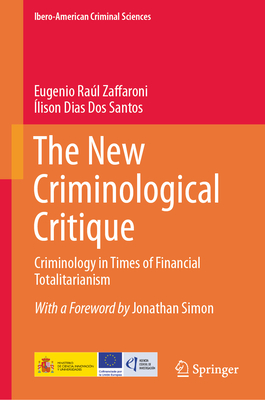
This book examines the rise of financial totalitarianism and its profound implications for criminal justice and criminological theory. It explores how the concentration of wealth and social exclusion, driven by corporate CEOs, has altered the role of politics in shaping criminal justice systems. The text argues that these shifts have given rise to a dystopian criminology, marked by a focus on total security, extreme prevention, zero tolerance policies, and pervasive surveillance. It critically assesses how these developments contribute to the criminalization of dissent, foster societal fears of outsiders, and institutionalize ethnic and cultural discrimination, all while maintaining a façade of administrative control. Drawing on historical and contemporary analysis, the book offers a framework for rethinking criminology in the context of financial and political power, advocating for a more critical approach to understanding crime, punishment, and justice in an increasingly unequal world.
商品描述(中文翻譯)
本書探討了金融極權主義的興起及其對刑事司法和犯罪學理論的深遠影響。它探討了由企業首席執行官推動的財富集中和社會排斥如何改變政治在塑造刑事司法系統中的角色。文本主張這些變化催生了一種反烏托邦的犯罪學,特徵是對全面安全的關注、極端預防、零容忍政策和無所不在的監控。它批判性地評估了這些發展如何促進異議的犯罪化、加劇社會對外來者的恐懼,並使種族和文化歧視制度化,同時維持行政控制的表象。通過歷史和當代分析,本書提供了一個重新思考犯罪學的框架,將其置於金融和政治權力的背景下,倡導對於在日益不平等的世界中理解犯罪、懲罰和正義的更具批判性的方式。
作者簡介
Eugenio Raúl Zaffaroni is a distinguished Ibero-American jurist, renowned for his contributions to criminology, criminal law, and human rights. He served as a Justice of the Supreme Court of Argentina and as a Judge of the Inter-American Court of Human Rights. He also held the position of General Director of the United Nations Latin American Institute for the Prevention of Crime and the Treatment of Offenders (ILANUD). Academically, he is a Professor Emeritus at the University of Buenos Aires, where he chaired the Department of Criminal Law and Criminology for several decades. He is the author of numerous influential works, including the five-volume Tratado de Derecho Penal and La nueva crítica criminológica (co-authored with Ílison Dias Dos Santos), both widely disseminated in multiple languages. Throughout his career, he has received more than fifty honorary doctorates from prestigious universities across Latin America and Europe. In 2009, he was awarded the Stockholm Prize in Criminology for his research on genocide, often referred to as the "Nobel Prize of Criminology." His scholarship has significantly shaped the field of criminal sciences in Latin America and Europe, and he is regarded as a central figure in the development of contemporary criminology and criminal law, noted for his critical and humanistic approach to the interpretation and application of penal law. Ílison Dias Dos Santos is Ramón y Cajal Research Professor of Criminal Law at the Department of Legal Sciences of the University of Alcalá (Madrid, Spain). He previously held a Margarita Salas Postdoctoral Fellowship, carrying out postdoctoral research at the University of Barcelona and serving as a Gastwissenschaftler (postdoctoral fellow) at Humboldt University of Berlin. He also served as a Collaborating Professor in the Master's Program in Criminology, Criminal Policy, and Sociology of Criminal Law at the University of Barcelona. He holds a PhD in Law from the University of Salamanca (Summa Cum Laude with International Distinction), where he received the Extraordinary Doctorate Award. He has been awarded several competitive research fellowships, enabling academic stays in Brazil, Spain, Germany, Italy, and Argentina, and has contributed to interdisciplinary research projects across Europe and Latin America. His research focuses on criminal law, criminology, and criminal policy, with a particular emphasis on critical and interdisciplinary approaches to punitive power. He is the author of numerous academic articles and books, including The New Critical Criminology (with Eugenio Raúl Zaffaroni) and Aporophobia and Punitive Power. He serves as Academic Editor of the Ibero-American Criminal Sciences book series (Springer Nature) and the Reflexiones en Derecho Penal y Criminología book series (BdeF-Reus). He is a founding member and former president of the Center for Criminal Sciences at the Federal University of Bahia. He is affiliated with the Istituto di Studi Penalistici at the University of Calabria, serves on the editorial boards of specialized journals, and actively collaborates with international academic networks.
作者簡介(中文翻譯)
Eugenio Raúl Zaffaroni 是一位傑出的伊比利亞美洲法學家,以其對犯罪學、刑法和人權的貢獻而聞名。他曾擔任阿根廷最高法院法官及美洲人權法院法官。他還擔任過聯合國拉丁美洲犯罪預防與罪犯處理研究所(ILANUD)的總幹事。在學術上,他是布宜諾斯艾利斯大學的名譽教授,並在該校的刑法與犯罪學系擔任系主任數十年。他是多部有影響力著作的作者,包括五卷本的 Tratado de Derecho Penal 和與 Ílison Dias Dos Santos 共同撰寫的 La nueva crítica criminológica,這些作品已被廣泛翻譯成多種語言。在他的職業生涯中,他獲得了來自拉丁美洲和歐洲多所著名大學的五十多個榮譽博士學位。2009年,他因對種族滅絕的研究而獲得斯德哥爾摩犯罪學獎,該獎項常被稱為「犯罪學的諾貝爾獎」。他的學術研究對拉丁美洲和歐洲的刑事科學領域產生了重大影響,被視為當代犯罪學和刑法發展的核心人物,以其批判性和人文主義的方式解釋和應用刑法而著稱。 Ílison Dias Dos Santos 是西班牙阿爾卡拉大學法律科學系的 Ramón y Cajal 刑法研究教授。他曾獲得 Margarita Salas 博士後獎學金,在巴塞隆納大學進行博士後研究,並在柏林洪堡大學擔任 Gastwissenschaftler(博士後研究員)。他還曾擔任巴塞隆納大學犯罪學、刑事政策和刑法社會學碩士課程的合作教授。他擁有薩拉曼卡大學的法學博士學位(以國際榮譽的優異成績畢業),並獲得了特別博士獎。他獲得了多個競爭性研究獎學金,使他能夠在巴西、西班牙、德國、意大利和阿根廷進行學術交流,並參與歐洲和拉丁美洲的跨學科研究項目。他的研究重點是刑法、犯罪學和刑事政策,特別強調對懲罰權的批判性和跨學科的研究方法。他是多篇學術文章和書籍的作者,包括與 Eugenio Raúl Zaffaroni 共同撰寫的 The New Critical Criminology 和 Aporophobia and Punitive Power。他擔任 Ibero-American Criminal Sciences 書系(Springer Nature)和 Reflexiones en Derecho Penal y Criminología 書系(BdeF-Reus)的學術編輯。他是巴伊亞聯邦大學刑事科學中心的創始成員及前任主席,並與卡拉布里亞大學的 Istituto di Studi Penalistici 有關聯,擔任專業期刊的編輯委員會成員,並積極參與國際學術網絡的合作。