商品描述
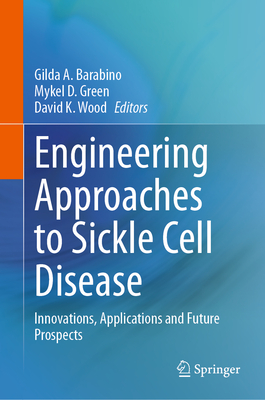
Engineers have played an important and often underrecognized role in advances in the treatment and management of sickle cell disease and in recent curative breakthroughs. This comprehensive and cutting-edge edited volume brings together renowned experts to shed light on the development and application of engineering technologies to unravel the complexities of sickle cell disease in pursuit of improved health outcomes.
This volume is intended for researchers, engineers, scientists, clinicians, and students working in the fields of engineering, genetics, hematology and other related disciplines. Medical professionals seeking to stay abreast of the most recent technological breakthroughs in sickle cell disease treatments and cures will also find this book informative. Additionally, counselors, policy makers, healthcare administrators and anyone seeking to understand the impact of engineering solutions on advances in sickle cell disease, will be intrigued by the innovations, applications and future prospects shared in this important addition to sickle cell resources.
商品描述(中文翻譯)
工程師在鎌狀細胞病的治療和管理進展中扮演了重要且常被低估的角色,尤其是在最近的治療突破中。本書是一部全面且前沿的編輯專著,匯集了知名專家,闡明工程技術的發展和應用,以解開鎌狀細胞病的複雜性,追求改善健康結果。
本書旨在為從事工程、遺傳學、血液學及其他相關領域的研究人員、工程師、科學家、臨床醫生和學生提供參考。希望了解鎌狀細胞病治療和治癒最新技術突破的醫療專業人員,也會發現本書內容豐富。此外,輔導員、政策制定者、醫療管理者以及任何希望了解工程解決方案對鎌狀細胞病進展影響的人,都會對本書中分享的創新、應用和未來前景感到興趣,這是鎌狀細胞資源的重要補充。
作者簡介
Gilda A. Barabino served as the second president of Olin College of Engineering where she currently holds an appointment as Professor of Biomedical and Chemical Engineering. Prior to Olin, she served as Dean of the Grove School of Engineering at the City College of New York (CCNY). She has also held academic and administrative appointments at Georgia Institute of Technology, Emory University, and Northeastern University. A chemical engineering trailblazer in the fields of medicine and global health, she has pursued an equity ethic across her interdisciplinary career. Her seminal discoveries in sickle cell research and orthopedic tissue engineering have informed current technologies and formed the basis of novel therapies. At CCNY she established the Master's in Translational Medicine program, which addresses unmet clinical needs through the integration of engineering, medical innovation, and entrepreneurship. She leads on a global stage and is a past president of the American Association for the Advancement of Science (AAAS), the world's largest interdisciplinary scientific society. She is also a past president of the Biomedical Engineering Society and the American Institute for Medical and Biological Engineering. She is an elected member of the National Academy of Engineering, the National Academy of Medicine, and the American Academy of Arts and Sciences. Mykel D. Green is an Assistant Professor of Biomedical Engineering at Tulane University, where he leads the Regenerative Engineering and Equity Lab (REEL). His research focuses on developing biomaterial-based therapies informed by disease pathology to improve cell-based treatments. The lab's work centers on bone marrow transplantation for sickle cell disease and explores related therapeutic strategies for conditions such as postmenopausal health. By studying how factors like age, sex, and disease state influence hematopoietic stem cell function, Dr. Green's team designs materials and delivery systems that enhance transplantation outcomes and tissue recovery. In addition to his research, Dr. Green is committed to advancing biomedical innovation and strengthening STEM education. His teaching integrates ethical and human-centered perspectives into engineering curricula, emphasizing technical excellence, problem-solving, and professional responsibility. Through this approach, students gain both the analytical and interpersonal skills needed to address complex challenges in healthcare and biotechnology. David K. Wood is Professor and Director of Graduate Studies in the Department of Biomedical Engineering at the University of Minnesota. He leads The Living Devices Lab, which integrates expertise in microtechnology, tissue engineering, and quantitative measurements to engineer in vitro models of human disease and to perform precision measurements on biological systems. His lab creates engineered tissues with precise control over biological components and transport processes at physiologically and pathologically relevant length scales. These cutting-edge platforms enable fundamental mechanistic discovery, improved diagnostic approaches, and accelerated therapeutic development. His research program encompasses: (1) sickle cell disease biophysics, where his group seeks to understand the biophysical underpinnings of the disease from molecules to whole organisms and to improve clinical management of the disease with new diagnostics and therapeutic approaches; (2) tumor microenvironment modeling, including high-throughput 3D microtissue platforms and tumor-on-a-chip systems to understand metastatic progression and evaluate immunotherapies for solid tumors; and (3) microphysiological systems to study human tissues in health and disease. In addition to research, Dr. Wood is a committed educator and mentor with over a decade of teaching undergraduate and graduate students. Through his teaching and service, he contributes to inclusive and equitable STEM education.
作者簡介(中文翻譯)
吉爾達·A·巴拉比諾擔任奧林工程學院的第二任院長,目前擔任生物醫學與化學工程的教授。在加入奧林之前,她曾擔任紐約市立大學(CCNY)格羅夫工程學院的院長。她還曾在喬治亞理工學院、埃默里大學和東北大學擔任學術和行政職位。
作為醫學和全球健康領域的化學工程先驅,她在跨學科的職業生涯中追求公平的倫理。她在鐮刀型細胞研究和骨科組織工程方面的開創性發現,為當前技術提供了指導,並形成了新療法的基礎。在CCNY,她建立了轉化醫學碩士課程,通過整合工程、醫療創新和創業來解決未滿足的臨床需求。
她在全球舞台上發揮領導作用,曾擔任美國科學促進協會(AAAS)的會長,該協會是全球最大的跨學科科學社會。她還曾擔任生物醫學工程學會和美國醫學與生物工程學會的會長。她是國家工程院、國家醫學院和美國藝術與科學學院的當選成員。
邁克爾·D·格林是杜蘭大學的生物醫學工程助理教授,負責再生工程與公平實驗室(REEL)。他的研究專注於開發基於生物材料的療法,這些療法受到疾病病理學的啟發,以改善基於細胞的治療。該實驗室的工作集中在鐮刀型細胞病的骨髓移植上,並探索與更年期後健康等相關的治療策略。通過研究年齡、性別和疾病狀態等因素如何影響造血幹細胞功能,格林博士的團隊設計出能增強移植結果和組織恢復的材料和傳遞系統。
除了研究,格林博士致力於推進生物醫學創新和加強STEM教育。他的教學將倫理和以人為本的觀點融入工程課程,強調技術卓越、問題解決和專業責任。通過這種方法,學生獲得了解決醫療保健和生物技術中複雜挑戰所需的分析和人際交往技能。
大衛·K·伍德是明尼蘇達大學生物醫學工程系的教授和研究生學習主任。他負責生活裝置實驗室,該實驗室整合微技術、組織工程和定量測量的專業知識,以工程化人類疾病的體外模型並對生物系統進行精確測量。他的實驗室創造出對生物組件和運輸過程具有精確控制的工程化組織,並在生理和病理相關的長度尺度上進行操作。這些尖端平台使基本機制的發現、改進診斷方法和加速治療開發成為可能。他的研究計劃包括:(1)鐮刀型細胞病的生物物理學,他的團隊旨在從分子到整個有機體理解該疾病的生物物理基礎,並通過新的診斷和治療方法改善該疾病的臨床管理;(2)腫瘤微環境建模,包括高通量3D微組織平台和腫瘤芯片系統,以理解轉移進展並評估固體腫瘤的免疫療法;以及(3)微生理系統,以研究健康和疾病中的人類組織。除了研究,伍德博士還是一位致力於教育和指導的教師,擁有超過十年的本科和研究生教學經驗。通過他的教學和服務,他為包容和公平的STEM教育做出了貢獻。