商品描述
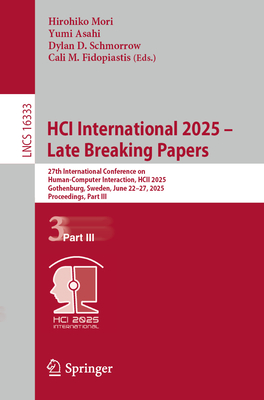
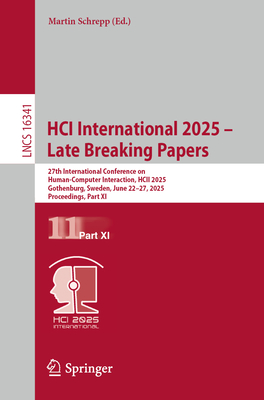
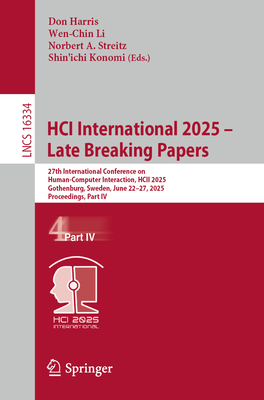
The 16-volume set LNCS 16331-16346 constitutes late breaking papers from the 27th International Conference on Human-Computer Interaction, HCI International 2025, held in Gothenburg, Sweden, during June 22-27, 2025. 439 papers and 104 posters were included in the volumes of the proceedings published after the conference, as "Late Breaking Work". The papers were organized in topical sections as follows: Part I: Theoretical and Conceptual Advances in HCI; and User Interface and Interaction Design; Design for Inclusivity and Social Impact. Part II: Robotics, Embodied Agents, and Human-Robot Interaction; Smart Environments and Manufacturing Systems; Human-AI Interaction and Generative AI in Design; and Ethics, Privacy and Sustainability in Digital Systems. Part III: Human Experience in Virtual Environments; Human Factors in Intelligent and Autonomous Systems; and Computational Methods for Human Behavior Analysis. Part IV: Human Performance and Safety in Aviation; Human-Automation Teaming; Eye Tracking, Cognition, and Situation Awareness; and Innovations in Adaptive and Responsive Environments. Part V: Accessibility and Inclusive Interaction Design; Accessibility and Innovations in Intelligent Environments; and Human-Centered Technologies for Autism and Neurodiverse Populations. Part VI: Designing for Positive Change: Well-Being, Inclusion, and Social Impact; Cross-Cultural and Creative Design Futures; Design and Engineering of Mobility Experiences; and Human Factors, Safety, and Driver Assistance. Part VII: Social Media, Society, and Digital Communities; LLMs and Intelligent Agents in Social Computing and Security; Understanding User Behavior in Social Computing; and Security, Privacy, and Trust in Digital Environments. Part VIII: Frameworks and Computational Methods in XR; Human Factors and User Experience in XR; XR, Culture, and Immersive Heritage Experiences; Extended Reality in Healthcare and Medical Training; and Serious Games and Interactive Narratives. Part IX: Ergonomics and Digital Human Modeling; Digital Human Modeling in Fashion and Textiles; Artificial Intelligence and Smart Services in Digital Human Modeling; and Health Monitoring, Decision-Making, and Care Optimization. Part X: Generational Differences and Technology Acceptance in Older Adults; Healthy Lifestyle, Physical Activity, and Active Aging; Cognitive Health, Well-Being; and Preventive Care; Intelligent Systems, Safety, and Aging in Place; and Artificial Intelligence in Healthcare and Well-Being. Part XI: User Experience and Interaction for Positive Social Impact; User Experience Methods, Tools, and Metrics; User Experience in Education and Learning; and User Experience in Digital Heritage and Art. Part XII: User Experience in Product and Service Design; User Experience, AI, and Emerging Applications; Digital Innovation and Interactive Design for Cultural Heritage; and Technology-Driven Cultural Shifts: AI, Metaverse, and Digital Society. Part XIII: Human-Centered Perspectives on New Technologies Adoption and Impact; AI-Empowered Ageing, Education, and Healthcare; Advances in Commerce, Marketing, and Consumer Behavior; and Digital Transformation of Business and Governance. Part XIV: Immersive Technologies for Learning; Inclusive and Collaborative Learning Design; Adaptive Instructional Systems; AI, Data, and Intelligent Support in Education. Part XV: Human-Centered Artificial Intelligence: Frameworks and Lessons Learned; Frameworks and Approaches for Trustworthy and Explainable AI; Large Language Models - Capabilities, Biases, and Applications. Part XVI: Generative AI in Creativity and Design; Human-AI Interaction and Collaboration; and Mobile Technologies for Health, Education, and Digital Engagement.
商品描述(中文翻譯)
這16卷的LNCS 16331-16346包含了2025年6月22日至27日在瑞典哥德堡舉行的第27屆國際人機互動會議(HCI International 2025)的最新研究論文。會議後出版的論文集中包含了439篇論文和104篇海報,作為「最新研究成果」。
這些論文按主題分為以下幾個部分:
第一部分:人機互動的理論與概念進展;用戶界面與互動設計;包容性設計與社會影響。
第二部分:機器人、具身代理與人機互動;智慧環境與製造系統;人類與人工智慧的互動及設計中的生成式人工智慧;以及數位系統中的倫理、隱私與可持續性。
第三部分:虛擬環境中的人類體驗;智能與自主系統中的人因工程;以及人類行為分析的計算方法。
第四部分:航空中的人類表現與安全;人機協作;眼動追蹤、認知與情境意識;以及自適應與響應環境中的創新。
第五部分:可及性與包容性互動設計;智能環境中的可及性與創新;以及針對自閉症與神經多樣性人群的人本技術。
第六部分:為正向變革設計:福祉、包容性與社會影響;跨文化與創意設計未來;移動體驗的設計與工程;以及人因工程、安全與駕駛輔助。
第七部分:社交媒體、社會與數位社群;大型語言模型(LLMs)與社會計算及安全中的智能代理;理解社會計算中的用戶行為;以及數位環境中的安全、隱私與信任。
第八部分:擴增實境(XR)中的框架與計算方法;XR中的人因工程與用戶體驗;XR、文化與沉浸式遺產體驗;擴展實境在醫療與醫學訓練中的應用;以及嚴肅遊戲與互動敘事。
第九部分:人體工學與數位人類建模;時尚與紡織中的數位人類建模;數位人類建模中的人工智慧與智慧服務;以及健康監測、決策與護理優化。
第十部分:老年人的代際差異與技術接受度;健康生活方式、身體活動與積極老化;認知健康、福祉與預防護理;智能系統、安全與居家老化;以及醫療與福祉中的人工智慧。
第十一部分:為正向社會影響而設計的用戶體驗與互動;用戶體驗的方法、工具與指標;教育與學習中的用戶體驗;以及數位遺產與藝術中的用戶體驗。
第十二部分:產品與服務設計中的用戶體驗;用戶體驗、人工智慧與新興應用;文化遺產的數位創新與互動設計;以及技術驅動的文化變遷:人工智慧、元宇宙與數位社會。
第十三部分:對新技術採用與影響的人本觀點;人工智慧賦能的老化、教育與醫療;商業、行銷與消費行為的進展;以及商業與治理的數位轉型。
第十四部分:學習的沉浸式技術;包容性與協作學習設計;自適應教學系統;人工智慧、數據與教育中的智能支持。
第十五部分:以人為中心的人工智慧:框架與經驗教訓;值得信賴與可解釋的人工智慧的框架與方法;大型語言模型的能力、偏見與應用。
第十六部分:創意與設計中的生成式人工智慧;人類與人工智慧的互動與合作;以及健康、教育與數位參與的移動技術。