商品描述
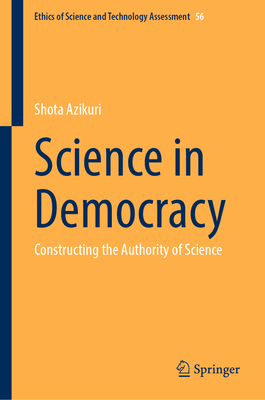
This book deals with the issue of integrating science into democratic decision-making, emphasizing the need to balance the epistemic qualities of science with democratic values. The central question is not whether to rely on science, but how to do so effectively without undermining democratic principles or scientific integrity. The work criticizes the traditional Weberian division of labor, which separates the roles of scientists and the public, and argues that this division often overlooks the complexities of modern science and democratic decision-making. It highlights the challenges of maintaining both the truth-seeking function of science and the political function of democracy. In turn, the book identifies the epistemic dependence of the public on scientific experts and explores how this dependence interacts with the ideal of autonomy. A significant focus is placed on the problem of specialization in modern science. The book argues that the cognitive division of labor, while necessary for scientific advancement, creates barriers to public understanding and engagement. This specialization complicates the transmission of scientific knowledge and poses a challenge to maintaining democratic oversight and participation. Three main models of integrating science into democracy are examined: the trust model, the epistemic authority model, and the democratic authority model. While each model offers valuable insights, none of them appears to be sufficient on its own. Therefore, the author proposes a synthesized approach that incorporates trust, epistemic rigor, and democratic principles. By addressing the interrelated challenges of specialization, epistemic dependence, and democratic legitimacy, this book presents a comprehensive normative framework for integrating science into democratic decision-making.
商品描述(中文翻譯)
本書探討將科學融入民主決策的議題,強調需要平衡科學的認識論特質與民主價值。核心問題不在於是否依賴科學,而在於如何有效地依賴科學,而不損害民主原則或科學的完整性。本書批評傳統的韋伯(Weber)勞動分工,該分工將科學家與公眾的角色分開,並主張這種分工常常忽視現代科學與民主決策的複雜性。它突顯了維持科學的真理追求功能與民主的政治功能之間的挑戰。進而,本書確定公眾對科學專家的認識論依賴,並探討這種依賴如何與自主的理想互動。本書特別關注現代科學中的專業化問題。書中指出,雖然認知勞動分工對科學進步是必要的,但卻為公眾理解與參與創造了障礙。這種專業化使科學知識的傳遞變得複雜,並對維持民主監督與參與構成挑戰。本書檢視了將科學融入民主的三種主要模型:信任模型、認識論權威模型和民主權威模型。雖然每個模型都提供了有價值的見解,但單獨來看,似乎都不夠充分。因此,作者提出了一種綜合的方法,結合信任、認識論的嚴謹性和民主原則。通過解決專業化、認識論依賴和民主合法性之間的相互挑戰,本書提出了一個全面的規範框架,以將科學融入民主決策。
作者簡介
Shota Azikuri holds a joint Ph.D. in Philosophy from the University of Münster and Ilia State University. His research lies at the intersection of political theory, social epistemology, and the philosophy of science, exploring how democratic authority can be reconciled with the challenges posed by scientific expertise and specialization in modern society.
作者簡介(中文翻譯)
Shota Azikuri 擁有明斯特大學和伊利亞國立大學的聯合哲學博士學位。他的研究位於政治理論、社會認識論和科學哲學的交叉點,探討如何在現代社會中調和民主權威與科學專業知識和專業化所帶來的挑戰。