Harnessing Nanozymes to Combat Antimicrobial Resistance
暫譯: 利用奈米酶對抗抗微生物抗藥性

Singh, Anurag Kumar, Kumar, Rajesh, Chaturvedi, Vivek K.
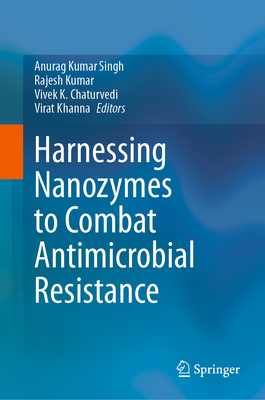
  • 出版商: Springer
  • 出版日期: 2026-01-20
  • 售價: $8,730
  • 貴賓價: 9.8$8,555
  • 語言: 英文
  • 頁數: 335
  • 裝訂: Hardcover - also called cloth, retail trade, or trade
  • ISBN: 3032165393
  • ISBN-13: 9783032165398
  • 相關分類: 奈米科技 Nano
  • 海外代購書籍(需單獨結帳)

商品描述

This book spotlights the potential of nanozymes in combating antimicrobial resistance (AMR), a growing global health crisis with high mortality and morbidity. Despite progress in understanding AMR, current therapies often fall short. Nanozymes, a novel class of enzyme-mimicking nanomaterials, offer diverse applications to address AMR and related infections. By enhancing targeted drug delivery, nanozyme-based treatments improve efficacy while reducing adverse effects, highlighting their potential to overcome the limitations of existing therapies.

AMR, driven by the overuse and misuse of antibiotics, is an escalating global challenge that results in resistant bacterial strains and significant health burdens. Current treatments lack optimal efficacy, emphasizing the need for innovative approaches. Nanozymes, with their enzyme-like catalytic activities at the nanoscale, present a promising solution to the complexities of AMR and associated infections.

Nanozymes offer a significant advantage in antimicrobial resistance (AMR) management by enhancing the efficacy of treatments. These formulations can navigate biological barriers with precision, improving drug bioavailability and minimizing off-target effects. Additionally, nanozymes facilitate early disease detection through advanced nano-imaging techniques, allowing the identification of infections and resistant bacteria at early stages-crucial for timely interventions. They can also carry anti-inflammatory agents, providing targeted relief and reducing systemic side effects.

In summary, nanozymes are a transformative tool in AMR management, addressing the limitations of current therapies. By improving drug delivery, enabling early detection, and offering precision therapeutics, nanozymes enhance treatment effectiveness while minimizing adverse effects. Their versatility opens avenues for personalized treatment regimens, paving the way for innovative, tailored healthcare solutions that can better meet the challenges of AMR, ultimately improving patient outcomes and public health.

This book targets scientists and researchers in AMR, drug delivery, and nanomaterials, covering AMR fundamentals to advanced nanozyme applications. It offers detailed, up-to-date insights, serving as a vital resource for students, clinicians, academics, and industry professionals across various scientific disciplines.

商品描述(中文翻譯)

這本書聚焦於納米酶在對抗抗微生物抗藥性(AMR)方面的潛力,這是一個日益嚴重的全球健康危機,伴隨著高死亡率和發病率。儘管對AMR的理解有所進展,但目前的療法往往無法滿足需求。納米酶作為一種新型的模擬酶的納米材料,提供了多樣的應用來應對AMR及相關感染。通過增強靶向藥物傳遞,基於納米酶的治療提高了療效,同時減少了不良反應,突顯了它們克服現有療法限制的潛力。

AMR由抗生素的過度使用和濫用驅動,是一個不斷上升的全球挑戰,導致抗藥性細菌株的出現和重大的健康負擔。目前的治療缺乏最佳療效,強調了創新方法的必要性。納米酶以其在納米尺度上的類酶催化活性,為AMR及相關感染的複雜性提供了一個有前景的解決方案。

納米酶在抗微生物抗藥性(AMR)管理中提供了顯著的優勢,通過提高治療的療效來增強其效果。這些配方能夠精確地穿越生物屏障,提高藥物的生物利用度並最小化非靶向效應。此外,納米酶通過先進的納米成像技術促進早期疾病檢測,能夠在早期階段識別感染和抗藥性細菌,這對於及時干預至關重要。它們還可以攜帶抗炎劑,提供靶向緩解並減少全身性副作用。

總之,納米酶是AMR管理中的一個變革性工具,解決了當前療法的局限性。通過改善藥物傳遞、實現早期檢測和提供精確的治療,納米酶提高了治療效果,同時最小化不良反應。它們的多功能性為個性化治療方案開辟了新途徑,為創新和量身定制的醫療解決方案鋪平了道路,能更好地應對AMR的挑戰,最終改善患者的結果和公共健康。

這本書的目標讀者是AMR、藥物傳遞和納米材料領域的科學家和研究人員,涵蓋從AMR基礎知識到先進的納米酶應用。它提供了詳細且最新的見解,作為學生、臨床醫生、學術界和各科學領域的行業專業人士的重要資源。

作者簡介

Dr. Anurag Kumar Singh is currently working as a Research Associate (ICMR-RA) in the Department of Pharmaceutical Engineering and Technology at the Indian Institute of Technology (Banaras Hindu University), Varanasi, India. Previously, he served as a Postdoctoral Research Assistant in Cancer Biology at the Department of Biological Sciences, Alabama State University, USA, and at the Institute of Nanotechnology & Advanced Materials, Department of Chemistry, Bar-Ilan University, Israel. He brings over 3.5 years of postdoctoral research experience to his current role. Dr. Singh earned his doctoral degree in pharmaceutical chemistry from the Centre of Experimental Medicine and Surgery, Institute of Medical Sciences, Banaras Hindu University, Varanasi, and his M. Pharm degree from the School of Chemical Sciences and Pharmacy, Central University of Rajasthan, Ajmer, India. His research focuses on the development of innovative nano-particulate systems for applications in chronic pain management, neurodegenerative disorders, and brain-targeted drug delivery. This includes expertise in dendrimers, nanoporous silica/silicon materials, and polymeric nanoparticles for controlled drug delivery, diagnostics, and nanotheranostics. Dr. Singh's work aims to integrate engineering, pharmaceutical, and medical sciences to advance nanomedicine for healthcare and biomedical applications. Dr. Singh has an impressive academic record with over 50 research articles, reviews, and journal editorials published in esteemed national and international journals. He has edited or authored more than eight books and contributed over 15 book chapters published by internationally renowned presses.

Dr. Rajesh Kumar is working as Associate Professor at Maharaja Agrasen School of Pharmacy, Maharaja Agrasen University, Solan, Himachal Pradesh. He worked as junior and senior research fellow in the Department of Pharmacology, Institute of Medical Sciences, Banaras Hindu University, Varanasi and has very good experimental hands on bioanalytical techniques viz. sample preparation, extraction of drug molecules from bioanalytical samples, chromatographic separations and interpretation by HPLC, GC-MS and also has an experience of 3 years for conducting Therapeutic Drug Monitoring (TDM) of different drug molecules. Dr. Kumar worked as Bioanalytical Research Associate (LC-MS/MS Department) in Micro Therapeutic Research Labs Private Limited (USFDA, WHO, ANVISA Approved lab.) Chennai and also worked as Trainee Analyst in Arbro Pharmaceutical Limited (Analytical Division) New Delhi in LC/MS/MS Department (NABL Accredited, Government Approved Test House) for one year. He has published several research papers, including reviews, journal editorials, and book chapters in various peer-reviewed National and International journals. During the research, he has also got UGC-BHU JRF Research Fellowship Award 2016-17, National Fellowship, JRF& SRF (NFSC Award) 2017-18 by UGC and ICMR (Indian Council of Medical Research) SRF Award 2018.

Dr Vivek K. Chaturvedi (MRSC) is a Young-Scientist Fellow (Department of Health Research, Ministry of Health and Family Welfare) at Institute of Medical Sciences, Banaras Hindu University, Varanasi, India. Before joining the laboratory as a Young Scientist Fellow, he worked as a Postdoctoral research associate at the Department of Gastroenterology, IMSBHU, Varanasi. He earned his PhD degree in Biotechnology from University of Allahabad (a central university), Prayagraj, India. He received his BSc degree in Biological Sciences and MSc degree in Biochemistry from Veer Bahadur Singh Purvanchal University, Jaunpur, India. Dr Chaturvedi's research interests include the synthesis and functionalization of nano-biomaterials as well as their fabrication for the development of various biosensors that may be useful for the early detection and treatment of cancer and gastrointestinal diseases. Besides these, he has published many original articles in peer-reviewed high-impact journals along with many internationally edited and authored books.

Dr. Virat Khanna is serving as Associate Dean, Research and Development, Chandigarh University, Punjab, India. He is an accomplished academic and researcher with over 15 years of experience in higher education and scientific research. He has authored more than 80 publications in high-impact, peer-reviewed journals indexed in SCI, Scopus, and Web of Science. His research contributions span nanotechnology, materials science, and sustainable development. He has served as an editor for multiple books and conference proceedings with leading international publishers, including Springer, CRC Press, IGI Global, and Bentham Science. He is actively involved in scholarly publishing and currently serves on the Editorial Board of Scientific Reports (Nature Group) and Discover Nano (Springer). Additionally, he holds the position of Academic Editor for the Journal of Nanotechnology published by Wiley. Dr Khanna is also the Book Series Editor for Recent Advances in Materials for Nanotechnology, published by CRC Press (Taylor & Francis).

作者簡介(中文翻譯)

阿努拉格·庫馬爾·辛格博士目前在印度瓦拉納西的印度理工學院(班納拉斯印度大學)藥學工程與技術系擔任研究助理(ICMR-RA)。他曾在美國阿拉巴馬州立大學生物科學系和以色列巴伊蘭大學化學系的納米技術與先進材料研究所擔任癌症生物學的博士後研究助理。他在目前的職位上擁有超過3.5年的博士後研究經驗。辛格博士在班納拉斯印度大學醫學科學中心獲得藥物化學博士學位,並在印度阿傑梅爾的拉賈斯坦中央大學化學科學與藥學學院獲得藥學碩士學位。他的研究專注於開發創新的納米顆粒系統,用於慢性疼痛管理、神經退行性疾病和腦靶向藥物傳遞的應用。這包括在樹狀聚合物、納米多孔二氧化矽/矽材料和聚合物納米顆粒方面的專業知識,這些材料用於控制藥物釋放、診斷和納米治療。辛格博士的工作旨在整合工程學、藥學和醫學科學,以推進納米醫學在醫療保健和生物醫學應用中的發展。辛格博士擁有令人印象深刻的學術記錄,已在國內外知名期刊上發表超過50篇研究文章、評論和期刊社論。他編輯或撰寫了超過八本書籍,並為國際知名出版社貢獻了超過15章書籍。

拉傑什·庫馬博士目前在印度喜馬偕爾邦的馬哈拉賈·阿格拉森大學藥學學院擔任副教授。他曾在班納拉斯印度大學醫學科學院的藥理學系擔任初級和高級研究員,並在生物分析技術方面擁有豐富的實驗經驗,包括樣品準備、從生物分析樣品中提取藥物分子、色譜分離及通過HPLC、GC-MS進行解釋,並擁有3年的不同藥物分子的治療藥物監測(TDM)經驗。庫馬博士曾在微療法研究實驗室私人有限公司(美國FDA、WHO、ANVISA認可實驗室)擔任生物分析研究助理(LC-MS/MS部門),並在阿爾布羅製藥有限公司(分析部門)新德里擔任實習分析師,工作一年,專注於LC/MS/MS部門(NABL認可,政府批准的測試機構)。他在各種同行評審的國內外期刊上發表了多篇研究論文,包括評論、期刊社論和書籍章節。在研究期間,他還獲得了2016-17年UGC-BHU JRF研究獎學金、2017-18年UGC和ICMR(印度醫學研究委員會)頒發的國家獎學金、JRF&SRF(NFSC獎)及2018年ICMR SRF獎。

維韋克·K·查圖爾維迪博士(MRSC)是印度瓦拉納西班納拉斯印度大學醫學科學院健康研究部的青年科學家獎學金獲得者。在成為青年科學家獎學金獲得者之前,他曾在IMSBHU的胃腸病學系擔任博士後研究助理。他在印度普拉亞格拉傑的阿拉哈巴德大學(中央大學)獲得生物技術博士學位。他在印度賈恩普爾的維爾·巴哈杜爾·辛格·普爾萬查爾大學獲得生物科學學士學位和生物化學碩士學位。查圖爾維迪博士的研究興趣包括納米生物材料的合成和功能化,以及其在開發各種生物傳感器中的應用,這些生物傳感器可能對癌症和胃腸疾病的早期檢測和治療有用。此外,他在同行評審的高影響力期刊上發表了多篇原創文章,並編輯和撰寫了多本國際書籍。

維拉特·卡納博士目前擔任印度旁遮普的昌迪加爾大學研究與發展副院長。他是一位成就卓著的學者和研究人員,在高等教育和科學研究方面擁有超過15年的經驗。他在SCI、Scopus和Web of Science索引的高影響力同行評審期刊上發表了超過80篇出版物。他的研究貢獻涵蓋納米技術、材料科學和可持續發展。他曾擔任多本書籍和會議論文集的編輯,與包括Springer、CRC Press、IGI Global和Bentham Science等領先國際出版社合作。他積極參與學術出版,目前擔任《Scientific Reports》(Nature Group)和《Discover Nano》(Springer)的編輯委員會成員。此外,他還擔任Wiley出版的《Journal of Nanotechnology》的學術編輯。卡納博士還是CRC Press(Taylor & Francis)出版的《Recent Advances in Materials for Nanotechnology》系列書籍的編輯。