High Power Hadron Accelerators
暫譯: 高功率重子加速器
Wei, Jie, Dalesio, Leo R., Facco, Alberto
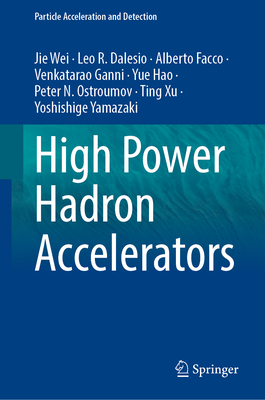
- 出版商: Springer
- 出版日期: 2026-07-14
- 售價: $5,060
- 貴賓價: 9.5 折 $4,807
- 語言: 英文
- 頁數: 634
- 裝訂: Hardcover - also called cloth, retail trade, or trade
- ISBN: 3032176611
- ISBN-13: 9783032176615
-
相關分類:
物理學 Physics
海外代購書籍(需單獨結帳)
相關主題


商品描述
商品描述(中文翻譯)
本書全面探討加速器科學,提供其專門子領域的基礎指南。隨著ESS、FAIR、RAON、HIAF、CADS、IFMIF、PIP-II和FRIB等重大項目的顯著增長,這本書成為理解最新進展和未來趨勢的重要資源。
作者是一組經驗豐富的物理學家和工程師,深入探討加速器的歷史發展,介紹尖端技術,並討論未來方向。主要主題包括大規模低溫技術、用於低速和中速強子束的超導射頻技術,以及集成加速器控制。本書還強調與高強度和高功率設施相關的主要束動力學主題,對於任何參與加速器科學的人來說,都是必讀之作。
本書針對研究生和專業人士,包括物理學家、工程師和技術經理,既是參考書也是手冊。它提供了有關加速器設施設計和建設的見解,並從如中子散射源、日本質子加速器研究綜合體和稀有同位素束設施等項目中提供寶貴的經驗教訓。無論您是資深專家還是新手,本書都將加深您對驅動高功率強子加速器的物理學和技術的理解。
作者簡介
Jie Wei has served as FRIB Accelerator Systems Division Director and has been a professor at MSU since 2010. He obtained his B. Sc. at Tsinghua University in 1983 and Ph. D. in physics at SUNY Stony Brook in 1989. He was awarded an APS Fellow in 2003 and the first IPAC Prize in 2010 "for his exceptionally creative contributions to the design, construction, and commissioning of circular accelerators, in particular RHIC, SNS, LHC, as well as the design of CSNS, and for numerous significant developments in the field of beam dynamics." He received the 2024 DOE Achievement Award and the 2026 APS Robert R. Wilson Prize "For seminal contributions in the physics of high-intensity hadron accelerators, and for leadership in the development, construction, and commissioning of the world's highest power hadron accelerators, particularly the first continuous-wave superconducting linac for heavy ions above 200 MeV/nucleon." He initiated the CPHS at Tsinghua University and chairs the A-TAC for J-PARC.
Leo R. (Bob) Dalesio has worked on scientific control solutions since 1985, when he joined Los Alamos National Laboratory to develop Supervisory Control and Data Acquisition tools for the Ground Test Accelerator. This SCADA software became the Experimental Physics and Industrial Control System (EPICS). Over the years Bob has been involved in projects as a lead engineer, cost account manager, reviewer, and system architect. He has contributed to APSU, NSLSII, SNS, LCLSI and II, CEBAF, and most recently MPEX and ALSU. He is now the managing partner of Osprey DCS, providing services to successfully deliver open-source, scientific control systems.
Alberto Facco is a senior accelerator physicist, specialized in SRF LINAC technologies, at INFN Legnaro, Italy, and at FRIB (MSU, USA). He studied Nuclear Physics at the University of Padua, Italy, and started his pioneering work in low-beta, bulk niobium superconducting resonators during his postdoctoral stay at the Weizmann Institute (Rehovot, Israel) in 1987. At INFN since 1988, he led the development of Nb SRF cavities for the linacs ALPI-PIAVE at LNL and ISAC2 at TRIUMF, working also in several international linac projects such as EURISOL and IFMIF/EVEDA. Since 2001 he collaborated in the FRIB project at MSU, where he also worked as Professor and SRF Department manager, leading the linac resonators development. He served on technical advisory committees for most of the main HPHA projects worldwide, including J-PARC (Japan), RAON/RISP (Korea), SARAF (Israel) and ESS (Sweden) that he chaired.
Venkatarao (Rao) Ganni is the director of the MSU Cryogenic Initiative and a professor of accelerator physics at Michigan State University. With B. E., M. Tech., M. S., and Ph. D. degrees in mechanical engineering, he has spent more than four decades advancing helium refrigeration and large-scale cryogenic systems. Ganni began his career at Cryogenic Technologies, Inc., leading engineering efforts on commercial and custom cryogenic equipment. He later contributed to major U.S. laboratory programs, including Brookhaven, Jefferson Lab, the Superconducting Super Collider, NASA, the Spallation Neutron Source, and FRIB, covering system design, commissioning, and performance optimization. He leads MSU's collaboration with FRIB to train the next generation of cryogenic engineers. Widely recognized for technical innovation, he invented the patented floating pressure (Ganni) cycle, now used or adapted in most major U.S. helium refrigeration systems. His honors include the Samuel C. Collins Award, the White House Closing the Circle Award, and Fellowship in the Cryogenic Society of America.
Yue Hao is a professor of physics at Michigan State University and an accelerator scientist at the Facility for Rare Isotope Beams (FRIB). His research group focuses on a first-principle understanding of accelerator beam physics, with emphasis on high-intensity beam dynamics, collective effects, nonlinear beam dynamics, and data-driven methods for modeling and optimization. He received his B. Sc. from the University of Science and Technology of China in 2003 and his Ph. D. in accelerator physics from Indiana University Bloomington in 2008. Before joining FRIB in 2016, he was a physicist at Brookhaven National Laboratory and an adjunct professor at Stony Brook University, working on beam dynamics for a variety of advanced accelerator facilities.
Peter N. Ostroumov is a professor of physics and associate director of the ASD at FRIB/MSU. His career began at the INR in Moscow, where he led the commissioning of a high-power proton accelerator. Since 1999, he has worked at ANL as a senior scientist and head of the Accelerator R&D group, developing a rare isotope accelerator and the ATLAS upgrades, including CW RFQ, EBIS, and novel quarter-wave SC resonators. While working at ANL, he developed a theory and experimentally validated the simultaneous acceleration of multiple charge-state heavy-ion beams in superconducting linacs. He has been a Fellow of the American Physical Society since 2006 with the citation: "For creativity and leadership in the design and development of both normal conducting and superconducting ion linear accelerators." After moving to FRIB in 2016, he has led the commissioning of FRIB and achieved a record high power for a uranium beam, 30 kW.
Ting Xu is a professor of physics and the SRF and Superconducting Magnet Department manager at FRIB MSU. He earned his B. Sc. and M. S. degrees from Shanghai Jiao Tong University and received his Ph. D. in mechanical engineering from Florida State University in 2007. From 2007 to 2009, he worked at the NHMFL as a postdoctoral associate, contributing to the development of the 36-T SCH magnet. He joined ORNL in 2009, where he worked on cryogenic systems and SRF cryomodules for the SNS drive linac. In 2012, Xu moved to the FRIB, where he led engineering efforts in SRF technology and superconducting magnet systems for the accelerator. He also led the SLAC LCLS-II HE SRF gun project, overseeing the design, development, fabrication and integration of the next-generation SRF gun. His work spans SRF, accelerator cryogenics, and large-scale superconducting magnet engineering.
Yoshishige Yamazaki joined the FRIB Accelerator Systems Division (ASD) in 2011 after completion of J-PARC. Since then, he had been ASD deputy director and professor of physics until he retired in 2022 after FRIB completion. He obtained Ph. D. in physics at the University of Tokyo in 1974. He developed, designed, and commissioned RF accelerating cavities at the KEK Photon Factory, TRISTAN, and KEK B factory. All these cavities were the world's most immune to the coupled-bunch instabilities by means of cutting-edge devices that he newly invented. From 1986, he had been leading an accelerator team for developing high-power proton accelerators in Japan and finally completed J-PARC construction as a deputy director of J-PARC center and accelerator systems division director. He served in technical advisory committees for major cutting-edge accelerators world-wide, including SNS, ESS, FAIR, CEBAF, and CSNS (chair).
作者簡介(中文翻譯)
Jie Wei 擔任 FRIB 加速器系統部門主任,自 2010 年以來一直是密西根州立大學的教授。他於 1983 年在清華大學獲得學士學位,並於 1989 年在紐約州立大學石溪分校獲得物理學博士學位。他於 2003 年被授予美國物理學會 (APS) 會士,並於 2010 年獲得首屆 IPAC 獎,表彰他在圓形加速器的設計、建造和調試方面的卓越創新貢獻,特別是 RHIC、SNS、LHC 的設計,以及 CSNS 的設計,並在束流動力學領域做出了多項重要發展。他獲得了 2024 年能源部成就獎和 2026 年 APS Robert R. Wilson 獎,表彰他在高強度重子加速器物理學方面的開創性貢獻,以及在世界最高功率重子加速器的開發、建造和調試中的領導作用,特別是針對 200 MeV/nucleon 以上的重離子連續波超導直線加速器。他在清華大學啟動了 CPHS,並擔任 J-PARC 的 A-TAC 主席。
Leo R. (Bob) Dalesio 自 1985 年以來一直從事科學控制解決方案的工作,當時他加入洛斯阿拉莫斯國家實驗室,為地面測試加速器開發監控控制和數據採集工具。這款 SCADA 軟體成為實驗物理和工業控制系統 (EPICS)。多年來,Bob 作為首席工程師、成本賬戶經理、審查員和系統架構師參與了多個項目。他對 APSU、NSLSII、SNS、LCLSI 和 II、CEBAF,以及最近的 MPEX 和 ALSU 做出了貢獻。他現在是 Osprey DCS 的管理合夥人,提供成功交付開源科學控制系統的服務。
Alberto Facco 是意大利 INFN Legnaro 和 FRIB (美國密西根州立大學) 的高級加速器物理學家,專注於 SRF LINAC 技術。他在意大利帕多瓦大學學習核物理,並於 1987 年在魏茨曼科學研究所 (以色列雷霍沃特) 的博士後期間開始了低貝塔、大塊鈮超導共振腔的開創性工作。自 1988 年以來,他在 INFN 工作,領導 Nb SRF 腔體的開發,為 LNL 的 ALPI-PIAVE 和 TRIUMF 的 ISAC2 工作,並參與了 EURISOL 和 IFMIF/EVEDA 等多個國際直線加速器項目。自 2001 年以來,他參與了密西根州立大學的 FRIB 項目,並擔任教授和 SRF 部門經理,領導直線加速器共振腔的開發。他曾在全球大多數主要 HPHA 項目的技術諮詢委員會中任職,包括 J-PARC (日本)、RAON/RISP (韓國)、SARAF (以色列) 和 ESS (瑞典),並擔任主席。
Venkatarao (Rao) Ganni 是密西根州立大學低溫計畫的主任及加速器物理學教授。他擁有機械工程的 B.E.、M.Tech.、M.S. 和 Ph.D. 學位,已在氦冷卻和大規模低溫系統方面工作了四十多年。Ganni 在 Cryogenic Technologies, Inc. 開始了他的職業生涯,領導商業和定制低溫設備的工程工作。之後,他為美國主要實驗室計畫做出了貢獻,包括布魯克海文、傑佛遜實驗室、超導超對撞機、NASA、散裂中子源和 FRIB,涵蓋系統設計、調試和性能優化。他領導密西根州立大學與 FRIB 的合作,培訓下一代低溫工程師。他因技術創新而廣受認可,發明了專利的浮壓 (Ganni) 循環,現在在美國大多數氦冷卻系統中使用或改編。他的榮譽包括 Samuel C. Collins 獎、白宮關閉循環獎和美國低溫學會會士。
Yue Hao 是密西根州立大學的物理學教授及稀有同位素束流設施 (FRIB) 的加速器科學家。他的研究小組專注於加速器束流物理的第一性原理理解,重點研究高強度束流動力學、集體效應、非線性束流動力學以及基於數據的方法進行建模和優化。他於 2003 年在中國科學技術大學獲得學士學位,並於 2008 年在印第安納大學布盧明頓獲得加速器物理學博士學位。在 2016 年加入 FRIB 之前,他曾是布魯克海文國家實驗室的物理學家,並在石溪大學擔任兼任教授,從事各種先進加速器設施的束流動力學研究。
Peter N. Ostroumov 是密西根州立大學 FRIB 的物理學教授及 ASD 副主任。他的職業生涯始於莫斯科的 INR,負責高功率質子加速器的調試。自 1999 年以來,他在 ANL 擔任高級科學家和加速器研發小組負責人,開發稀有同位素加速器和 ATLAS 升級,包括 CW RFQ、EBIS 和新型四分之一波 SC 共振腔。在 ANL 工作期間,他發展了一種理論,並實驗驗證了在超導直線加速器中同時加速多個電荷狀態的重離子束流。自 2006 年以來,他一直是美國物理學會的會士,獲得的評語是:「因在正常導電和超導離子線性加速器的設計和開發中的創造力和領導力。」在 2016 年轉到 FRIB 後,他領導了 FRIB 的調試,並為鈾束流創造了 30 kW 的記錄高功率。
Ting Xu 是密西根州立大學 FRIB 的物理學教授及 SRF 和超導磁鐵部門經理。他在上海交通大學獲得學士和碩士學位,並於 2007 年在佛羅里達州立大學獲得機械工程博士學位。從 2007 年到 2009 年,他在 NHMFL 擔任博士後助理,參與 36-T SCH 磁鐵的開發。他於 2009 年加入 ORNL,從事 SNS 驅動直線加速器的低溫系統和 SRF 冷模塊的工作。2012 年,Xu 轉到 FRIB,領導加速器的 SRF 技術和超導磁鐵系統的工程工作。他還領導了 SLAC LCLS-II HE SRF 槍項目,負責下一代 SRF 槍的設計、開發、製造和整合。他的工作涵蓋 SRF、加速器低溫技術和大規模超導磁鐵工程。
Yoshishige Yamazaki 於 2011 年加入 FRIB 加速器系統部門 (ASD),在完成 J-PARC 後開始工作。自那時以來,他一直擔任 ASD 副主任和物理學教授,直到 2022 年 FRIB 完成後退休。他於 1974 年在東京大學獲得物理學博士學位。他在 KEK 光子工廠、TRISTAN 和 KEK B 工廠開發、設計和調試 RF 加速腔。所有這些腔體都是世界上對耦合束流不穩定性最具免疫力的,這得益於他新發明的尖端設備。自 1986 年以來,他一直領導一個加速器團隊,開發日本的高功率質子加速器,最終作為 J-PARC 中心的副主任和加速器系統部門主任完成了 J-PARC 的建設。他曾在全球主要尖端加速器的技術諮詢委員會中任職,包括 SNS、ESS、FAIR、CEBAF 和 CSNS(擔任主席)。





-cover](https://cf-assets2.tenlong.com.tw/products/images/000/262/137/medium/getImage.jpg?1778569737)