商品描述
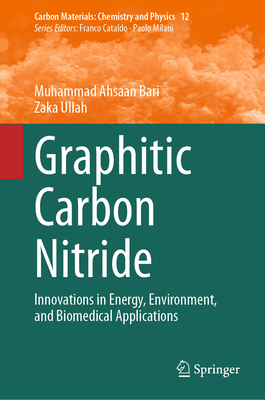
This book provides a comprehensive overview of the synthesis, properties, and multifunctional applications of g-C₃N₄, with a strong emphasis on its role in solving critical global challenges. As the world faces escalating challenges related to energy scarcity and environmental pollution, the demand for sustainable solutions has never been greater. Over the past four decades, global energy consumption has risen by an average of 2.2% per year, and by 2050, it is projected to increase by an additional 30%. Currently, fossil fuels such as coal, crude oil, and natural gas account for nearly 90% of the world's energy supply, underscoring the urgent need for renewable and eco-friendly alternatives. Among the most promising solutions is solar energy, an abundant, renewable, and sustainable resource. Photocatalysis, which harnesses solar energy for chemical transformations, has emerged as a key technology for addressing environmental and energy-related challenges. Central to this process are photocatalysts, materials that drive essential reactions such as water splitting, pollutant degradation, and CO₂ reduction. In recent years, graphitic carbon nitride (g-C₃N₄) has garnered significant attention as a metal-free semiconductor with remarkable photocatalytic properties. Its ease of synthesis, chemical stability, and tunable electronic structure make it highly effective in a wide range of applications, including energy conversion, environmental remediation, and biomedical technologies. Beyond photocatalysis, g-C₃N₄ has shown promise in supercapacitors, batteries, electrocatalysis, and emerging biomedical applications such as biosensors, bioimaging, drug delivery, and antimicrobial treatments. Covering photocatalysis, electrochemical energy storage, solar cells, and biomedical advancements, this book offers researchers, engineers, and industry professionals an in-depth understanding of the latest developments and future directions in this rapidly evolving field. With its interdisciplinary approach and practical focus, this book serves as a valuable resource for scientists working on materials science, nanotechnology, renewable energy, and environmental sustainability. By exploring both fundamental principles and cutting-edge applications, it aims to inspire new research pathways and innovative solutions for a cleaner and more sustainable future.
商品描述(中文翻譯)
本書提供了 g-C₃N₄ 的合成、特性及多功能應用的全面概述,並強調其在解決全球重大挑戰中的角色。隨著世界面臨日益嚴重的能源短缺和環境污染問題,對可持續解決方案的需求從未如此迫切。在過去四十年中,全球能源消耗平均每年增長 2.2%,預計到 2050 年將再增加 30%。目前,煤、原油和天然氣等化石燃料幾乎佔全球能源供應的 90%,這突顯了對可再生和環保替代方案的迫切需求。
在最有前景的解決方案中,太陽能是一種豐富、可再生且可持續的資源。光催化技術利用太陽能進行化學轉化,已成為應對環境和能源相關挑戰的關鍵技術。這一過程的核心是光催化劑,這些材料驅動水分解、污染物降解和二氧化碳還原等基本反應。
近年來,石墨相氮化碳 (g-C₃N₄) 作為一種無金屬半導體,因其卓越的光催化特性而受到廣泛關注。其合成簡便、化學穩定性高及可調的電子結構,使其在能源轉換、環境修復和生物醫學技術等多種應用中極具效能。除了光催化外,g-C₃N₄ 在超級電容器、電池、電催化以及新興的生物醫學應用(如生物傳感器、生物成像、藥物傳遞和抗微生物治療)中也顯示出潛力。
本書涵蓋光催化、電化學儲能、太陽能電池和生物醫學進展,為研究人員、工程師和業界專業人士提供了對這一快速發展領域最新進展和未來方向的深入理解。
憑藉其跨學科的方法和實用的重點,本書成為材料科學、納米技術、可再生能源和環境可持續性領域科學家的寶貴資源。通過探索基本原理和前沿應用,本書旨在激發新的研究途徑和創新解決方案,以實現更清潔和可持續的未來。
作者簡介
Muhammad Ahsaan Bari obtained a bachelor's degree in physics from Bahauddin Zakariya University, Multan, and a master's degree in material physics from Government College University (GCU), Lahore, Pakistan. He commenced his research activities at the Solar Cell Applications Research Laboratory, Department of Physics, GCU Lahore. He later served as a Visiting Lecturer at the Department of Physics, University of Education, Multan Campus, Pakistan. He is currently pursuing a Ph.D. in materials engineering at the NanoBioMedical Center, Adam Mickiewicz University in Poznań, Poland. His current research focuses on the synthesis, characterization, and structure study of two-dimensional materials for multipurpose usage. In addition to publishing several research articles in international journals, Ahsaan has co-authored two international books published by IOP Publishing. His interdisciplinary background and active contributions to the field position him well to contribute to the advancement of materials research for energy and environmental applications. Dr. Zaka Ullah earned his Ph.D. from the University of Chinese Academy of Sciences, China, and is currently working as an Assistant Professor of Physics at the University of Education, Pakistan. He has authored around 90 research articles in high-impact international journals, including Advanced Energy Materials, Energy Storage Materials, Advanced Functional Materials, Nano Energy, Chemical Engineering Journal, Small, and Journal of Materials Chemistry A. Dr. Ullah holds one Chinese patent and has received a research grant from the Higher Education Commission (HEC) of Pakistan. He is an editorial board member of several journals, including Frontiers in Materials, and has reviewed over 1,000 manuscripts for more than 100 SCI-indexed journals. In recognition of his peer-review contributions, he received the Publons/Web of Science Top Peer Reviewer Award in 2019. He has been a complimentary member of the American Chemical Society (ACS) during 2019-2020 and 2022-2023. He is also a life member of the Pakistan Institute of Physics.
作者簡介(中文翻譯)
Muhammad Ahsaan Bari 於巴哈烏丁·扎卡里亞大學(Bahauddin Zakariya University)獲得物理學學士學位,並在巴基斯坦拉合爾的政府學院大學(Government College University, GCU)獲得材料物理學碩士學位。他在GCU拉合爾的物理系太陽能電池應用研究實驗室開始了他的研究活動。之後,他擔任了巴基斯坦穆爾坦教育大學(University of Education, Multan Campus)物理系的訪問講師。目前,他正在波蘭波茲南的亞當·密茲基維奇大學(Adam Mickiewicz University)追求材料工程的博士學位。他目前的研究重點是合成、表徵和結構研究用於多用途的二維材料。
除了在國際期刊上發表多篇研究文章外,Ahsaan還共同撰寫了兩本由IOP Publishing出版的國際書籍。他的跨學科背景和對該領域的積極貢獻使他能夠為能源和環境應用的材料研究進步做出貢獻。
Dr. Zaka Ullah 於中國科學院大學獲得博士學位,目前在巴基斯坦教育大學擔任物理助理教授。他在高影響力的國際期刊上發表了約90篇研究文章,包括《Advanced Energy Materials》、《Energy Storage Materials》、《Advanced Functional Materials》、《Nano Energy》、《Chemical Engineering Journal》、《Small》和《Journal of Materials Chemistry A》。
Dr. Ullah擁有一項中國專利,並獲得了巴基斯坦高等教育委員會(Higher Education Commission, HEC)的研究資助。他是多本期刊的編輯委員會成員,包括《Frontiers in Materials》,並為超過100本SCI索引期刊審稿超過1,000篇手稿。因其同行評審的貢獻,他於2019年獲得了Publons/Web of Science頂級同行評審獎。他在2019-2020年和2022-2023年期間是美國化學學會(American Chemical Society, ACS)的免費會員,並且是巴基斯坦物理學會的終身會員。