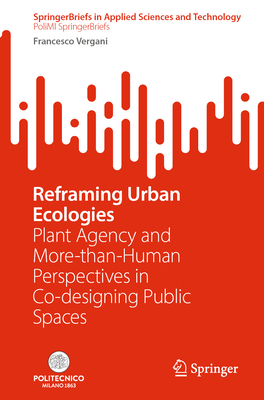
Reframing Urban Ecologies: Plant Agency and More-Than-Human Perspectives in Co-Designing Public Spaces
暫譯: 重塑城市生態:植物能動性與超人類視角在共同設計公共空間中的應用
Vergani, Francesco
商品描述
This book explores the emerging intersection of design, plant intelligence, and multispecies coexistence, with a particular focus on the relationship between plants and humans in urban public spaces. Rooted in recent findings from plant neurobiology and expanded through design theory, it challenges the entrenched perception of plants as passive, decorative resources and instead positions them as active, purposeful agents capable of interaction and influence within designed systems. By engaging with more-than-human and multispecies design, it underscores the importance of recognising and cultivating interspecies relations as a foundation for shaping plural, multispecies urban environments. At the core of this work lies the "Relational Atlas", a framework that decentres the human and reframes design space as relational space, where the shared interests of human and non-human agents converge at specific spatial and temporal nodes. Grounded in Critical Plant Studies, this framework informs participatory design practices that unsettle anthropocentric paradigms, highlight the ambiguous role of plants within urban ecosystems, and open pathways toward new forms of urban ecology.
商品描述(中文翻譯)
這本書探討了設計、植物智慧和多物種共存之間新興的交集,特別關注植物與人類在城市公共空間中的關係。根植於植物神經生物學的最新研究成果,並通過設計理論進行擴展,它挑戰了將植物視為被動、裝飾性資源的根深蒂固的觀念,而是將植物定位為能夠在設計系統中進行互動和影響的主動、有目的的代理者。通過參與超越人類和多物種的設計,它強調了認識和培養物種間關係的重要性,作為塑造多元、多物種城市環境的基礎。這項工作的核心是「關係地圖」(Relational Atlas),這是一個將人類置於邊緣的框架,並將設計空間重新構建為關係空間,在這裡,人類和非人類代理者的共同利益在特定的空間和時間節點上交匯。基於批判性植物研究,這一框架為參與式設計實踐提供了指導,顛覆了以人類為中心的範式,突顯了植物在城市生態系統中的模糊角色,並為新的城市生態形式開辟了道路。