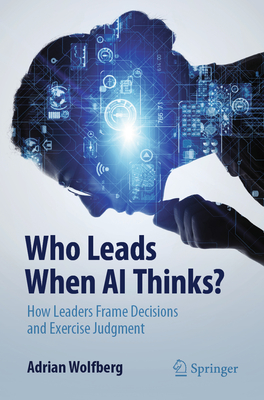
Who Leads When AI Thinks?: How Leaders Frame Decisions and Exercise Judgment
暫譯: 當 AI 思考時,誰來領導?:領導者如何框架決策與行使判斷
Wolfberg, Adrian
商品描述
商品描述(中文翻譯)
隨著人工智慧(AI)越來越深入日常個人、組織和社會生活的各個層面,問題不在於領導者是否應該做出使用與否的二元選擇,或是找出指導其使用的政策。我們面臨的問題是如何正確地將AI與人類參與進行對齊。這種對齊取決於要解決的問題的性質。問題的範圍從簡單到複雜,並隨著時間演變,因此存在不同階段的問題,具有不同的解決需求。隨著問題變得越來越複雜,人類的批判性和創造性思維佔主導地位,而當問題較簡單時,AI則佔主導地位。無論在未來幾年和幾十年內人工智慧的技術進步如何,面對複雜和以人為本的問題時,始終需要人類的參與。本書為領導者提供知識,以便在AI與人類參與的層級之間分配最有效的資源對齊,以確保成功的結果。
作者簡介
Adrian Wolfberg is the founder of Organizational Insight Consulting LLC and an adjunct professor at Case Western Reserve University's Weatherhead School of Management. He has four decades of combined experience as a naval officer, intelligence officer, change agent, boundary spanner, scholarly researcher, and educator. As a naval officer, he was trained as an airborne electronic intelligence officer collecting and analyzing electromagnetic signals from weapon-associated radars on adversary ground-, sea-, and air-based systems. He flew intelligence gathering missions from aircraft carrier-based reconnaissance aircraft and, then, assigned as an Indications & Warning officer assigned to the Joint Staff Intelligence Directorate. He was employed by Defense Intelligence Agency (DIA) as a civilian intelligence analyst where he was a counterdrug analyst. While at DIA, he created and led an internal organizational consulting capability called the DIA Knowledge Lab. Its purpose was to help intelligence officers in the organization--regardless of seniority or formal position--learn how to help themselves in order to solve or make progress solving intractable problems. While assigned to DIA, he graduated from the National War College, spent four years supporting the Office of National Drug Control Policy, four years teaching at the United States Army War College, and two years conducting research at the National Intelligence University. He earned a Ph.D. in organizational science from Case Western Reserve University. Adrian's scholarly research has focused on psychological, organizational, and technological (including machine intelligence) factors that affect the intelligence analyst's ability to create and communicate knowledge, and how decision-making consumers of intelligence receive and absorb knowledge. His experiences as an intelligence analyst, leading the DIA Knowledge Lab, and his scholarly research have addressed the challenges of confronting and navigating different knowledge boundaries.
作者簡介(中文翻譯)
阿德里安·沃爾夫伯格是組織洞察顧問公司(Organizational Insight Consulting LLC)的創始人,並擔任凱斯西儲大學(Case Western Reserve University)韋瑟海德管理學院的兼任教授。他擁有四十年的綜合經驗,曾擔任海軍軍官、情報官、變革推動者、跨界專家、學術研究者和教育工作者。作為海軍軍官,他接受了空中電子情報官的訓練,負責收集和分析來自敵方地面、海上和空中系統的武器相關雷達的電磁信號。他從航空母艦上的偵察機執行情報收集任務,隨後被指派為聯合參謀部情報局的警示與警告官。他曾在國防情報局(Defense Intelligence Agency, DIA)擔任民間情報分析師,專注於反毒品分析。在DIA工作期間,他創建並領導了一個名為DIA知識實驗室(DIA Knowledge Lab)的內部組織諮詢能力,旨在幫助組織中的情報官員——無論其資歷或正式職位如何——學習如何自助,以解決或在解決棘手問題上取得進展。在DIA任職期間,他畢業於國家戰爭學院,花了四年時間支持國家毒品控制政策辦公室,四年在美國陸軍戰爭學院任教,以及兩年在國家情報大學進行研究。他獲得了凱斯西儲大學的組織科學博士學位。阿德里安的學術研究專注於影響情報分析師創造和傳達知識能力的心理、組織和技術(包括機器智能)因素,以及情報消費者如何接收和吸收知識。他作為情報分析師的經驗、領導DIA知識實驗室的經歷以及他的學術研究,針對面對和導航不同知識邊界的挑戰進行了探討。