商品描述
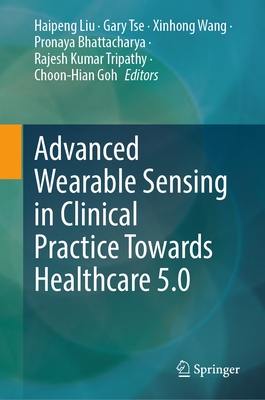
The book "Advanced wearable sensing in clinical practice towards healthcare 5.0" provides an overview of the state of the art that caters various professionals from clinical, scientific, and engineering backgrounds, as well as the novices that are interested in wearable sensing technology. It presents a comprehensive overview of modern wearable technology and unmet challenges. The book covers research hotspots in wearable technology, including advanced materials, low-cost wearable sensing systems, bio-signal processing, multimodal data analysis, artificial intelligence, and internet-of-medical-things. The readers from various research backgrounds (e.g., biomedical engineering, artificial intelligence, material sciences, etc.) can get an in-depth understanding of current trends and future directions. It summarizes different technologies regarding the clinical needs, theoretical basis, latest technical innovations, challenges in implementation, and limitations. These details will help improve existing designs and algorithms to cater different application scenarios. The book also provides the details of the implementation of advanced wearable sensors in different clinical settings including population screening, clinical diagnosis, to remote healthcare monitoring. The targeted diseases include cardiovascular, neurological, respiratory, metabolic, and other chronic diseases. By analyzing relevant standards and regulations, the challenges for next-generation wearable sensors are discussed in the context of healthcare ecosystem from a perspective of healthcare 5.0. In summary, the book focus on technical innovations but also delves into clinical and regulatory aspects. It caters a broad spectrum of readers. Clinical researchers, healthcare professionals, and students can obtain a better grasp of current trends of wearable technology. Biomedical engineers can understand the clinical needs, the state of the art, and the challenges in implementation, to develop better wearable sensors and algorithms for signal processing and data analysis. Public health researchers and policymakers can update the regulations and clinical guidelines to enable the integration of advanced wearable sensing technologies into current healthcare ecosystems.
商品描述(中文翻譯)
書籍《臨床實踐中的先進可穿戴感測技術:邁向健康照護5.0》提供了針對來自臨床、科學和工程背景的各類專業人士以及對可穿戴感測技術感興趣的新手的最新技術概述。它全面介紹了現代可穿戴技術及其未滿足的挑戰。該書涵蓋了可穿戴技術的研究熱點,包括先進材料、低成本可穿戴感測系統、生物信號處理、多模態數據分析、人工智慧和醫療物聯網。來自不同研究背景的讀者(例如生醫工程、人工智慧、材料科學等)可以深入了解當前趨勢和未來方向。書中總結了與臨床需求相關的不同技術、理論基礎、最新技術創新、實施挑戰和限制。這些細節將有助於改善現有設計和算法,以滿足不同的應用場景。該書還提供了在不同臨床環境中實施先進可穿戴感測器的詳細資訊,包括人群篩檢、臨床診斷和遠程健康監測。針對的疾病包括心血管、神經、呼吸、代謝及其他慢性疾病。通過分析相關標準和法規,書中討論了下一代可穿戴感測器在健康照護生態系統中的挑戰,並從健康照護5.0的角度進行探討。
總之,該書專注於技術創新,同時深入探討臨床和法規方面的內容,適合廣泛的讀者群體。臨床研究人員、健康照護專業人士和學生可以更好地掌握可穿戴技術的當前趨勢。生醫工程師可以了解臨床需求、最新技術狀況及實施挑戰,以開發更好的可穿戴感測器和信號處理及數據分析算法。公共衛生研究人員和政策制定者可以更新法規和臨床指導方針,以促進先進可穿戴感測技術在當前健康照護生態系統中的整合。
作者簡介
Haipeng Liu received the bachelor's and master's degrees in engineering from Zhejiang University, China, in 2012 and 2015, respectively, and the Doctor of Philosophy degree in medical sciences from The Chinese University of Hong Kong, in 2018. From 2019 to 2020, he was a Research Fellow with the Medical Technology Research Centre, Anglia Ruskin University. From 2020 to 2024, he was a Research Fellow with Coventry University, U.K. From 2024 to 2026, he was an Assistant Professor and a Lecturer of three undergraduate and master course modules with Coventry University. He was invited as a guest lecturer of European Institute of Innovation and Technology (EIT) Summer School, University Hospitals Coventry and Warwickshire NHS Trust, Nottingham Trent University (U.K.). He is a Visiting Professor of Universidad Santa Paula (Costa Rica) and Rushford Business School (Switzerland), and Visiting Associate Professor of Zhejiang Ocean University (China). He was a PI and a mentor of undergraduate student internship project of Anglia Ruskin University, and a mentor of the National Medical Research Association (NMRA, U.K.). He is the author of over 120 journal articles, 32 book chapters, and 12 conference papers, with over 3000 citations and the H-index of 28. His research interests include computational simulation of cardio-cerebrovascular diseases, AI-enhanced diagnostics, and wearable sensor development. He was a recipient of the Travel Award of British Heart Foundation, the Research and Innovation Support Fund of Anglia Ruskin University, Official Development Assistance (ODA) funding and four Ph.D. grants from Coventry University. Dr Liu is an Associate Fellow of the Higher Education Academy (AFHEA, U.K.). He is a member of the World Stroke Organization (WSO), Chinese Stroke Association (CSA, China), British Society for Cardiovascular Research (BSCR, U.K.), Institute of Physics and Engineering in Medicine (IPEM, U.K.), and Cardiovascular Analytics Group (CVAG, HKSAR of China). He is an editorial member of nine academic journals. He is a peer-reviewer of more than 200 academic papers from over 50 academic journals, four international conferences, and two book proposals. Gary Tse matriculated at Trinity Hall, University of Cambridge in 2005 to read pre-clinical medicine. He subsequently completed his clinical training at Imperial College London, as well as PhD and MD from the University of Cambridge. He is Associate Dean (Innovations and Research) at the School of Nursing and Health Sciences, Hong Kong Metropolitan University (HKMU). He is also Distinguished Chair Professor at the Department of Cardiology, Second Hospital of Tianjin Medical University, China and a Visiting Professor at the Faculty of Health and Medical Sciences, University of Surrey. Prior to joining HKMU, Prof. Tse held a joint position as Clinical Reader at the University of Kent (with permanent appointment until retirement age) and Public Health Consultant at the Medway Council in local government, UK. He serves as a Nucleus Committee Member of the Population Health Section, European Association of Preventive Cardiology. He is a Council Member, Secretary and President-Elect of the International Society of Electrocardiology, as well as a Member of the Board of Trustees of the International Society for Holter and Non-invasive Electrocardiology. He is a Fellow of the Faculty of Public Health, Royal College of Pathologists and Royal College of Physicians, and an elected Member of the European Academy of Sciences and Arts (Class II: Medicine). He has been listed on the World's Top 2% Scientists Released by Stanford University for the Cardiovascular System & Hematology subfield since 2020. He is ranked 26 th on the Top Cardiovascular Researchers from China in 2023. He was placed Top 0.05% scientists globally, ranking 87 th globally for cardiology in 2024 by ScholarGPS. He ranked 3rd for cardiology in China in 2025 by AD Scientific Index. He has an H-index of 66 and has obtained more than HK$200 million research-related funding. He leads the Hong Kong Risk Modelling Team focusing on the use of big data and artificial intelligence for the development of predictive models for estimating biological age and risk prediction of cardiovascular and cerebrovascular diseases. Pronaya Bhattacharya received the Ph.D. degree in optical networks from Dr. A. P. J. Abdul Kalam Technical University, Lucknow, Uttar Pradesh, India, in 2021. He is currently employed as an Assistant Professor with the Department of Computer Science and Engineering, Institute of Technology, Nirma University, Ahmedabad, India. He has over eight years of teaching experience. He has authored or coauthored more than 120 research papers in leading SCI journals and top core IEEE COMSOC A* conferences. Some of his top-notch findings are published in reputed SCI journals, like IEEE Journal of Biomedical and Health Informatics, IEEE Transactions on Vehicular Technology, IEEE Internet of Things Journal, IEEE Transactions on Network Science and Engineering, IEEE Access, ETT (Wiley), Expert Systems (Wiley), FGCS (Elsevier), OQEL (Springer), WPC (Springer), ACM-MOBICOM, IEEE-INFOCOM, IEEE-ICC, IEEECITS, IEEE-ICIEM, IEEE-CCCI, and IEEE-ECAI. His google scholar has 2126 citations to his credit with an H-index of 23 and i10-index of 53, and 1263 citations in Scopus, an H-index of 18. His research interests include healthcare analytics, optical switching and networking, federated learning, blockchain, and the IoT. He has been appointed as a Technical Committee Member and the Session Chair across the globe. He is a Lifetime Member of professional societies, like ISTE and IAENG. He was awarded the seven best paper awards in Springer ICRIC-2019, IEEE-ICIEM-2021, IEEE-ECAI-2021, and Springer COMS2-2021. He is a reviewer of 24 reputed SCI journals, like IEEE Internet of Things Journal, IEEE Transactions on Industrial Informatics, IEEE Access, IEEE Network, ETT (Wiley), IJCS (Wiley), MTAP (Springer), OSN (Elsevier), WPC (Springer), and others. Xinhong Wang received the Bachelor of Medical Imaging Technology from Sichuan University in 2011, and Ph.D. in Biomedical Engineering from Zhejiang University. He has been engaged in mixed research in the fields of biomedical engineering and medicine. He is currently an associate professor at the The Second Affiliated Hospital, Zhejiang University School of Medicine. His research interests are focused on medical imaging technology, imaging equipment development, and computational hemodynamics. Rajesh Kumar Tripathy received a Ph.D. in Machine Learning for Signal Processing from IIT Guwahati in 2017. He has also received B.Tech and M.Tech degrees in Electronics & Telecommunication and Biomedical Engineering from BPUT, Odisha, and NIT Rourkela, India. He is currently working as an associate professor at Government college of engineering, Keonjhar, India, since May 18 2026. Prior to this, he served for 1.5 years as an associate professor at BITS Pilani Hyderabad. He has more than nine years experience as an assistant professor in reputed institutions. He has published 92 papers in reputed international journals. He has also published 13 conference papers, 6 edited books, and 15 chapters. He has supervised 3 Ph.D. students in machine learning and biomedical signal processing. He has also supervised 5 M.Tech projects and 25 B.Tech projects. He is extensively working in research areas such as biomedical signal processing, machine learning, deep learning for healthcare, time-frequency analysis, medical image processing, Internet of Things (IoT), and embedded systems for healthcare applications. He received the Outstanding Potential for Excellence in Research Award (OPERA) from BITS Pilani in 2018. He has received INR 2,280,000 in funding from BITS Pilani through an OPERA grant to conduct high-quality research on signal processing and machine learning for healthcare data analysis. He has completed one sponsored project as a co-principal investigator from the CARS project, DRDO, India. His research papers are cited more than 4862 times on Google Scholar (accessed on 22/05/2026). He is also working as the associate editor for reputed journals like IEEE Access and Frontiers in Physiology. Goh Choon Hian is an Associate Professor and Head of the Department of Mechatronics and Biomedical Engineering at Universiti Tunku Abdul Rahman (UTAR), Malaysia. A registered Professional Engineer with the Board of Engineers Malaysia, he holds a Ph.D. and Bachelor's degree in Biomedical Engineering from Universiti Malaya. His research spans biomedical engineering, biosensors, robotics, and healthcare-focused applications of machine learning and artificial intelligence. Dr. Goh's interdisciplinary work bridges engineering and clinical medicine, with particular focus on falls, syncope, and patient monitoring technologies. He is committed to advancing biomedical innovation through collaborative, real-world solutions.
作者簡介(中文翻譯)
劉海鵬於2012年和2015年分別獲得中國浙江大學的工程學學士和碩士學位,並於2018年獲得香港中文大學的醫學科學博士學位。2019年至2020年,他擔任英國安格利亞魯斯金大學醫療技術研究中心的研究員。2020年至2024年,他在英國考文垂大學擔任研究員。2024年至2026年,他擔任考文垂大學的助理教授及三個本科和碩士課程模組的講師。他受邀擔任歐洲創新與技術研究所(EIT)夏季學校的客座講師,並在考文垂和華威郡國立醫院信託、諾丁漢特倫特大學(英國)擔任講師。他是哥斯達黎加聖保拉大學和瑞士拉什福德商學院的訪問教授,以及中國浙江海洋大學的訪問副教授。他曾擔任安格利亞魯斯金大學本科生實習項目的主要研究者和導師,並擔任英國國家醫學研究協會(NMRA)的導師。他是120多篇期刊文章、32章書籍和12篇會議論文的作者,引用次數超過3000次,H指數為28。他的研究興趣包括心腦血管疾病的計算模擬、AI增強診斷和可穿戴傳感器開發。他曾獲得英國心臟基金會的旅行獎、安格利亞魯斯金大學的研究與創新支持基金、官方發展援助(ODA)資金以及考文垂大學的四項博士獎學金。劉博士是英國高等教育學院的副研究員(AFHEA)。他是世界中風組織(WSO)、中國中風協會(CSA)、英國心血管研究學會(BSCR)、英國醫學物理與工程學會(IPEM)和心血管分析小組(CVAG,香港特別行政區)的成員。他是九本學術期刊的編輯成員,並擔任超過200篇學術論文的同行評審,來自50多本學術期刊、四個國際會議和兩個書籍提案。
謝嘉瑞於2005年入讀劍橋大學三一學院,學習臨床前醫學。隨後,他在倫敦帝國學院完成臨床培訓,並獲得劍橋大學的博士和醫學博士學位。他是香港都會大學(HKMU)護理與健康科學學院的副院長(創新與研究)。他同時擔任中國天津醫科大學第二醫院心臟病學系的特聘講座教授,以及薩里大學健康與醫學科學學院的訪問教授。在加入HKMU之前,謝教授在肯特大學擔任臨床讀者(永久任職至退休年齡)和英國地方政府梅德威市的公共衛生顧問。他是歐洲預防心臟病學會人口健康部門的核心委員會成員,並擔任國際心電圖學會的理事會成員、秘書和當選會長,以及國際霍爾特與非侵入性心電圖學會的董事會成員。他是英國公共衛生學院、皇家病理學會和皇家內科醫師學會的院士,並當選為歐洲科學與藝術學院的成員(第二類:醫學)。自2020年以來,他被列入斯坦福大學發布的全球前2%科學家名單,專注於心血管系統與血液學子領域。2023年,他在中國心血管研究者中排名第26位。2024年,他在全球心臟病學領域排名第87位,全球科學家中排名前0.05%。2025年,他在中國心臟病學領域排名第3位,根據AD科學指數。他的H指數為66,並獲得超過2億港元的研究相關資金。他領導香港風險建模團隊,專注於利用大數據和人工智慧開發預測模型,以估算生物年齡和心血管及腦血管疾病的風險預測。
普羅納亞·巴塔查里亞於2021年獲得印度烏塔爾邦盧克諾的阿卜杜勒·卡拉姆技術大學光學網絡博士學位。他目前在印度艾哈邁達巴德的尼爾瑪大學計算機科學與工程系擔任助理教授,擁有超過八年的教學經驗。他在領先的SCI期刊和頂級核心IEEE COMSOC A*會議上發表或共同發表了120多篇研究論文。他的一些頂尖研究成果發表在知名的SCI期刊上,如IEEE生物醫學與健康信息學期刊、IEEE車輛技術期刊、IEEE物聯網期刊、IEEE網絡科學與工程期刊、IEEE Access、ETT(Wiley)、專家系統(Wiley)、FGCS(Elsevier)、OQEL(Springer)、WPC(Springer)、ACM-MOBICOM、IEEE-INFOCOM、IEEE-ICC、IEEE-CITS、IEEE-ICIEM、IEEE-CCCI和IEEE-ECAI。他的Google Scholar引用次數為2126,H指數為23,i10指數為53,Scopus引用次數為1263,H指數為18。他的研究興趣包括醫療分析、光學切換與網絡、聯邦學習、區塊鏈和物聯網(IoT)。他被任命為全球技術委員會成員和會議主席。他是專業社團的終身會員,如ISTE和IAENG。他在Springer ICRIC-2019、IEEE-ICIEM-2021、IEEE-ECAI-2021和Springer COMS2-2021中獲得七項最佳論文獎。他是24本知名SCI期刊的審稿人,如IEEE物聯網期刊、IEEE工業信息學期刊、IEEE Access、IEEE Network、ETT(Wiley)、IJCS(Wiley)、MTAP(Springer)、OSN(Elsevier)、WPC(Springer)等。
王新宏於2011年獲得四川大學醫學影像技術學士學位,並獲得浙江大學生物醫學工程博士學位。他一直從事生物醫學工程和醫學領域的綜合研究。目前,他是浙江大學醫學院第二附屬醫院的副教授。他的研究興趣集中在醫學影像技術、影像設備開發和計算血流動力學。
拉傑什·庫馬爾·特里帕提於2017年獲得印度印度理工學院古瓦哈提的信號處理機器學習博士學位。他還獲得了印度奧里薩邦BPUT的電子與電信學士學位和生物醫學工程碩士學位,及印度NIT Rourkela的碩士學位。他自2026年5月18日起在印度凱翁賈爾政府工程學院擔任副教授。在此之前,他在比特斯比拉尼海德拉巴擔任副教授1.5年。他在知名機構擔任助理教授的經驗超過九年。他在國際知名期刊上發表了92篇論文,還發表了13篇會議論文、6本編輯書籍和15章書籍。他指導了3名機器學習和生物醫學信號處理的博士生,並指導了5個碩士項目和25個本科項目。他在生物醫學信號處理、機器學習、深度學習在醫療保健中的應用、時頻分析、醫學影像處理、物聯網(IoT)和醫療應用的嵌入式系統等研究領域廣泛工作。他於2018年獲得比特斯比拉尼的研究卓越潛力獎(OPERA)。他通過OPERA資助獲得了228萬印度盧比的資金,以進行高質量的信號處理和機器學習在醫療數據分析中的研究。他作為共同首席研究員完成了一個來自印度DRDO的CARS項目的贊助項目。他的研究論文在Google Scholar上的引用次數超過4862次(截至2026年5月22日)。他還擔任IEEE Access和Frontiers in Physiology等知名期刊的副編輯。
吳春賢是馬來西亞東姑阿都拉曼大學(UTAR)機電與生物醫學工程系的副教授及系主任。他是馬來西亞工程師委員會註冊的專業工程師,擁有馬來亞大學的生物醫學工程博士和學士學位。他的研究涵蓋生物醫學工程、生物傳感器、機器人技術以及機器學習和人工智慧在醫療保健中的應用。吳博士的跨學科工作橋接了工程學和臨床醫學,特別關注跌倒、暈厥和病人監測技術。他致力於通過協作和現實世界的解決方案推進生物醫學創新。