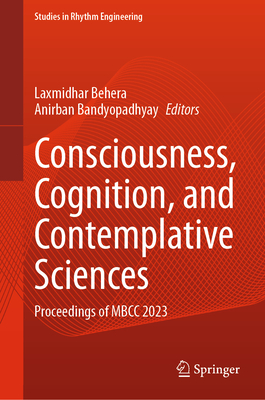
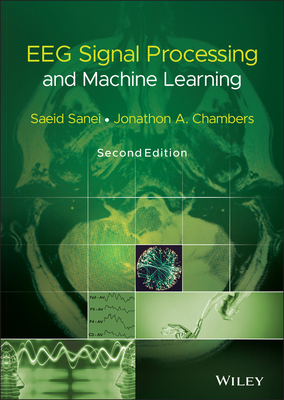
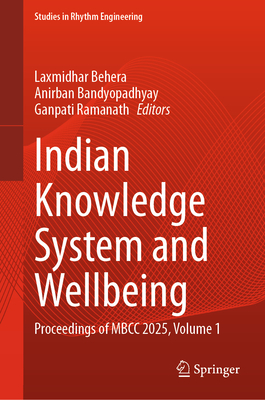
Cognitive Biomarkers and Bci Applications: Proceedings of Mbcc 2025, Volume 2
暫譯: 認知生物標記與腦機介面應用:2025年MBCC會議論文集,第二卷
Behera, Laxmidhar, Bandyopadhyay, Anirban, Ramanath, Ganpati
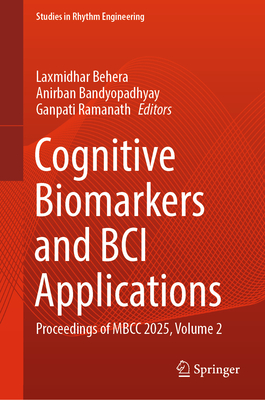
- 出版商: Springer
- 出版日期: 2026-07-12
- 售價: $13,590
- 貴賓價: 9.5 折 $12,910
- 語言: 英文
- 頁數: 340
- 裝訂: Hardcover - also called cloth, retail trade, or trade
- ISBN: 3032206332
- ISBN-13: 9783032206336
-
相關分類:
Machine Learning
海外代購書籍(需單獨結帳)
商品描述
This book presents a cutting-edge collection of research at the intersection of neuroscience, cognitive science, artificial intelligence, and consciousness studies. Covering a wide range of empirical and conceptual contributions, the chapters explore neural mechanisms of attention, emotion, motor control, and perception through advanced techniques such as EEG, MEG, fMRI, and BCI. Topics include brainwave modulation, meditation, seizure detection, machine learning in cognitive diagnostics, and AI-enabled health tools. The book also delves into language models, mind wandering, neuroplasticity, and psychophysiological interventions such as yoga, hypnotherapy, and nostril breathing. Integrating computational paradigms with experimental neurobiology, this collection showcases the growing synergy between traditional contemplative practices and modern brain science. It is an essential resource for scholars and practitioners seeking to understand the neural underpinnings of consciousness, cognition, and mental wellbeing in an age of digital transformation and interdisciplinary inquiry.
商品描述(中文翻譯)
本書呈現了一系列前沿研究,探討神經科學、認知科學、人工智慧與意識研究的交集。涵蓋了廣泛的實證與概念貢獻,各章節透過先進技術如腦電圖(EEG)、磁腦圖(MEG)、功能性磁共振成像(fMRI)和腦機介面(BCI)探討注意力、情緒、運動控制和知覺的神經機制。主題包括腦波調節、冥想、癲癇檢測、認知診斷中的機器學習,以及人工智慧驅動的健康工具。本書還深入探討語言模型、心智漫遊、神經可塑性,以及瑜伽、催眠治療和鼻孔呼吸等心理生理介入。將計算範式與實驗神經生物學相結合,本書展示了傳統靜思實踐與現代腦科學之間日益增長的協同效應。對於尋求理解意識、認知和心理健康的神經基礎的學者和實踐者而言,這是一本不可或缺的資源,特別是在數位轉型和跨學科探究的時代。
作者簡介
Prof. Laxmidhar Behera is the director of IIT Mandi and a senior professor in the Department of Electrical Engineering at IIT Kanpur. He earned his B.Sc. (Engg) and M.Sc. (Engg) from NIT Rourkela and completed his Ph.D. from IIT Delhi in 1996. With postdoctoral research at the German National Research Centre for Information Technology, he has over 28 years of experience in teaching and research. His expertise spans intelligent systems, control, vision-based robotics, warehouse automation, brain-computer interfaces, drone technology, and consciousness studies. He has led projects worth over ₹25 crores and collaborated with TCS, Renault Nissan, and BEL. Prof. Behera has supervised 31 Ph.D. students, 70+ master's theses, authored three textbooks, and published over 380 papers. His book Intelligent Control of Robotic Systems won the Best Engineering Book Award (2020-21).
Anirban Bandyopadhyay is a Principal Research Scientist at the National Institute for Materials Science (NIMS), Tsukuba, Japan. He did Ph.D. in IACS, Kolkata, 2005. 2005-2008 ICYS research fellow at ICYS, NIMS, Japan. In 2008, joined NIMS, built organic jelly based artificial brain, quantum computer, molecular motor based drugs, invented Dodecanogram for deep consciousness measurement, built Polyatomic time crystal based Quantum cryptographic language, written a book "Nanobrain: The making of an artificial brain from a time crystal", 2020. 2013-2014 visiting professor at the Massachusetts Institute of Technology (MIT), USA. Hitachi Science and Technology award 2010, Inamori Foundation award 2011-2012, Kurata Foundation Award, and Sewa Society International member, Japan. Published 197 papers, 42 patents, 43 products invented, 14 inventions commercialized, edited 27 books.
Prof. Ganpati Ramanath is the John Tod Horton professor at Rensselaer Polytechnic Institute. He received his Ph.D. in Materials Science and Engineering from the University of Illinois Urbana in 1997, following degrees from IIT Madras and the University of Cincinnati. His research focuses on structure-processing-property relationships in nanomaterials and interfaces for energy and electronics. He has published over 185 journal articles (h-index 53, 12,000 citations), holds 9 US patents, and has delivered more than 235 invited talks globally. A co-founder of ThermoAura Inc., he served as the director of the NY State Center for Future Energy Systems and was an editor for IEEE Transactions on Nanotechnology. Honors include Fellowships of MRS, APS, and AVS, the NSF CAREER Award, and the Humboldt Bessel Award. He has held visiting positions at institutions in Germany, Japan, Sweden, Australia, and India, including IISc Bangalore and RWTH Aachen.
作者簡介(中文翻譯)
教授 Laxmidhar Behera 是 IIT Mandi 的主任,並且是 IIT Kanpur 電機工程系的資深教授。他在 NIT Rourkela 獲得了工學學士和工學碩士學位,並於 1996 年在 IIT Delhi 完成博士學位。擁有德國國家資訊技術研究中心的博士後研究經驗,他在教學和研究方面擁有超過 28 年的經驗。他的專業領域涵蓋智能系統、控制、基於視覺的機器人技術、倉庫自動化、大腦-電腦介面、無人機技術和意識研究。他主導的項目價值超過 ₹25 億,並與 TCS、Renault Nissan 和 BEL 合作。Behera 教授已指導 31 位博士生,70 多篇碩士論文,著作三本教科書,並發表超過 380 篇論文。他的著作《智能機器人系統控制》獲得了最佳工程書籍獎(2020-21)。
Anirban Bandyopadhyay 是日本筑波的國立材料科學研究所(NIMS)的首席研究科學家。他於 2005 年在 IACS(印度科學研究所)獲得博士學位。2005-2008 年期間,他是 NIMS 的 ICYS 研究員。2008 年加入 NIMS,研發基於有機果凍的人工大腦、量子電腦、基於分子馬達的藥物,發明了用於深層意識測量的 Dodecanogram,建立了基於多原子時間晶體的量子密碼語言,並於 2020 年撰寫了《納米大腦:從時間晶體製造人工大腦》。他於 2013-2014 年擔任美國麻省理工學院(MIT)的訪問教授。曾獲得 2010 年日立科學與技術獎、2011-2012 年稻盛財團獎、Kurata 財團獎,並是日本 Sewa Society International 的成員。他發表了 197 篇論文,擁有 42 項專利,發明了 43 種產品,商業化了 14 項發明,編輯了 27 本書籍。
教授 Ganpati Ramanath 是倫斯勒理工學院的 John Tod Horton 教授。他於 1997 年在伊利諾伊大學厄本那分校獲得材料科學與工程的博士學位,之前在 IIT Madras 和辛辛那提大學獲得學位。他的研究專注於納米材料和界面在能源和電子學中的結構-加工-性質關係。他已發表超過 185 篇期刊文章(h-index 53,12,000 次引用),擁有 9 項美國專利,並在全球發表了超過 235 次受邀演講。作為 ThermoAura Inc. 的共同創辦人,他曾擔任紐約州未來能源系統中心的主任,並擔任 IEEE Transactions on Nanotechnology 的編輯。榮譽包括 MRS、APS 和 AVS 的院士、NSF CAREER 獎和洪堡貝塞爾獎。他曾在德國、日本、瑞典、澳大利亞和印度的多個機構擔任訪問職位,包括班加羅爾的印度科學研究所(IISc)和亞琛工業大學(RWTH Aachen)。