商品描述
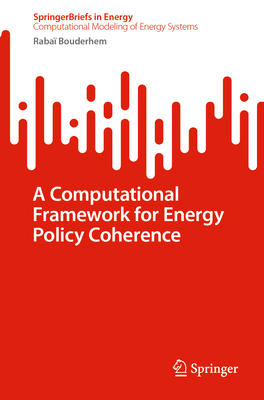
Computational methods can achieve high accuracy, process large document collections, and generate actionable policy insights. Nevertheless, energy policy remains inconsistent, and institutional fragmentation persists, excluding marginalized populations from reshaping governance. This issue stems from conceptual failures rather than technical ones, as biased algorithms reinforce existing power structures. This book examines why these challenges arise. The governance-data-inequality nexus shows how institutional fragmentation creates biased data infrastructures that train algorithms, perpetuating fragmentation. By combining complexity science with ethical frameworks like energy justice, the analysis reveals why conventional computational approaches serve only as diagnostic tools rather than genuine governance solutions. The BRIDGE-E framework redefines computational governance. Equity is not merely an afterthought but a guiding principle for algorithmic systems. Epistemic inclusion shapes what counts as data, and energy justice determines policy pathways. Deliberation is central, promoting internal institutional capacity instead of reliance on external solutions. BRIDGE-E effectively addresses the challenges of institutional fragmentation, data scarcity, and contested values in governance.
A Computational Framework for Energy Policy Coherence serves policymakers, energy planners, AI researchers, and development practitioners by explaining how computational innovation can address governance fragmentation while ensuring equity.
商品描述(中文翻譯)
計算方法可以實現高精度、處理大量文檔集合,並生成可行的政策見解。然而,能源政策仍然不一致,且制度碎片化持續存在,排除了邊緣化群體重新塑造治理的機會。這一問題源於概念上的失敗,而非技術上的問題,因為偏見算法強化了現有的權力結構。本書探討了這些挑戰產生的原因。治理-數據-不平等的聯繫顯示,制度碎片化如何創造出偏見的數據基礎設施,這些基礎設施訓練算法,進一步延續了碎片化。通過將複雜性科學與能源正義等倫理框架相結合,分析揭示了為什麼傳統的計算方法僅作為診斷工具,而非真正的治理解決方案。BRIDGE-E 框架重新定義了計算治理。公平不僅僅是一個事後考量,而是算法系統的指導原則。認識論的包容性塑造了什麼被視為數據,而能源正義則決定了政策路徑。審議是核心,促進內部制度能力的提升,而不是依賴外部解決方案。BRIDGE-E 有效應對了制度碎片化、數據稀缺和治理中有争议的價值觀的挑戰。
《能源政策一致性的計算框架》為政策制定者、能源規劃者、人工智慧研究人員和發展實踐者提供了說明,解釋了計算創新如何在確保公平的同時解決治理碎片化問題。
作者簡介
Rabaï Bouderhem is an Associate Professor of Law. His research investigates the regulation and governance of artificial intelligence and data science methodologies through an interdisciplinary lens, integrating legal analysis with complexity economics, epistemic injustice theory, information ethics, and responsible AI frameworks to develop adaptive and equitable regulatory approaches.
作者簡介(中文翻譯)
拉巴伊·布德赫姆是法律副教授。他的研究透過跨學科的視角探討人工智慧和數據科學方法的規範與治理,將法律分析與複雜性經濟學、認識論不公理論、資訊倫理以及負責任的人工智慧框架相結合,以發展適應性和公平的監管方法。