商品描述
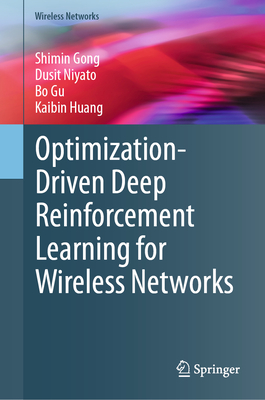
This book explores the integration and interplay of model-based optimization and model-free deep reinforcement learning (DRL). It addresses the growing complexity of future wireless networks. This book begins with a concise overview of foundational DRL algorithms and then delves into advanced frameworks, including optimization-driven DRL, hierarchical DRL, multi-agent DRL, Bayesian-enhanced DRL, and Lyapunov-guided DRL. Each framework is illustrated through case studies in emerging scenarios such as intelligent reflecting surface (IRS)-assisted wireless communications, UAV-assisted wireless networks, backscatter-assisted relay communications, and mobile edge computing. Each chapter of this book demonstrates how partial system knowledge, inherent structural properties, and problem decomposition can dramatically accelerate learning convergence. It also improves sample efficiency, and enhance robustness in decentralized, dynamic, and large-scale wireless networks. Tailored for researchers and graduate students focused on wireless communications and AI-driven networking, it bridges theoretical innovation with practical implementation challenges. It provides a roadmap for designing intelligent, autonomous, and resource-efficient next-generation wireless systems. Engineers and professional specializing in AI and machine learning for wireless systems will also find this book useful as a reference.
商品描述(中文翻譯)
本書探討基於模型的優化與無模型深度強化學習(DRL)之間的整合與相互作用。它針對未來無線網絡日益增長的複雜性進行討論。本書首先簡要概述了基礎的 DRL 演算法,然後深入探討先進的框架,包括以優化為驅動的 DRL、分層 DRL、多代理 DRL、貝葉斯增強的 DRL 以及李雅普諾夫引導的 DRL。每個框架都通過在新興場景中的案例研究進行說明,例如智能反射面(IRS)輔助的無線通信、無人機(UAV)輔助的無線網絡、反向散射輔助的中繼通信以及移動邊緣計算。
本書的每一章都展示了部分系統知識、固有結構特性和問題分解如何顯著加速學習收斂。它還提高了樣本效率,並增強了在去中心化、動態和大規模無線網絡中的穩健性。
本書專為專注於無線通信和人工智慧驅動網絡的研究人員和研究生量身定制,橋接理論創新與實際實施挑戰。它提供了一個設計智能、自主和資源高效的下一代無線系統的路線圖。專注於無線系統的人工智慧和機器學習的工程師和專業人士也會發現本書作為參考資料非常有用。
作者簡介
Shimin Gong received the B.Eng. and M.Eeng. degrees in electronics and information engineering from the Huazhong University of Science and Technology, Wuhan, China, in 2008 and 2012, respectively, and the Ph.D. degree in computer engineering from Nanyang Technological University, Singapore, in 2014. He is currently a Professor with the School of Intelligent Systems Engineering, Sun Yat-sen University, Shenzhen, China. His research interests include wireless powered communications, backscatter communications, and machine learning in wireless communications. He was a co-recipient of the IEEE WCNC 2019 Best Paper Award on MAC and Cross-layer Design and the 2023 IEEE Communications Society Best Survey Paper Award. He is an Associate Editor of IEEE TRANSACTIONS ON VEHICULAR TECHNOLOGY. Dusit Niyato (Fellow, IEEE) received the B.Eng. from the King Mongkuts Institute of Technology Ladkrabang, Bangkok, Thailand, in 1999 and the Ph.D. degree in electrical and computer engineering from the University of Manitoba, Winnipeg, MB, Canada, in 2008. He is currently a Professor with the School of Computer Science and Engineering, Nanyang Technological University, Singapore. His research interests include the area of energy harvesting for wireless communication, Internet of Things, and sensor networks. Bo Gu received the Ph.D. degree from Waseda University, Tokyo, Japan, in 2013. He is currently a Professor with the School of Intelligent Systems Engineering, Sun Yat-sen University, Shenzhen, China. He was a Research Engineer with Sony Digital Network Applications, Yokohama, Japan, from 2007 to 2011, an Assistant Professor with Waseda University from 2011 to 2016, and an Associate Professor with Kogakuin University, Tokyo, from 2016 to 2018. His research interests include the Internet of Things, edge computing, network economics, and machine learning. He was a recipient of the IEEE ComSoc Communications Systems Integration and Modeling (CSIM) Technical Committee Best Journal Article Award in 2019, the Asia-Pacific Network Operations and Management Symposium (APNOMS) Best Paper Award in 2016, and the IEICE Young Researcher's Award in 2011. He is a member of IEICE. Kaibin Huang (Fellow, IEEE) received the B.Eng. and M.Eng. degrees from the National University of Singapore, and the Ph.D. degree from The University of Texas at Austin, all in electrical engineering. He is a Philip K, H, Wong Wilson K, L, Wong Professor in electrical engineering and the Department Head with the Department of Electrical and Electronic Engineering, The University of Hong Kong (HKU), Hong Kong. His work was recognized with seven Best Paper awards from the IEEE Communications Society. He is a member of the Engineering Panel of Hong Kong Research Grants Council (RGC) and a RGC Research Fellow (2021 Class).
作者簡介(中文翻譯)
施敏恭於2008年和2012年分別獲得中國武漢華中科技大學電子與信息工程的學士及碩士學位,並於2014年獲得新加坡南洋理工大學計算機工程的博士學位。他目前是中國深圳中山大學智能系統工程學院的教授。他的研究興趣包括無線供電通信、反向散射通信以及無線通信中的機器學習。他曾共同獲得2019年IEEE WCNC最佳論文獎(MAC和跨層設計)及2023年IEEE通信學會最佳調查論文獎。他是《IEEE TRANSACTIONS ON VEHICULAR TECHNOLOGY》的副編輯。
杜西特·尼亞托(Fellow, IEEE)於1999年獲得泰國曼谷國王蒙克特科技學院的學士學位,並於2008年獲得加拿大曼尼托巴大學電氣與計算機工程的博士學位。他目前是新加坡南洋理工大學計算機科學與工程學院的教授。他的研究興趣包括無線通信的能量收集、物聯網及傳感器網絡領域。
郭博於2013年獲得日本東京早稻田大學的博士學位。他目前是中國深圳中山大學智能系統工程學院的教授。他曾於2007年至2011年擔任日本橫濱索尼數字網絡應用公司的研究工程師,2011年至2016年擔任早稻田大學的助理教授,2016年至2018年擔任東京工科大學的副教授。他的研究興趣包括物聯網、邊緣計算、網絡經濟學及機器學習。他曾於2019年獲得IEEE ComSoc通信系統集成與建模(CSIM)技術委員會最佳期刊文章獎,2016年獲得亞太網絡運營與管理研討會(APNOMS)最佳論文獎,以及2011年獲得IEICE青年研究者獎。他是IEICE的成員。
黃凱彬(Fellow, IEEE)於新加坡國立大學獲得學士及碩士學位,並於德克薩斯大學奧斯汀分校獲得電氣工程的博士學位。他是香港大學(HKU)電氣與電子工程系的菲利普·K·H·黃威爾遜·K·L·黃教授及系主任。他的工作曾獲得IEEE通信學會的七項最佳論文獎。他是香港研究資助局(RGC)工程小組的成員,並於2021年成為RGC研究員。