-
出版商:
Springer
-
出版日期:
2026-06-26
-
售價:
$8,320
-
貴賓價:
9.5 折
$7,904
-
語言:
英文
-
頁數:
120
-
裝訂:
Quality Paper - also called trade paper
-
ISBN:
3032274044
-
ISBN-13:
9783032274045
-
相關分類:
3D建模 3D-modeling
商品描述
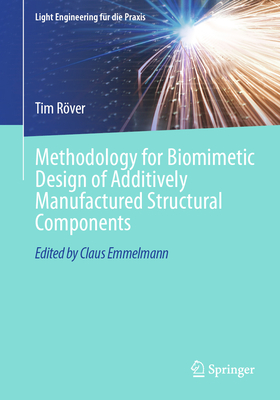
Previous research indicates that incorporating biomimetic beam-like structures into topology optimization designs can enhance the lightweight characteristics of components such as aviation brackets that were produced by the additive manufacturing technique of powder bed fusion of metal with a laser beam. However, there is a need for detailed design methodologies to effectively implement such design modifications. The first research question of this thesis explores how a design methodology can be developed to generate biomimetic design components from density-based topology optimization designs. The secondary research question assesses the lightweight characteristics of the outcomes generated by such a methodology, comparing them to those of the input topology optimization design. A five-step design methodology with detailed submethodologies was developed. It takes a topology optimization design as an input and, in the first step generates an auxiliary 3D model consisting of cylindrical beams and spherical nodes that resembles the topology optimization design. A skeletonization approach is used for abstraction. In the second step, a finite element analysis of the auxiliary model is performed to evaluate the internal forces and moments in its beams. In step three, two biomimetic parametric beam designs as well as two conventional parametric beam designs are considered for parameter optimization for each of the beam load cases from the auxiliary model. The most lightweight optimized beam is selected for each of the beams of the abstraction, respectively. Buckling analyses and re-dimensioning of optimized beams are performed, if necessary. In step four, adapted nodes for the biomimetic component design are generated. The nodes contain a lattice infill structure to ensure powder-removability and a lightweight design. In step five, the complete biomimetic component design is validated by finite element analysis and the mass of the component is evaluated. Thus, a complete design methodology was developed successfully. Three common topology optimization problem formulations were considered for validation of the developed biomimetic design methodology. Finite element analyses of the biomimetic designs yielded the existence of critical regions of high stress in all three of the biomimetic components. However, the locations of critical stresses have been associated with specific regions within the biomimetic designs. Mass evaluation showed that the biomimetic component designs are 12.5 % - 30.3 % lighter compared to their topology optimization counterparts. The developed methodology stands out from previously existing research as it considers the internal forces and moments in beams and closes a research gap for detailed design methodologies for biomimetic structural components. This thesis contributes to harnessing the immense potential of biomimetic design in lightweight industries, such as aerospace and automotive. Future research should refine the presented methodology and perform experimental assessment of component designs generated by it.
商品描述(中文翻譯)
先前的研究顯示,將仿生梁狀結構納入拓樸優化設計中,可以增強由金屬粉末床熔融技術和激光束製造的航空支架等元件的輕量化特性。然而,仍需詳細的設計方法來有效實施這些設計修改。本論文的第一個研究問題探討如何開發一種設計方法,以從基於密度的拓樸優化設計生成仿生設計元件。第二個研究問題評估該方法生成的結果的輕量化特性,並將其與輸入的拓樸優化設計進行比較。開發了一種包含詳細子方法的五步設計方法。該方法以拓樸優化設計作為輸入,第一步生成一個由圓柱梁和球形節點組成的輔助三維模型,該模型類似於拓樸優化設計。使用骨架化方法進行抽象。在第二步中,對輔助模型進行有限元素分析,以評估其梁中的內部力和力矩。在第三步中,考慮兩種仿生參數梁設計以及兩種傳統參數梁設計,對輔助模型的每個梁載荷情況進行參數優化。分別為每個抽象的梁選擇最輕量化的優化梁。如果需要,還會進行屈曲分析和優化梁的重新尺寸設計。在第四步中,生成適應於仿生元件設計的節點。這些節點包含一種格子填充結構,以確保粉末可去除性和輕量化設計。在第五步中,通過有限元素分析驗證完整的仿生元件設計,並評估元件的質量。因此,成功開發了一種完整的設計方法。考慮了三種常見的拓樸優化問題公式,以驗證所開發的仿生設計方法。對仿生設計的有限元素分析顯示,所有三個仿生元件中都存在高應力的關鍵區域。然而,關鍵應力的位置與仿生設計中的特定區域相關聯。質量評估顯示,仿生元件設計比其拓樸優化對應物輕12.5%至30.3%。所開發的方法與先前的研究相比,突出了其考慮梁中的內部力和力矩,填補了仿生結構元件詳細設計方法的研究空白。本論文有助於發揮仿生設計在航空航天和汽車等輕量化產業中的巨大潛力。未來的研究應該完善所提出的方法,並對其生成的元件設計進行實驗評估。
作者簡介
Tim Röver (born 1992) earned his M.Sc. at Hamburg University of Technology (TUHH), where he conducted his PhD research. His work focuses on additive manufacturing, topology optimization, biomimetics, and numerical methods for mechanical and thermal component optimization. He held visiting researcher positions at Fraunhofer IAPT (Hamburg) and Mondragon University (Spain). At TUHH, Röver led a research group and currently serves as Head of Innovation in industry. He has co-authored over 16 peer-reviewed publications.
作者簡介(中文翻譯)
Tim Röver(生於1992年)在漢堡科技大學(TUHH)獲得碩士學位,並在該校進行博士研究。他的研究專注於增材製造、拓撲優化、生物仿生學以及機械和熱元件優化的數值方法。他曾在弗勞恩霍夫IAPT(漢堡)和蒙德拉貢大學(西班牙)擔任訪問研究員。在TUHH,Röver領導了一個研究小組,並目前擔任業界創新部門負責人。他共同撰寫了超過16篇經過同行評審的出版物。