相關主題

商品描述
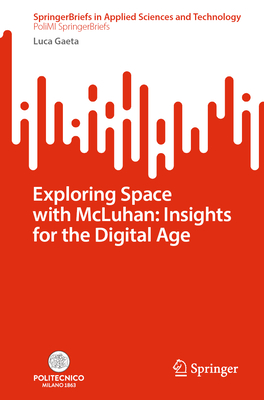
This book investigates the spatial relations between digital media and society, relying on Marshall McLuhan's probes into the effects of communication technology. It argues that McLuhan's ideas may be relevant to understanding how contemporary space, digital media, and society adapt to one another. This aim is pursued in three steps. First, McLuhan's media theory is discussed with a focus on the effects of media in structuring the conditions of space perception at both the individual and the social levels. The concepts of visual and acoustic space are examined in relation to mechanical and electric media, respectively. Second, McLuhan's lifelong interest in the city as a learning environment is contrasted with his claim that cities are obsolete vis-à-vis the global village of instant electronic communication. The contradiction is more apparent than real, as McLuhan imagined a future for cities as programmed environments for the sensory training of citizens and actively engaged in discussions with urban planners and designers. Third, McLuhan's insights are extended beyond his time to make sense of the current relationship between digital media, space, and urban society. The evolution of cyberspace from a virtual realm to its hybridisation with physical space is traced across both literary and scholarly sources. The effects of a hybrid space concept on urban planning and design approaches in the digital age are explored. McLuhan's legacy, with its humanistic breadth, enables an understanding of the present media ecology that moves beyond the efficiency-oriented paradigm of the smart city discourse. The book bridges technological consciousness and social responsibility in the fields of space theory and spatial planning. It targets an audience that is open to interdisciplinary dialogue between science and the humanities to promote sustainable cities and communities.
商品描述(中文翻譯)
本書探討數位媒體與社會之間的空間關係,依賴馬歇爾·麥克盧漢(Marshall McLuhan)對於通訊技術影響的深入研究。書中主張,麥克盧漢的觀點可能對理解當代空間、數位媒體與社會如何相互適應具有重要意義。這一目標分三個步驟進行。首先,討論麥克盧漢的媒體理論,重點在於媒體如何在個人和社會層面上結構化空間感知的條件。視覺空間和聲音空間的概念分別與機械媒體和電媒體進行檢視。其次,麥克盧漢對城市作為學習環境的終身興趣與他聲稱城市在即時電子通訊的全球村面前已經過時的觀點形成對比。這一矛盾看似明顯,但實際上並不真實,因為麥克盧漢想像未來的城市是為市民的感官訓練而設計的程式化環境,並積極與城市規劃者和設計師進行討論。第三,將麥克盧漢的見解延伸至他所處的時代之外,以理解當前數位媒體、空間與城市社會之間的關係。從虛擬領域到與實體空間的混合化,網路空間的演變在文學和學術來源中得以追溯。探討混合空間概念對數位時代城市規劃和設計方法的影響。麥克盧漢的遺產,憑藉其人文的廣度,使我們能夠理解當前的媒體生態,超越以效率為導向的智慧城市話語範式。本書在空間理論和空間規劃領域架起了技術意識與社會責任之間的橋樑,目標讀者是對科學與人文之間的跨學科對話持開放態度,以促進可持續的城市和社區。