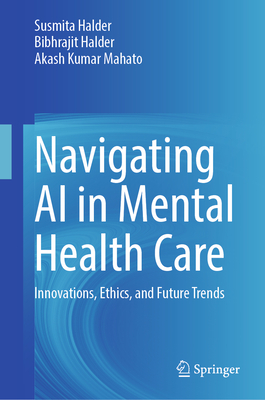
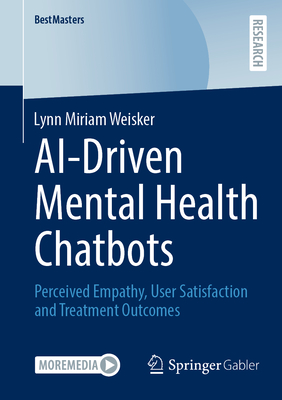
Ai-Driven Mental Health Chatbots: Perceived Empathy, User Satisfaction and Treatment Outcomes
暫譯: AI 驅動的心理健康聊天機器人:感知同理心、用戶滿意度與治療結果
Weisker, Lynn Miriam
- 出版商: Springer Gabler
- 出版日期: 2025-11-09
- 售價: $4,160
- 貴賓價: 9.5 折 $3,952
- 語言: 英文
- 頁數: 103
- 裝訂: Quality Paper - also called trade paper
- ISBN: 3658501359
- ISBN-13: 9783658501358
-
相關分類:
Chatbot、Text-mining
海外代購書籍(需單獨結帳)
商品描述
As artificial intelligence (AI) continues to evolve, its potential role in online mental health therapy is gaining increasing interest. In this study, a quantitative 2x2 factorial experimental design is used to explore how AI transparency, theory of change (ToC), therapy style of advice, AI acceptance rate and type of mental health issue influence user perceptions of AI-driven mental health chatbots. Using a mixed-methods approach that combines quantitative analysis with sentiment and emotional text mining, the research examines how these variables shape user experiences in terms of perceived empathy, satisfaction and treatment outcomes. The findings reveal that participants who are aware they are interacting with AI tend to report more positive experiences, particularly when an emotional ToC is employed. Furthermore, emotional advice styles elicit deeper emotional engagement, while rational advice is associated with more positive sentiment. Additionally, the emotional tone and conversational dynamics vary by discussion topic, with depression-related conversations showing greater emotional intensity. These insights underline the importance of aligning chatbot communication styles with individual user expectations and emotional needs, offering implications for the design of more personalised mental health technologies.
商品描述(中文翻譯)
隨著人工智慧(AI)的不斷演進,其在網路心理健康治療中的潛在角色正受到越來越多的關注。本研究採用定量的2x2因子實驗設計,探討AI透明度、變革理論(Theory of Change, ToC)、建議的治療風格、AI接受度及心理健康問題類型如何影響使用者對AI驅動的心理健康聊天機器人的感知。研究採用混合方法,結合定量分析與情感及情緒文本挖掘,檢視這些變數如何塑造使用者在感知同理心、滿意度及治療結果方面的體驗。研究結果顯示,參與者若意識到自己正在與AI互動,通常會報告更正面的體驗,特別是在使用情感ToC時。此外,情感建議風格引發更深層的情感參與,而理性建議則與更正面的情感相關聯。此外,情感語調和對話動態會因討論主題而異,與抑鬱相關的對話顯示出更高的情感強度。這些見解強調了將聊天機器人的溝通風格與個別使用者的期望和情感需求對齊的重要性,並為設計更個性化的心理健康技術提供了啟示。
作者簡介
Lynn Miriam Weisker is a master's student at the Department of Information Systems at the University of Liechtenstein. Her research focuses on AI-supported mental health chatbots and their use in supporting mental health.
作者簡介(中文翻譯)
Lynn Miriam Weisker 是列支敦士登大學資訊系的碩士生。她的研究專注於人工智慧支援的心理健康聊天機器人及其在心理健康支持中的應用。