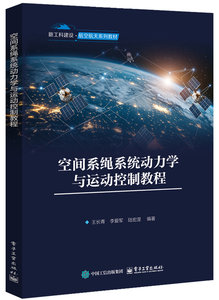
可展網狀天線設計與在軌動力學行為預示(英文版)
付康佳

- 出版商: 清華大學
- 出版日期: 2026-09-01
- 售價: $534
- 語言: 簡體中文
- 頁數: 144
- ISBN: 7302709939
- ISBN-13: 9787302709930
-
相關分類:
動力學 Dynamics
下單後立即進貨 (約4週~6週)


相關主題

商品描述
《可展網狀天線設計與在軌動力學行為預示(英文版)》是關於空間大型可展天線動力學建模與天地重力等效設計的專業書籍,開展了桁架、網面和微重力系統的優化設計,盡可能減小天地力學環境差以實現在軌特性的精確預示。主要內容包括:(1) 網狀天線的多體動力學建模及展開機構設計;(2) 對張緊力魯棒的網面構型設計方法;(3) 地面微重力模擬與天地重力等效設計。 《可展網狀天線設計與在軌動力學行為預示(英文版)》可供航天領域,特別是從事大型空間可展結構的相關人員閱讀,也適合作為相關院校和科研院所的研究生參考用書。
作者簡介
付康佳,男,軍事科學院國防科技創新研究院助理研究員,研究方向為多體動力學與軟體機器人等,主持及參與參與多項研究課題,部分成果發表在Adv. Func. Mat與AIAA J等期刊。
目錄大綱
1 Introduction
Background and Significance
1.2 Current Research and Unresolved Issues
1.2.1 Design of Deployable Structures
1.2.2 Modeling and Simulation of Deployable Antennas
1.2.3 Design of Cable Networks
1.2.4 On-Ground Validation
1.3 Research Content of this Thesis
2 From Modeling to Design of Synchronization Mechanisms in Mesh Antennas
2.1 Introduction
2.2 Multiscale Modeling Problems of Mesh Antennas
2.3 Multiscale Modeling Methods of Cable-Pulley Systems
2.3.1 Modeling of the Non-contact Segment
2.3.2 Border Location of the Non-sliding Case
2.3.3 Border Locations and Friction of the Sliding Case
2.3.4 Governing Equations of a Cable-Pulley System
2.3.5 Multiscale Modeling Methods of Cable-Cam Systems
2.3.6 Multiscale Modeling Validations
2.4 Multibody Dynamic Model of a Mesh Antenna
2.4.1 Tension Decay of Driving Cables Through Pulleys
2.4.2 Modeling of Flexible Sliding Joints
2.4.3 Stick-Slip Friction of the Sliding Joint
2.4.4 Assembly and Calculation of the Governing Equations
2.5 Design and Verification of Synchronization Mechanism
2.5.1 Variant-Wrap-Angle Design
2.5.2 Constant-Wrap-Angle Design
2.5.3 Experimental Validation of the Constant-Wrap-Angle Design
2.5.4 Material and Pretension of the Synchronization Cable
2.6 Evaluation of Synchronization Mechanisms on Deployment Dynamics
2.6.1 Kinematic Latch Time
2.6.2 Bending Moments of the Ring Truss
2.6.3 Potential Energy and Butterfly Effect on the Driving Force
2.6.4 Overall Comparison of the Two Synchronization Mechanisms
2.7 Friction Sensitivity Analyses
2.8 Summary
3 Robust Design of Cable Networks Against Variation in Tension Forces
3.1 Introduction
3.1.1 Error Source and Classification of the Cable Networks
3.1.2 Robust Cable Networks
3.2 Definition and Calculation of Force Tolerance
3.2.1 Taut Region
3.2.2 Definition of Force Tolerance
3.2.3 Formulation of the Force Tolerance of a Tension Truss Antenna
3.2.4 Simple Analytical Example
3.3 Optimization of the Relative Force Tolerance
3.3.1 Optimization of the Tie Forces
3.3.2 Simultaneous Optimization of the Tie Forces and the Geometry of the Truss
3.3.3 Constraint of Tessellation Error
3.3.4 Optimization Procedure of Force Tolerance
3.4 Examples of Robust Design
3.4.1 Robust Design of a Six-Bay Two-Meter Front-Fed Truss Antenna
3.4.2 Robust Design of a Thirty-Bay Offset-Fed Truss Antenna
3.5 Summary
4 Effect and Design of Gravity Compensation System of Mesh Antennas on Deployment
4.1 Introduction
4.1.1 Gravity Compensation of Ring Truss
4.1.2 Gravity Compensation of Webs
4.1.3 Contents of this Chapter
4.2 Gravity Compensation Design of the Ring Truss
4.2.1 Problems of the Constant-Length Offloading
4.2.2 Constant-Force Offloading Design of a Single Bay
4.2.3 Constant-Force Offloading Design of the Ring Truss
4.3 Constant-Force Offloading Experiment
4.3.1 Constant-Force Offloading Experiment of a Single Bay
4.3.2 Constant-Force Offloading Experiment of the Ring Truss
4.4 Effect of Gravity of Webs on Deployment Dynamics
4.4.1 Modeling a Mesh Antenna Utilizing a Flexible Multibody Approach
4.4.2 In-Orbit Deployment Dynamics
4.4.3 On-Ground Deployment Dynamics Without Web Suspension Systems
4.5 On-Ground Deployment Dynamics with Web Suspension Systems
4.5.1 Two Designs of Web Suspension Systems
4.5.2 Evaluation of Gravity Compensation
4.6 Summary
4.7 Conclusions and Prospects
4.7.1 Conclusions
4.7.2 Prospects
5 Conclusions and Prospects
5.1 Conclusions
5.2 Prospects
References