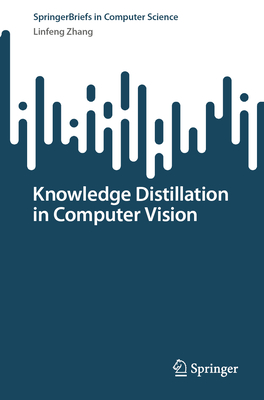
Knowledge Distillation in Computer Vision
暫譯: 計算機視覺中的知識蒸餾
Zhang, Linfeng
- 出版商: Springer
- 出版日期: 2026-01-03
- 售價: $2,590
- 貴賓價: 9.5 折 $2,460
- 語言: 英文
- 頁數: 140
- 裝訂: Quality Paper - also called trade paper
- ISBN: 9819503663
- ISBN-13: 9789819503667
-
相關分類:
Computer Vision
海外代購書籍(需單獨結帳)
商品描述
Discover the cutting-edge advancements in knowledge distillation for computer vision within this comprehensive monograph. As neural networks become increasingly complex, the demand for efficient and lightweight models grows critical, especially for real-world applications. This book uniquely bridges the gap between academic research and industrial implementation, exploring innovative methods to compress and accelerate deep neural networks without sacrificing accuracy. It addresses two fundamental problems in knowledge distillation: constructing effective student and teacher models and selecting the appropriate knowledge to distill. Presenting groundbreaking research on self-distillation and task-irrelevant knowledge distillation, the book offers new perspectives on model optimization. Readers will gain insights into applying these techniques across a wide range of visual tasks, from 2D and 3D object detection to image generation, effectively bridging the gap between AI research and practical deployment. By engaging with this text, readers will learn to enhance model performance, reduce computational costs, and improve model robustness. This book is ideal for researchers, practitioners, and advanced students with a background in computer vision and deep learning. Equip yourself with the knowledge to design and implement knowledge distillation, thereby improving the efficiency of computer vision models.
商品描述(中文翻譯)
探索這本綜合專著中計算機視覺領域知識蒸餾的尖端進展。隨著神經網絡變得越來越複雜,對高效且輕量化模型的需求變得至關重要,特別是在實際應用中。本書獨特地彌合了學術研究與工業實施之間的鴻溝,探討了在不犧牲準確性的情況下壓縮和加速深度神經網絡的創新方法。它解決了知識蒸餾中的兩個基本問題:構建有效的學生模型和教師模型,以及選擇適當的知識進行蒸餾。本書展示了自我蒸餾和與任務無關的知識蒸餾的開創性研究,為模型優化提供了新的視角。讀者將獲得在各種視覺任務中應用這些技術的見解,從 2D 和 3D 物體檢測到圖像生成,有效地彌合了 AI 研究與實際部署之間的鴻溝。通過參與這本書,讀者將學會提升模型性能、降低計算成本並改善模型的穩健性。本書非常適合具有計算機視覺和深度學習背景的研究人員、實踐者和高級學生。讓自己掌握設計和實施知識蒸餾的知識,從而提高計算機視覺模型的效率。
作者簡介
Dr. Zhang Linfeng is the assistant professor in School of Artificial Intellignce, Shanghai Jiao Tong University. He graduated from the Institute of Interdisciplinary Information Sciences at Tsinghua University with a doctoral degree in Computer Science and Technology, specializing in computer vision model compression and acceleration. His doctoral dissertation, "Structured Knowledge Distillation: Towards Efficient Visual Intelligence," was recognized as an outstanding doctoral dissertation by Tsinghua University. He has served as a reviewer for more than a dozen top academic conferences and journals, including IEEE TPAMI, NeurIPS, ICLR, and CVPR for several consecutive years. He has published more than 20 high-level academic papers as first author or corresponding author. According to Google Scholar, his papers have been cited 2,300 times, with the highest citation count for a single first-authored paper exceeding 1,000 times. At the 2019 ICCV conference, he first proposed the Self-Distillation algorithm, which is one of the representative works in the field of knowledge distillation. He has successfully applied knowledge distillation algorithms to various visual tasks such as object detection, instance segmentation, and image generation, as well as to different types of visual data including images, multi-view images, point clouds, and videos to achieve compression and acceleration effects of visual models. Meanwhile, his research achievements have been utilized in the Qiming series chips developed by Polar Bear Technology, Huawei, DiD Global, and Kwai, providing compression and acceleration effects for artificial intelligence models in real industrial scenarios.
作者簡介(中文翻譯)
張林峰博士是上海交通大學人工智慧學院的助理教授。他畢業於清華大學跨學科資訊科學研究所,獲得計算機科學與技術的博士學位,專攻計算機視覺模型的壓縮與加速。他的博士論文《結構化知識蒸餾:邁向高效的視覺智能》被清華大學評選為優秀博士論文。他曾連續多年擔任多個頂尖學術會議和期刊的審稿人,包括 IEEE TPAMI、NeurIPS、ICLR 和 CVPR。他以第一作者或通訊作者身份發表了超過 20 篇高水平的學術論文。根據 Google Scholar 的資料,他的論文被引用 2,300 次,其中一篇第一作者的論文被引用次數超過 1,000 次。在 2019 年的 ICCV 會議上,他首次提出了自我蒸餾(Self-Distillation)算法,這是知識蒸餾領域的代表性作品之一。他成功地將知識蒸餾算法應用於各種視覺任務,如物體檢測、實例分割和圖像生成,以及不同類型的視覺數據,包括圖像、多視角圖像、點雲和視頻,以實現視覺模型的壓縮和加速效果。同時,他的研究成果已被北極熊科技、華為、DiD Global 和快手等公司開發的啟明系列芯片所應用,為真實工業場景中的人工智能模型提供壓縮和加速效果。