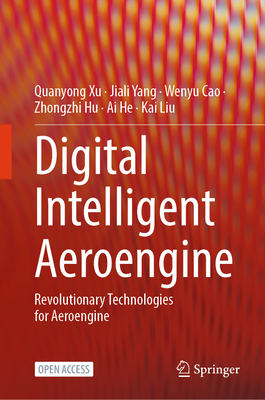
Digital Intelligent Aeroengine: Revolutionary Technologies for Aeroengine
暫譯: 數位智能航空發動機:航空發動機的革命性技術
Xu, Quanyong, Yang, Jiali, Cao, Wenyu
- 出版商: Springer
- 出版日期: 2025-10-24
- 售價: $2,790
- 貴賓價: 9.5 折 $2,650
- 語言: 英文
- 頁數: 252
- 裝訂: Hardcover - also called cloth, retail trade, or trade
- ISBN: 9819509416
- ISBN-13: 9789819509416
-
相關分類:
材料科學 Meterials
海外代購書籍(需單獨結帳)
商品描述
This open access book provides a deep dive into the digitalization and intelligent technologies transforming the field of aircraft engines, offering insights into their critical importance and the challenges they aim to address. As the aerospace industry faces increasing demands for efficiency, sustainability, and innovation, digital and intelligent technologies have become essential tools in advancing aircraft engine design, performance optimization, and lifecycle management. These technologies are reshaping the way engines are developed and maintained, enabling breakthroughs in predictive maintenance, real-time diagnostics, and cross-disciplinary collaboration. However, achieving these advancements comes with significant challenges, such as data integration, simulation accuracy, and the need for seamless coordination among multiple disciplines.
This book begins by examining the current state of digital engine technologies, highlighting their role in improving design efficiency, operational safety, and cost-effectiveness. Through a detailed analysis, it identifies critical obstacles, such as the complexity of integrating heterogeneous data, achieving high-fidelity simulations, and optimizing whole-system performance in multi-disciplinary contexts. Moving beyond diagnostics, the text explores innovative approaches like digital twin-based simulation modeling, which combines physical models with real-world data to accurately predict engine behavior. It also introduces advanced methods for creating enhanced whole-engine system models, enabling multi-disciplinary collaboration to ensure design reliability and efficiency. A significant portion of this book is dedicated to the concept of the digital thread, a framework that ensures consistent data integration and automated workflows throughout the engine lifecycle. By leveraging digital threads, engineers can streamline design iterations, reduce uncertainties, and improve overall product quality.商品描述(中文翻譯)
這本開放存取的書籍深入探討了數位化和智能技術如何改變航空發動機領域,提供了對其關鍵重要性及所面臨挑戰的見解。隨著航空航天產業對效率、可持續性和創新需求的增加,數位和智能技術已成為推進航空發動機設計、性能優化和生命週期管理的必要工具。這些技術正在重塑發動機的開發和維護方式,使預測性維護、即時診斷和跨學科合作的突破成為可能。然而,實現這些進展面臨著重大的挑戰,例如數據整合、模擬準確性以及多學科之間無縫協調的需求。
本書首先檢視數位發動機技術的現狀,強調其在提高設計效率、操作安全性和成本效益方面的作用。通過詳細分析,識別出關鍵障礙,例如整合異質數據的複雜性、實現高保真模擬的挑戰,以及在多學科背景下優化整體系統性能的需求。除了診斷之外,文本還探討了創新的方法,如基於數位雙胞胎的模擬建模,該方法將物理模型與現實世界數據結合,以準確預測發動機行為。它還介紹了創建增強型整體發動機系統模型的先進方法,促進多學科合作,以確保設計的可靠性和效率。本書的一個重要部分專注於數位線索的概念,這是一個確保在發動機生命週期中一致數據整合和自動化工作流程的框架。通過利用數位線索,工程師可以簡化設計迭代、減少不確定性並提高整體產品質量。
作者簡介
Xu Quanyong is an associate research fellow and digital engine scientist at Tsinghua University, holding a Ph.D. from Beihang University (2010). Since 2012, he has focused on aero engine research, exploring digital and intelligent transformation technology, multi-field coupling co-simulation, and high-load compressor aerodynamic design. He developed software for aero-engine aerodynamic thermodynamic massively parallel computing, applied in gas turbine and aero-engine performance simulation. Xu led the creation of the Tsinghua Digital Engine Simulation System (T-DESS), used in future aero engine development. He managed 15 research projects, published 38 papers, and holds 31 patents. Xu has won awards including the Geneva Invention Exhibition silver Award and industry-research cooperation Award.
Yang Jiali, male, graduated with a Ph.D. from the Department of Computer Science and Technology at Tsinghua University in 2016. From 2016 to 2019, he conducted postdoctoral research at the same department. Between 2019 and 2022, he worked as a postdoctoral researcher and assistant researcher at the Institute for Aero Engine (IAE) of Tsinghua University, focusing on the research of a real-time model-driven immersive virtual operation system for aerospace engines. During this period, he served as the project leader for the virtual operation system of the Digital Engine Project (Phase I). Since December 2022, he has been working as an associate researcher, conducting research on multi-system co-simulation of digital engines, automatic generation of control code, and other related topics. He is currently the project leader for the system prototype of the Digital Engine Project (Phase II).
Cao Wenyu is a senior engineer at the Institute for Aerospace Propulsion, Tsinghua University, is the lead for the structural prototype of Tsinghua University's Digital Engine Project. He has been engaged in the overall structural design and strength research of aerospace engines for an extended period. As the overall structural leader, he has participated in the development of multiple turbofan/turbojet engines and micro gas turbines. Additionally, he has been a key contributor to several major projects, including the National Science and Technology Project, the Chinese Academy of Sciences for Key Topics in Innovation Engineering. In the field of digital engineering, he is responsible for developing critical technologies for the digital thread of aerospace engines. His primary research areas include the integration and traceability of multi-source heterogeneous data across design, simulation, and manufacturing, MBSE-based integrated structural design and simulation, and configuration management based on physical systems.
Dr. Hu Zhongzhi is currently the chief researcher of Institute for Aero Engine of Tsinghua University. He was once the deputy director of the R&D center of China Aero-Engine Commercial Development and the deputy chief designer of the large passenger engine project. Previously, he served as a chief engineer, project manager, research manager, and department manager at General Electric Company in the United States. Before entering the academic field, he has more than 20 years of experience in the design, development, integration, testing, and airworthiness certification of aeroengine control systems and health management systems both domestically and internationally. The current research areas are multi-disciplinary modeling and simulation of aeroengine control systems, multivariable and multimodal fault-tolerant control, intelligent health management, and MBSE method research and application. He has more than 20 domestic and foreign patents and has published more than 60 papers.
作者簡介(中文翻譯)
徐全勇是清華大學的副研究員及數位引擎科學家,擁有北京航空航天大學的博士學位(2010年)。自2012年以來,他專注於航空發動機研究,探索數位與智能轉型技術、多領域耦合共同模擬及高負載壓縮機氣動設計。他開發了用於航空發動機氣動熱力學大規模並行計算的軟體,應用於燃氣渦輪及航空發動機性能模擬。徐全勇主導創建了清華數位引擎模擬系統(T-DESS),用於未來航空發動機的開發。他管理了15個研究項目,發表了38篇論文,並擁有31項專利。徐全勇獲得了包括日內瓦發明展銀獎及產業研究合作獎等多項獎項。
楊佳立,男性,於2016年獲得清華大學計算機科學與技術系的博士學位。從2016年到2019年,他在同一系所進行博士後研究。2019年至2022年間,他在清華大學航空發動機研究所(IAE)擔任博士後研究員及助理研究員,專注於航空發動機的實時模型驅動沉浸式虛擬操作系統的研究。在此期間,他擔任數位引擎專案(第一階段)虛擬操作系統的專案負責人。自2022年12月以來,他擔任副研究員,進行數位引擎的多系統共同模擬、自動生成控制程式碼及其他相關主題的研究。目前,他是數位引擎專案(第二階段)系統原型的專案負責人。
曹文宇是清華大學航空推進研究所的高級工程師,負責清華大學數位引擎專案的結構原型。他長期從事航空發動機的整體結構設計及強度研究。作為整體結構負責人,他參與了多個渦輪風扇/渦輪噴氣發動機及微型燃氣渦輪的開發。此外,他還是多個重大專案的關鍵貢獻者,包括國家科技專案及中國科學院的創新工程重點專題。在數位工程領域,他負責開發航空發動機數位線索的關鍵技術。他的主要研究領域包括設計、模擬及製造過程中多源異構數據的整合與可追溯性、基於MBSE的整合結構設計與模擬,以及基於物理系統的配置管理。
胡忠志博士目前是清華大學航空發動機研究所的首席研究員。他曾擔任中國航空發動機商業發展研發中心的副主任及大型客機發動機專案的副總設計師。此前,他在美國通用電氣公司擔任首席工程師、專案經理、研究經理及部門經理。在進入學術界之前,他在航空發動機控制系統及健康管理系統的設計、開發、整合、測試及適航認證方面擁有超過20年的國內外經驗。目前的研究領域包括航空發動機控制系統的多學科建模與模擬、多變量及多模態容錯控制、智能健康管理,以及MBSE方法的研究與應用。他擁有20多項國內外專利,並發表了60多篇論文。