商品描述
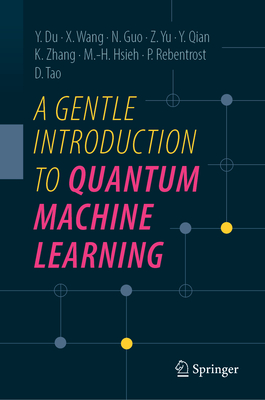
Quantum machine learning (QML) is revolutionizing artificial intelligence by leveraging the power of quantum computing to access previously unimaginable computational possibilities. However, the field remains fragmented--balancing rigorous quantum theory with practical AI applications remains a challenge. This book bridges this gap, offering a systematic, hands-on guide for AI researchers, ML practitioners, and computer scientists eager to explore this emerging frontier. It provides a cohesive roadmap, covering everything from fundamental quantum computing principles to state-of-the-art QML techniques. Readers will explore quantum kernel methods, quantum neural networks, and quantum Transformers, gaining insight into their theoretical foundations, performance advantages, and practical implementations. The book's code demonstrations offer hands-on experience, ensuring that readers can move beyond theory to real-world applications. Designed for those with an AI or ML background, this tutorial does not assume prior expertise in quantum computing. Instead, it presents complex concepts with clarity, making it an essential resource for researchers, graduate students, and industry professionals eager to stay ahead in the quantum AI revolution. Whether you seek to understand quantum speedups, develop quantum-based models, or explore future research directions, this book provides the foundation you need to engage with QML and shape the future of intelligent computing.
商品描述(中文翻譯)
量子機器學習(Quantum Machine Learning, QML)正在通過利用量子計算的力量來徹底改變人工智慧,從而訪問以前無法想像的計算可能性。然而,該領域仍然存在碎片化的問題——在嚴謹的量子理論與實際的人工智慧應用之間取得平衡仍然是一個挑戰。本書填補了這一空白,為渴望探索這一新興前沿的人工智慧研究者、機器學習實踐者和計算機科學家提供了一本系統的、實用的指南。
本書提供了一個連貫的路線圖,涵蓋從基本的量子計算原理到最先進的QML技術的所有內容。讀者將探索量子核方法、量子神經網絡和量子變壓器,深入了解它們的理論基礎、性能優勢和實際實現。本書的代碼示範提供了實踐經驗,確保讀者能夠超越理論,應用於現實世界。
本教程專為具有人工智慧或機器學習背景的人士設計,並不假設讀者具備量子計算的先前專業知識。相反,它以清晰的方式呈現複雜的概念,使其成為研究人員、研究生和行業專業人士在量子人工智慧革命中保持領先的必備資源。無論您是希望理解量子加速、開發基於量子的模型,還是探索未來的研究方向,本書都提供了您參與QML並塑造智能計算未來所需的基礎。
作者簡介
Yuxuan Du is an assistant professor at Nanyang Technological University, specializing in quantum machine learning, quantum learning theory, and AI for quantum science. He was previously a senior researcher at JD Explore Academy and earned his Ph.D. in computer science from The University of Sydney in 2021. Xinbiao Wang is a research fellow at Nanyang Technological University. He earned his Master's (2021) and Ph.D. (2024) from Wuhan University, researching quantum machine learning under Professors Dacheng Tao and Yong Luo. He interned at JD.com and held visiting positions at NTU and NUS. Naixu Guo is a Ph.D. candidate in Quantum Information at NUS. He holds an M.E. in Electrical Engineering from Osaka University (2022) and a B.E. in Applied Physics from Kyoto University (2020) and has conducted research visits at RWTH Aachen and the Free University of Berlin. Zhan Yu is a Ph.D. student in Quantum Computing at NUS (since 2023). He holds an M.Sc. (2021) and B.Sc. (2019) in Computer Science from the University of Calgary, where he researched quantum walks under Peter Høyer. He also holds a B.Eng. in Software Engineering from Wuhan University of Technology (2016) and interned at Baidu Research (2021-2023). Yang Qian received his B.S. from Huazhong University of Science and Technology (2016), M.S. from CASIA (2019), and Ph.D. from the University of Sydney (2024) under Prof. Dacheng Tao. Kaining Zhang is a Research Fellow at NTU's College of Computing and Data Science. He earned his Ph.D. (2024) and MPhil (2020) in Computer Science from the University of Sydney and a B.Sc. in Physics from USTC (2018). Min-Hsiu Hsieh is Director of the Hon Hai Quantum Computing Research Center, Taiwan. He was previously an Associate Professor at UTS and held research roles at Cambridge, the University of Tokyo, and ERATO-SORST in Japan. He also held an Australian Research Council Future Fellowship (2014-2018). Patrick Rebentrost is an assistant professor at NUS, specializing in quantum computing and quantum machine learning. He previously held research positions at MIT, Xanadu, and the Centre for Quantum Technologies. He earned his Ph.D. from Harvard University in 2012. Dacheng Tao is a distinguished university professor at NTU and a leading AI, machine learning, and quantum computing researcher. He was previously a professor at the University of Sydney (2016-2023) and Senior VP at JD.com. Holding a Ph.D. from the University of London, he has held faculty roles at UTS, NTU, and HK PolyU.
作者簡介(中文翻譯)
杜宇軒是南洋理工大學的助理教授,專注於量子機器學習、量子學習理論及量子科學的人工智慧。他曾擔任京東探索學院的高級研究員,並於2021年在悉尼大學獲得計算機科學博士學位。 王新彪是南洋理工大學的研究員。他於武漢大學獲得碩士學位(2021年)和博士學位(2024年),在陶大程教授和羅勇教授的指導下研究量子機器學習。他曾在京東實習,並在國立台灣大學和新加坡國立大學擔任訪問職位。 郭乃旭是新加坡國立大學的量子資訊博士候選人。他擁有大阪大學的電機工程碩士學位(2022年)和京都大學的應用物理學學士學位(2020年),並曾在亞琛工業大學和柏林自由大學進行研究訪問。 余展是新加坡國立大學的量子計算博士生(自2023年起)。他擁有卡爾加里大學的計算機科學碩士學位(2021年)和學士學位(2019年),在彼得·霍耶的指導下研究量子隨機漫步。他還擁有武漢科技大學的軟體工程學士學位(2016年),並在百度研究實習(2021-2023年)。 錢揚於華中科技大學獲得學士學位(2016年)、中國科學院自動化研究所獲得碩士學位(2019年),並在悉尼大學獲得博士學位(2024年),指導教授為陶大程。 張凱寧是南洋理工大學計算與數據科學學院的研究員。他於悉尼大學獲得計算機科學博士學位(2024年)和碩士學位(2020年),以及中國科學技術大學的物理學學士學位(2018年)。 謝敏修是台灣鴻海量子計算研究中心的主任。他曾擔任悉尼科技大學的副教授,並在劍橋大學、東京大學及日本的ERATO-SORST擔任研究職位。他還曾獲得澳大利亞研究委員會的未來研究獎學金(2014-2018年)。 帕特里克·瑞本特羅斯是新加坡國立大學的助理教授,專注於量子計算和量子機器學習。他曾在麻省理工學院、Xanadu和量子技術中心擔任研究職位。他於2012年在哈佛大學獲得博士學位。 陶大程是南洋理工大學的特聘大學教授,也是人工智慧、機器學習和量子計算領域的領軍研究者。他曾在悉尼大學擔任教授(2016-2023年)及京東的高級副總裁。他擁有倫敦大學的博士學位,並曾在悉尼科技大學、南洋理工大學和香港理工大學擔任教職。