商品描述
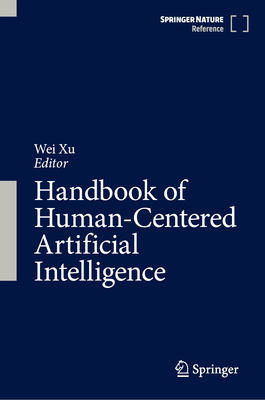
Explore the transformative world of Human-Centered Artificial Intelligence (HCAI) with the Handbook of Human-Centered Artificial Intelligence. This authoritative resource bridges cutting-edge AI technologies with core human-centered principles, such as human needs, values, controllability, and experiences, offering a holistic approach for designing, developing, deploying, and using AI systems that put humans first. Written by leading experts, the handbook serves as an indispensable reference for researchers, practitioners, and policymakers dedicated to creating AI solutions that are reliable, safe, controllable, usable, valuable, and trustworthy. It covers the foundational principles of HCAI, from core concepts, methodology, design and development strategies, risk management and governance, to real-world applications across diverse domains, demonstrating how AI can enhance human capabilities and improve the quality of work and life. Empower your knowledge and be at the forefront of AI innovation, a future where AI benefits humans rather than harming or replacing them. This is your definitive guide to understanding and shaping the future of AI through a human-centered lens. This handbook comprises ten sections, encompassing approximately sixty chapters in total. (Note: In the current living version, individual chapters are published in alphabetical order as they become available.) Overview, Concepts, and Foundations Human-AI interaction Human-centered AI design Human-centered AI in computing Human controllability over AI Human-centered AI risk management Human-centered AI governance Human-centered large language models Sectoral applications of human-centered AI Human-centered AI practice
商品描述(中文翻譯)
探索以人為中心的人工智慧(HCAI)變革世界,透過《以人為中心的人工智慧手冊》。這本權威資源將尖端的人工智慧技術與核心的人本原則相結合,如人類需求、價值觀、可控性和體驗,提供一種全面的方法來設計、開發、部署和使用以人為本的人工智慧系統。該手冊由領先的專家撰寫,是研究人員、實務工作者和政策制定者不可或缺的參考資料,致力於創造可靠、安全、可控、可用、有價值和可信賴的人工智慧解決方案。它涵蓋了HCAI的基本原則,從核心概念、方法論、設計和開發策略、風險管理和治理,到在各個領域的實際應用,展示了人工智慧如何增強人類能力並改善工作和生活的質量。
提升您的知識,站在人工智慧創新的最前沿,迎接一個人工智慧造福人類而非傷害或取代他們的未來。這是您理解和塑造未來人工智慧的終極指南,透過以人為中心的視角。
本手冊包含十個部分,總共約六十章。(注意:在當前的活版本中,個別章節會按字母順序發布,隨著可用性而更新。)
概述、概念和基礎
人類與人工智慧的互動
以人為中心的人工智慧設計
計算中的以人為中心的人工智慧
人類對人工智慧的可控性
以人為中心的人工智慧風險管理
以人為中心的人工智慧治理
以人為中心的大型語言模型
以人為中心的人工智慧的行業應用
以人為中心的人工智慧實踐
作者簡介
Dr. Wei Xu is Chief Scientist at HCAI Labs, California, USA, and an adjunct Professor in Human Factors/Human-Computer Interaction (HCI). He previously worked as a Senior Research Scientist and served as Principal Engineer in Human Factors/HCI at Intel (USA), where he also chaired the IT HCI Technical Committee, and as Senior Research Scientist at Boeing (USA). He was formerly an Assistant Professor in academia, where he focused on teaching and researching human factors and HCI. Dr. Xu earned his Ph.D. in Human Factors/HCI and M.S. in Computer Science, both from Miami University, USA, in 1997.An internationally recognized expert in human factors and HCI, Dr. Xu is an elected Fellow of the International Ergonomics Association (IEA), the Human Factors and Ergonomics Society (HFES), and the International Association for Psychological Science (APS). He serves as Senior Editor of IEEE Transactions on Technology and Society, Associate Editor of IEEE Transactions on Human-Machine Systems. He also sits on the editorial boards of the International Journal of Human-Computer Interaction, Theoretical Issues in Ergonomics Science, and the Journal of Applied Psychology. He is a member of the International Organization for Standardization (ISO) Technical Committee on Human-System Interaction (TC159/SC4) and its Standards Drafting Working Group (TC159/SC4/WG6). With over 35 years of experience spanning academia and leading roles at global IT and aviation companies, Dr. Xu has contributed extensively to research, design, development, and standards in human factors and HCI. His work has received numerous research and design awards and is in use across multiple aircraft models and computing systems. He has co-drafted over 20 human factors/HCI design standards for ISO, ANSI, Boeing, and Intel, and authored four books--Engineering Psychology, User Experience: Theory and Practice, Human-AI Interaction: Multidisciplinary Collaboration for Enabling Human-Centered AI, and Human-Centered AI: Advancing Research and Applications in Human-AI Interaction. His papers have been published in core journals of human factors, HCI, psychology, aviation, computer science, and AI. Since 2018, Dr. Xu has focused on the emerging field of Human-Centered Artificial Intelligence (HCAI). As one of its pioneers, he proposed the early "technology-human factors-ethics (THE) triangle" HCAI framework (2019). He co-authored the influential paper titled "Six Human-Centered AI Grand Challenges" (2022) with Professors Ben Shneiderman, Gavriel Salvendy, and 24 other scholars. In recent years, he has introduced multiple frameworks in the HCAI field, including Human-AI Joint Cognitive Systems (2021), Human-AI Joint Cognitive Ecosystems (2022), Intelligent Sociotechnical Systems (iSTS) (2022), the HCAI Methodological Framework (HCAI-MF) (2024), the Hierarchical HCAI (hHCAI) approach (2024), the "User Experience 3.0" paradigm framework for HCAI (2024), the HCAI Maturity Model (HCAI-MM) (2025), the human-centered human-AI collaboration (HC-HAC) framework (2025), the human-centered human-AI interaction (HC-HAII) approach (2025), the human-centered privacy (HCP) approach to AI (2025), and the human-centered artificial social intelligence (HC-ASI) framework (2025).Dr. Xu has played a key role in the development of several ISO human factors/HCI design standards, including two ISO standards for AI systems: Ergonomics Issues of Robotic, Intelligent, and Autonomous Systems (ISO 9241-810) (2020) and Ergonomics of Human-Intelligent Systems Interaction (ISO 9241-812) (2024).
作者簡介(中文翻譯)
徐偉博士是美國加州HCAI實驗室的首席科學家,並擔任人因工程/人機互動(HCI)兼任教授。他曾在英特爾(美國)擔任高級研究科學家及人因工程/HCI的首席工程師,並擔任IT HCI技術委員會的主席,還曾在波音(美國)擔任高級研究科學家。他曾在學術界擔任助理教授,專注於人因工程和HCI的教學與研究。徐博士於1997年在美國邁阿密大學獲得人因工程/HCI的博士學位及計算機科學的碩士學位。
作為國際公認的人因工程和HCI專家,徐博士是國際人因工程協會(IEA)、人因與人因工程學會(HFES)及國際心理科學協會(APS)的當選會士。他擔任《IEEE技術與社會期刊》的高級編輯、《IEEE人機系統期刊》的副編輯,並在《國際人機互動期刊》、《人因工程科學理論問題期刊》和《應用心理學期刊》的編輯委員會中任職。他是國際標準化組織(ISO)人系互動技術委員會(TC159/SC4)及其標準草擬工作組(TC159/SC4/WG6)的成員。
擁有超過35年的學術及全球IT和航空公司領導角色的經驗,徐博士在研究、設計、開發和人因工程及HCI標準方面做出了廣泛貢獻。他的工作獲得了多項研究和設計獎項,並在多種飛機型號和計算系統中得到應用。他共同起草了超過20項人因工程/HCI設計標準,涵蓋ISO、ANSI、波音和英特爾,並著有四本書籍——《工程心理學》、《用戶體驗:理論與實踐》、《人機智能互動:促進以人為中心的AI的多學科合作》和《以人為中心的AI:推進人機智能互動的研究與應用》。他的論文發表在核心的人因工程、HCI、心理學、航空、計算機科學和AI期刊上。
自2018年以來,徐博士專注於以人為中心的人工智慧(HCAI)這一新興領域。作為其先驅之一,他於2019年提出了早期的「技術-人因-倫理(THE)三角」HCAI框架。他與本·施奈德曼教授、加夫里爾·薩爾文迪教授及其他24位學者共同撰寫了具有影響力的論文《六大以人為中心的AI重大挑戰》(2022)。近年來,他在HCAI領域引入了多個框架,包括人機智能聯合認知系統(2021)、人機智能聯合認知生態系統(2022)、智能社會技術系統(iSTS)(2022)、HCAI方法論框架(HCAI-MF)(2024)、分層HCAI(hHCAI)方法(2024)、HCAI的「用戶體驗3.0」範式框架(2024)、HCAI成熟度模型(HCAI-MM)(2025)、以人為中心的人機智能協作(HC-HAC)框架(2025)、以人為中心的人機智能互動(HC-HAII)方法(2025)、以人為中心的隱私(HCP)方法(2025)以及以人為中心的人工社會智能(HC-ASI)框架(2025)。
徐博士在多項ISO人因工程/HCI設計標準的制定中發揮了關鍵作用,包括兩項針對AI系統的ISO標準:《機器人、智能和自主系統的人因工程問題》(ISO 9241-810)(2020)和《人類與智能系統互動的人因工程》(ISO 9241-812)(2024)。