商品描述
作者簡介
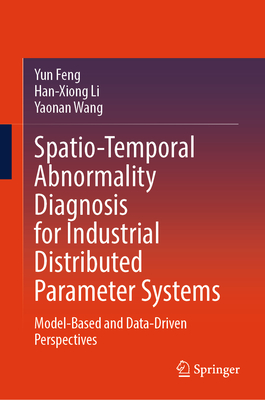
Yun Feng received the B.E. degree in automation and the M.S. degree in control theory and control engineering from the Department of Automation, Wuhan University, Wuhan, China, in 2014 and 2017, respectively, and the Ph.D. degree from the Department of Systems Engineering and Engineering Management, City University of Hong Kong, Hong Kong, in 2020. From July to November 2019, he was a Visiting Student with the Institute for Automatic Control and Complex Systems (AKS), University of Duisburg Essen, Duisburg, Germany. He is currently an Associate Professor with the School of Artificial Intelligence and Robotics and the National Engineering Research Center for Robot Visual Perception and Control Technology, Hunan University, Changsha, China. He has authored or co-authored more than 50 papers in peer-reviewed international journals and conferences. Among them 20 papers are in the field closely related to the topic of this book. His research interests include spatial-temporal dynamical systems, fault diagnosis, and soft robotics. He was a recipient of the Excellent Young Scientists Fund of the National Natural Science Foundation of China, the Young Elite Scientists Sponsorship Program by the China Association for Science and Technology, the Senior Member of the Chinese Association of Automation (CAA). He is serving as an Associate Editor for IEEE SYSTEMS, MAN, AND CYBERNETICS MAGAZINE and FRANKLIN OPEN, a youth editorial board member of ROBOT LEARNING. He is a Senior Member of the IEEE. Han-Xiong Li received the B.E. degree in aerospace engineering from the National University of Defense Technology, Changsha, China, in 1982, the M.E. degree in electrical engineering from the Delft University of Technology, Delft, The Netherlands, in 1991, and the Ph.D. degree in electrical engineering from The University of Auckland, Auckland, New Zealand, in 1997. He is currently a Chair Professor with the Department of Systems Engineering, City University of Hong Kong, Hong Kong. He has a broad experience in both academia and industry. He has authored two books, holds about 20 patents, and has published more than 250 SCI journal articles with H-index 55 (web of science). He has been rated as a Highly Cited Scholar in China by Elsevier since 2014. His current research interests include process modeling and control, distributed parameter systems, and system intelligence. Dr. Li was awarded the Distinguished Young Scholar (overseas) by the China National Science Foundation in 2004, a Chang Jiang Professorship by the Ministry of Education, China, in 2006, and a National Professorship in the China Thousand Talents Program in 2010. He serves as an Associate Editor for the IEEE TRANSACTIONS ON SYSTEMS, MAN, AND CYBERNETICS: SYSTEMS and was an Associate Editor of the IEEE TRANSACTIONS ON CYBERNETICS from 2002 to 2016 and the IEEE TRANSACTIONS ON INDUSTRIAL ELECTRONICS from 2009 to 2015. He is a Fellow of the IEEE. Yaonan Wang received the B.S. degree in computer engineering from the East China University of Science and Technology, Fuzhou, China, in 1981, and the M.S. and Ph.D. degrees in control engineering from Hunan University, Changsha, China, in 1990 and 1994, respectively. He was a Post-Doctoral Research Fellow with the National University of Defense Technology, Changsha, from 1994 to 1995, a Senior Humboldt Fellow in Germany from 1998 to 2000, and a Visiting Professor with the University of Bremen, Bremen, Germany, from 2001 to 2004. He has been a Professor with Hunan University since 1995. His current research interests include robot control, intelligent control and information processing, industrial process control, and image processing. Dr. Wang has been a member of the China Engineering Academy since 2019.
作者簡介(中文翻譯)
雲峰於2014年和2017年分別獲得中國武漢大學自動化系的自動化學士學位和控制理論與控制工程碩士學位,並於2020年獲得香港城市大學系統工程與工程管理系的博士學位。2019年7月至11月,他曾在德國杜伊斯堡-埃森大學自動控制與複雜系統研究所(AKS)擔任訪問學生。他目前是中國湖南大學人工智慧與機器人學院及機器人視覺感知與控制技術國家工程研究中心的副教授。他已在國際同行評審的期刊和會議上發表或共同發表超過50篇論文,其中20篇與本書主題密切相關。他的研究興趣包括時空動態系統、故障診斷和柔性機器人。他曾獲得中國國家自然科學基金的優秀青年科學基金、中國科學技術協會的青年精英科學家贊助計劃,以及中國自動化學會的高級會員。他目前擔任《IEEE SYSTEMS, MAN, AND CYBERNETICS MAGAZINE》和《FRANKLIN OPEN》的副編輯,並是《ROBOT LEARNING》的青年編輯委員會成員。他是IEEE的高級會員。
李漢雄於1982年獲得中國國防科技大學的航空航天工程學士學位,1991年獲得荷蘭代爾夫特科技大學的電氣工程碩士學位,1997年獲得紐西蘭奧克蘭大學的電氣工程博士學位。他目前是香港城市大學系統工程系的講座教授。他在學術界和工業界擁有廣泛的經驗。他已出版兩本書,擁有約20項專利,並發表超過250篇SCI期刊文章,H指數為55(根據Web of Science)。自2014年以來,他被Elsevier評為中國的高被引學者。他目前的研究興趣包括過程建模與控制、分佈參數系統和系統智能。李博士於2004年獲得中國國家自然科學基金的傑出青年學者(海外)獎,2006年獲得中國教育部的長江學者獎,2010年獲得中國千人計劃的國家教授獎。他擔任《IEEE TRANSACTIONS ON SYSTEMS, MAN, AND CYBERNETICS: SYSTEMS》的副編輯,並曾於2002年至2016年擔任《IEEE TRANSACTIONS ON CYBERNETICS》的副編輯,以及2009年至2015年擔任《IEEE TRANSACTIONS ON INDUSTRIAL ELECTRONICS》的副編輯。他是IEEE的會士。
王耀南於1981年獲得中國東華理工大學的計算機工程學士學位,並於1990年和1994年分別獲得湖南大學的控制工程碩士和博士學位。他於1994年至1995年擔任中國國防科技大學的博士後研究員,1998年至2000年在德國擔任高級洪堡學者,2001年至2004年擔任德國不來梅大學的訪問教授。自1995年以來,他一直是湖南大學的教授。他目前的研究興趣包括機器人控制、智能控制與信息處理、工業過程控制和圖像處理。王博士自2019年以來一直是中國工程院的院士。