商品描述
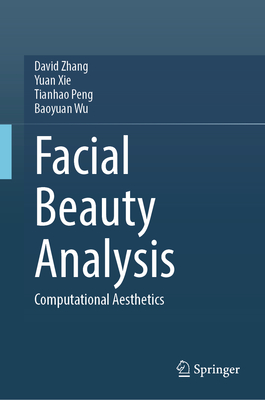
Facial beauty is an intriguing and multifaceted subject that has captivated human interest, crossing cultural and scientific boundaries for centuries. In today's digital age, understanding facial beauty is no longer just an art but a sophisticated science, the analysis and enhancement of facial beauty leverage advanced technologies such as machine learning, computer vision, and biometrics. This book, "Facial Beauty Analysis: Computational Aesthetics," is based on our research and aims to offer an in-depth exploration of the latest advancements on both 2D and 3D facial beauty analysis. By combining principles from computer vision, pattern recognition, machine learning, and deep learning, this book provides comprehensive insights into landmark detection, feature extraction, beauty prediction, and facial attractiveness enhancement. It introduces cutting-edge innovations such as geometric prior guided hybrid deep neural networks, GAN-based facial beautification, and 3D facial beauty analysis, ensuring readers are equipped with the latest advancements. The content is thoughtfully crafted to empower readers with both foundational concepts and the latest tools required to stay ahead in this rapidly evolving domain. Targeted toward researchers, professionals, and graduate students, "Facial Beauty Analysis: Computational Aesthetics," aims to systematically cover both 2D and 3D facial beauty analysis, providing comprehensive insights into feature extraction, beauty prediction, and facial enhancement. This book offers both foundational knowledge and cutting-edge methodologies to advance the field of facial beauty analysis. Whether you're exploring the fundamentals or seeking to apply the latest technologies, this book is a valuable asset for anyone dedicated to advancing the field of facial beauty analysis.
商品描述(中文翻譯)
面部美學是一個引人入勝且多面向的主題,幾個世紀以來一直吸引著人類的興趣,跨越了文化和科學的界限。在當今的數位時代,理解面部美學不再僅僅是一門藝術,而是一門複雜的科學,面部美學的分析和增強利用了機器學習、計算機視覺和生物識別等先進技術。本書《面部美學分析:計算美學》基於我們的研究,旨在深入探討最新的2D和3D面部美學分析的進展。
本書結合了計算機視覺、模式識別、機器學習和深度學習的原則,提供了對地標檢測、特徵提取、美感預測和面部吸引力增強的全面見解。它介紹了尖端創新,如幾何先驗引導的混合深度神經網絡、基於生成對抗網絡(GAN)的面部美化和3D面部美學分析,確保讀者掌握最新的進展。內容經過精心設計,旨在使讀者具備基礎概念和在這個快速發展領域中保持領先所需的最新工具。
本書針對研究人員、專業人士和研究生,系統性地涵蓋了2D和3D面部美學分析,提供了對特徵提取、美感預測和面部增強的全面見解。《面部美學分析:計算美學》提供了基礎知識和尖端方法論,以推進面部美學分析的領域。無論您是在探索基礎知識還是尋求應用最新技術,本書都是任何致力於推進面部美學分析領域的人的寶貴資產。
作者簡介
David Zhang (Life Fellow, IEEE) graduated from Peking University, Beijing, China, in 1974 and received the M.S. and first Ph.D. degrees in computer science from the Harbin Institute of Technology, Harbin, China, in 1982 and 1985, respectively. He also got his second Ph.D. degree in electrical and computer engineering from the University of Waterloo, ON, Canada, in 1994. From 1986 to 1988, he was a postdoctoral fellow with Tsinghua University, Beijing, and then an associate professor with the Academia Sinica, Beijing. He has been a chair professor with the Hong Kong Polytechnic University, Hong Kong, where he is the Founding Director of Biometrics Research Centre (UGC/CRC) supported by the Hong Kong SAR Government since 1998. He is currently a distinguished presidential chair professor with the Chinese University of Hong Kong (Shenzhen), Shenzhen, China. Over the past 40 years, he has been working on pattern recognition, image processing, and biometrics, where many research results have been awarded and some created directions, including medical biometrics and computerized TCM, are famous in the world. He has published 20+ monographs, 500+ international journal papers, and 50+ patents from the USA, Japan, and China. He has been continuously eight years listed as a global highly cited researcher in engineering by Clarivate Analytics. He is also ranked 70th with H-Index 133 at top 1,000 scientists for International Computer Science in 2023. Prof. Zhang has been selected as a fellow of both Royal Society of Canada (RSC) and Canadian Academy of Engineering (CAE). He is also a Croucher senior research fellow, a distinguished speaker of the IEEE Computer Society, an IAPR, and an AAIA fellow. Yuan Xie received the B.S. degree in Math and Statistics from Xi'an Jiao Tong University, Xi'an, China, in 2022. He is a Ph.D student of Prof. David Zhang and is currently pursuing the Ph.D. degree in School of Data Science from The Chinese University of Hong Kong, Shenzhen, China, under the supervision of Prof. David Zhang. His research interests include pattern recognition, deep learning, computer vision and image processing. Tianhao Peng received the B.S. degree from Changchun Normal University, Changchun, China in 2005, the M.S. degree from Yunnan University, Kunming, China in 2012. He is currently pursuing the Ph.D. degree in computer science and technology from School of Computer Science and Technology, Guizhou University, Guiyang, China. He is also currently an associate professor with the department of automation, Moutai Institute, Renhuai, China. His current research interests include pattern recognition, computer vision, and machine learning. Baoyuan Wu is an associate professor of School of Data Science, the Chinese University of Hong Kong, Shenzhen (CUHKShenzhen). He is also the director of the Secure Computing Lab of Big Data, Shenzhen Research Institute of Big Data (SBRID). On June 2014, he received the PhD degree from the National Laboratory of Pattern Recognition, Institute of Automation, Chinese Academy of Sciences. From November 2016 to August 2020, he was a senior and principal researcher at Tencent AI lab. His research interests are AI security and privacy, machine learning, computer vision, and optimization. He has published 40+ top-tier conference and journal papers, including TPAMI, IJCV, NeurIPS, CVPR, ICCV, ECCV, ICLR, and AAAI, and one paper was selected as the Best Paper Finalist of CVPR 2019. He serves as an associate editor of Neurocomputing, area chair of ICLR 2022, AAAI 2022 and ICIG 2021, senior program committee member of AAAI 2021 and IJCAI 2020/2021, task force member of CCF and CAA. He is the principal investigator of General Program of National Natural Science Foundation of China, 2021 CCF-Tencent Rhino-Bird Young Faculty Open Research Fund, and 2021 Tencent Rhino-Bird Special Research Fund. Yuan Xie received the B.S. degree in Math and Statistics from Xi'an Jiao Tong University, Xi'an, China, in 2022. He is a Ph.D student of Prof. David Zhang and is currently pursuing the Ph.D. degree in School of Data Science from The Chinese University of Hong Kong, Shenzhen, China, under the supervision of Prof. David Zhang. His research interests include pattern recognition, deep learning, computer vision and image processing. Tianhao Peng received the B.S. degree from Changchun Normal University, Changchun, China in 2005, the M.S. degree from Yunnan University, Kunming, China in 2012. He is currently pursuing the Ph.D. degree in computer science and technology from School of Computer Science and Technology, Guizhou University, Guiyang, China. He is also currently an associate professor with the department of automation, Moutai Institute, Renhuai, China. His current research interests include pattern recognition, computer vision, and machine learning. Baoyuan Wu is an associate professor of School of Data Science, the Chinese University of Hong Kong, Shenzhen (CUHKShenzhen). He is also the director of the Secure Computing Lab of Big Data, Shenzhen Research Institute of Big Data (SBRID). On June 2014, he received the PhD degree from the National Laboratory of Pattern Recognition, Institute of Automation, Chinese Academy of Sciences. From November 2016 to August 2020, he was a senior and principal researcher at Tencent AI lab. His research interests are AI security and privacy, machine learning, computer vision, and optimization. He has published 40+ top-tier conference and journal papers, including TPAMI, IJCV, NeurIPS, CVPR, ICCV, ECCV, ICLR, and AAAI, and one paper was selected as the Best Paper Finalist of CVPR 2019. He serves as an associate editor of Neurocomputing, area chair of ICLR 2022, AAAI 2022 and ICIG 2021, senior program committee member of AAAI 2021 and IJCAI 2020/2021, task force member of CCF and CAA. He is the principal investigator of General Program of National Natural Science Foundation of China, 2021 CCF-Tencent Rhino-Bird Young Faculty Open Research Fund, and 2021 Tencent Rhino-Bird Special Research Fund.
作者簡介(中文翻譯)
張大衛(IEEE 生命會士)於1974年畢業於中國北京的北京大學,並於1982年和1985年分別獲得中國哈爾濱工業大學的計算機科學碩士及第一個博士學位。他於1994年在加拿大安大略省的滑鐵盧大學獲得電氣與計算機工程的第二個博士學位。從1986年到1988年,他在北京的清華大學擔任博士後研究員,隨後成為中國社會科學院的副教授。自1998年以來,他一直擔任香港理工大學的講座教授,並擔任由香港特區政府支持的生物識別研究中心(UGC/CRC)的創始主任。他目前是中國香港中文大學(深圳)的傑出校長講座教授。在過去的40年中,他專注於模式識別、圖像處理和生物識別,許多研究成果獲得獎項,並創造了一些著名的研究方向,包括醫療生物識別和計算機化的中醫。他已發表20多部專著、500多篇國際期刊論文,以及50多項來自美國、日本和中國的專利。他連續八年被Clarivate Analytics列為全球工程領域的高被引研究者。2023年,他在國際計算機科學領域的前1000位科學家中排名第70,H-Index為133。張教授被選為加拿大皇家學會(RSC)和加拿大工程學院(CAE)的會士。他還是Croucher高級研究員、IEEE計算機學會的傑出演講者、IAPR和AAIA的會士。
謝源於2022年在中國西安的西安交通大學獲得數學與統計學的學士學位。他是張大衛教授的博士生,目前在中國香港中文大學(深圳)的數據科學學院攻讀博士學位,研究興趣包括模式識別、深度學習、計算機視覺和圖像處理。
彭天浩於2005年在中國長春的長春師範大學獲得學士學位,並於2012年在中國昆明的雲南大學獲得碩士學位。他目前在中國貴州大學計算機科學與技術學院攻讀計算機科學與技術的博士學位,同時擔任中國仁懷的茅台學院自動化系的副教授。他目前的研究興趣包括模式識別、計算機視覺和機器學習。
吳保源是中國香港中文大學(深圳)數據科學學院的副教授。他同時也是深圳大數據研究院(SBRID)安全計算實驗室的主任。2014年6月,他在中國科學院自動化研究所的模式識別國家實驗室獲得博士學位。從2016年11月到2020年8月,他在騰訊AI實驗室擔任高級和首席研究員。他的研究興趣包括AI安全與隱私、機器學習、計算機視覺和優化。他已發表40多篇頂級會議和期刊論文,包括TPAMI、IJCV、NeurIPS、CVPR、ICCV、ECCV、ICLR和AAAI,其中一篇論文被選為CVPR 2019的最佳論文決賽入圍者。他擔任《Neurocomputing》的副編輯,並擔任ICLR 2022、AAAI 2022和ICIG 2021的區域主席,以及AAAI 2021和IJCAI 2020/2021的高級程序委員會成員,還是CCF和CAA的工作小組成員。他是中國國家自然科學基金一般項目的首席研究員,2021年CCF-騰訊犀牛鳥青年教師開放研究基金和2021年騰訊犀牛鳥特別研究基金的首席研究員。