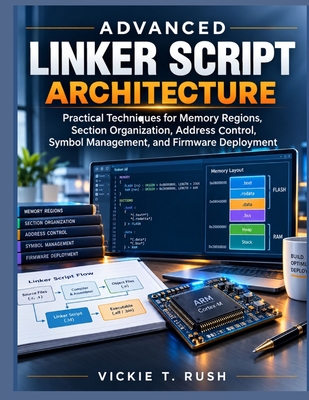
Advanced Linker Script Architecture: Practical Techniques for Memory Regions, Section Organization, Address Control, Symbol Management, and Firmware D
暫譯: 進階 Linker Script 架構:記憶體區域、區段組織、位址控制、符號管理與韌體 D
Rush, Vickie T.
- 出版商: Independently Published
- 出版日期: 2026-09-13
- 售價: $1,040
- 貴賓價: 9.5 折 $988
- 語言: 英文
- 頁數: 196
- 裝訂: Quality Paper - also called trade paper
- ISBN: 9798174008250
- ISBN-13: 9798174008250
-
相關分類:
嵌入式系統
海外代購書籍(需單獨結帳)
相關主題

商品描述
Have you ever stared at a linker error message that made absolutely no sense, copied a linker script from an old project just to get your build working, and quietly hoped you'd never have to touch it again?
If that sounds familiar, you're not alone, and you're exactly who this book was written for.
Most firmware engineers can write solid C code, configure peripherals, and debug a tricky timing issue without breaking a sweat. But ask them to explain why a variable's initial value needs to live in one address and run from another, or why an interrupt suddenly stops firing after a bootloader hands off control, and the confidence disappears. That gap isn't a knowledge problem you can Google your way out of in five minutes. It's a blind spot that most embedded courses and tutorials skip entirely, because it sits in the uncomfortable space between the compiler and the hardware, where the linker quietly makes every decision about where your program actually lives in memory.
This book closes that gap, deliberately and thoroughly.
Inside, you'll build a real, working understanding of how a linker script controls memory regions, organizes sections, separates load addresses from execution addresses, manages symbols, and ultimately decides whether your firmware boots cleanly or fails in ways that are maddening to trace. You won't just learn syntax. You'll learn why each command exists, what problem it was designed to solve, and how experienced engineers actually use it on production hardware.
So what will you walk away with?
You'll be able to read an unfamiliar linker script and understand its intent within minutes, instead of guessing. You'll know exactly how to structure memory regions for a new microcontroller, how to place startup code, interrupt tables, and custom sections with full control, and how to separate a variable's storage location from where it actually runs, a distinction that trips up even experienced developers. You'll understand how bootloaders hand off execution to an application, how dual bank update schemes protect a device from a failed firmware update, and how memory layout choices contribute directly to a device's security posture rather than existing as an afterthought.
You'll also find a full set of real world case studies, walking through the design decisions behind a battery powered sensor node, a multitasking control system, a safety conscious device with redundant memory zones, and a field updatable product with a dual bank bootloader, so you can see these techniques applied to problems that actually resemble what you're working on.
Who is this for? If you're an embedded software engineer who wants to stop treating the linker script as a mysterious file you inherit rather than something you understand, this book is for you. If you're preparing to design firmware for a new microcontroller and don't want to discover memory layout mistakes after the hardware has already shipped, this book is for you. If you've ever been the person on your team who gets handed the "why won't this link correctly" problem and had to figure it out under pressure, this book will make that job considerably easier the next time it comes up.
You don't need to be a linker expert to start. You do need some familiarity with C and a basic sense of how compiled programs work. Everything else, the memory maps, the address arithmetic, the startup sequencing, the security considerations, is built up carefully, one concept at a time, with working examples throughout.
Firmware that boots reliably, updates safely, and behaves predictably in the field doesn't happen by accident. It happens because someone understood exactly where every piece of that firmware lives in memory, and why. This book will make sure that someone is you.
商品描述(中文翻譯)
你是否曾經盯著一則完全看不懂的 linker 錯誤訊息,直接從舊專案複製一份 linker script,只為了讓建置順利完成,然後默默祈禱自己再也不用碰它?
如果這聽起來很熟悉,那你並不孤單;而且,你正是本書的目標讀者。
大多數韌體工程師都能寫出穩健的 C 程式碼、設定周邊,並且在不費吹灰之力的情況下,除錯棘手的時序問題。但如果請他們解釋,為什麼某個變數的初始值必須存放在一個位址,卻要從另一個位址執行;或者為什麼 bootloader 將控制權交接出去之後,中斷會突然停止觸發,他們的自信往往就消失了。這個落差不是你花五分鐘 Google 就能解決的知識問題,而是一個大多數嵌入式課程與教學完全略過的盲點。因為它位於 compiler 與硬體之間那個令人不太自在的區域,而 linker 正是在這裡悄悄決定你的程式究竟會存放在記憶體的哪個位置。
本書將有系統且徹底地補上這個落差。
在本書中,你將真正理解 linker script 如何控制記憶體區域、組織 sections、區分載入位址(load address)與執行位址(execution address)、管理 symbols,並最終決定你的韌體能否順利啟動,還是以令人抓狂且難以追查的方式失敗。你學到的不只是語法,還會了解每個指令為何存在、它是為了解決什麼問題而設計,以及資深工程師在量產硬體上究竟如何使用這些功能。
那麼,讀完本書之後,你將獲得什麼?
你將能在幾分鐘內讀懂一份陌生的 linker script,了解它的設計意圖,而不必再靠猜測。你會確切知道如何為新的 microcontroller 規劃記憶體區域,如何完全掌控 startup code、interrupt table 與自訂 sections 的配置,以及如何將變數的儲存位置與其實際執行位置分開——這個區分甚至會讓有經驗的開發人員踩雷。你也會了解 bootloader 如何將執行權交給 application、dual-bank 更新機制如何保護裝置免受韌體更新失敗的影響,以及記憶體配置的選擇如何直接影響裝置的安全性,而不是事後才補上的考量。
本書也收錄了一整套真實世界的案例研究,逐步說明電池供電感測器節點、多工控制系統、採用備援記憶體區域的安全關鍵裝置,以及搭載 dual-bank bootloader、支援現場更新的產品,其背後的設計決策。透過這些案例,你將看到上述技術如何應用於實際上與你目前工作相似的問題。
本書適合哪些讀者?如果你是嵌入式軟體工程師,不想再把 linker script 當成一份只能繼承、卻無法理解的神祕檔案,那麼本書就是為你而寫。如果你正準備為新的 microcontroller 設計韌體,不希望等到硬體出貨後才發現記憶體配置錯誤,那麼本書就是為你而寫。如果你曾經在團隊中負責處理「為什麼無法正確完成 link」的問題,並且必須在壓力下找出答案,那麼下次再遇到這類問題時,本書將讓你的工作輕鬆許多。
你不需要成為 linker 專家才能開始閱讀本書,但需要熟悉 C,並對編譯後的程式如何運作有基本概念。至於其他內容——包括記憶體配置圖、位址運算、啟動流程與安全性考量——本書都會透過完整的實作範例,一次建立一個概念,循序漸進地仔細說明。
能夠可靠啟動、安全更新,並在現場可預期地運作的韌體,並不是偶然形成的。這是因為有人確切了解韌體的每個部分位於記憶體中的哪裡,以及為什麼位於那裡。本書將確保那個人就是你。