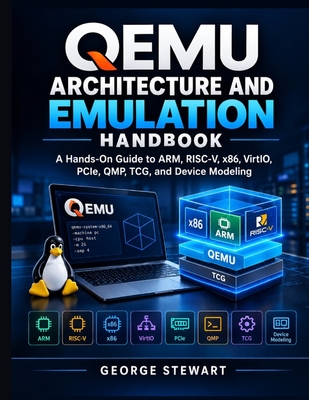
QEMU Architecture and Emulation Handbook: A Hands-On Guide to ARM, RISC-V, x86, VirtIO, PCIe, QMP, TCG, and Device Modeling
暫譯: QEMU 架構與模擬實戰手冊:ARM、RISC-V、x86、VirtIO、PCIe、QMP、TCG 與裝置建模實作指南
Stewart, George
- 出版商: Independently Published
- 出版日期: 2026-09-26
- 售價: $1,710
- 貴賓價: 9.5 折 $1,624
- 語言: 英文
- 頁數: 460
- 裝訂: Quality Paper - also called trade paper
- ISBN: 9798177098586
- ISBN-13: 9798177098586
-
相關分類:
虛擬化技術 Virtualization、Computer-architecture
海外代購書籍(需單獨結帳)
相關主題

商品描述
What happens when you need to run an operating system built for another processor architecture? How do you test firmware before the physical hardware is ready? How can you debug a kernel, study virtual hardware, model a device, or build a reliable multi-architecture development environment without constantly depending on physical machines?
QEMU Architecture and Emulation Handbook is designed to answer those questions through practical, system-level exploration of QEMU and the technologies that make modern emulation possible.
Are you working with ARM, AArch64, RISC-V, or x86 systems? Do you want to understand how virtual machines, CPU emulation, memory, devices, firmware, storage, and networking work together? Are you trying to move beyond simply launching a virtual machine and actually understand what QEMU is doing underneath?
This book takes you through QEMU from architecture and development setup to advanced system emulation, debugging, automation, hardware modeling, testing, and performance engineering.
You will learn how QEMU represents machines, CPUs, memory, buses, and devices, while gaining a practical understanding of how its major subsystems interact. You will explore system emulation, virtual devices, VirtIO, storage, networking, firmware, UEFI, U-Boot, OpenSBI, and architecture-specific workflows.
What would it take to create a complete virtual laboratory for experimenting with ARM, RISC-V, and x86 systems? You will learn how to approach that problem systematically, including booting kernels, working with firmware, connecting virtual hardware, inspecting system behavior, and debugging low-level software.
The book also moves into QEMU development itself. How does the QEMU Object Model work? How are virtual devices created? How can QMP and HMP be used for programmatic control? What role do TCG, tracing, plugins, record/replay, and the gdbstub play in analyzing system behavior?
You will also examine PCIe, NVMe, custom device models, memory handling, acceleration, migration, isolation, testing, and continuous integration. These topics help connect everyday QEMU usage with the engineering practices required for serious systems development.
Whether you are a systems programmer, firmware developer, embedded engineer, kernel developer, virtualization learner, security researcher, or technology enthusiast who wants to understand what happens beneath a virtual machine, this handbook provides a structured path from fundamental concepts to advanced QEMU workflows.
Instead of treating QEMU as a command you simply run, why not understand the architecture that makes it work?
By the end of the book, you will have a stronger foundation for building controlled multi-architecture environments, debugging low-level software, experimenting with virtual hardware, validating firmware, automating QEMU, and exploring system behavior without relying exclusively on physical hardware.
Ready to understand QEMU beyond the command line?
Get your copy of QEMU Architecture and Emulation Handbook and start building a deeper practical understanding of system emulation, virtual hardware, debugging, and multi-architecture development.
商品描述(中文翻譯)
當您需要執行為另一種處理器架構所建置的作業系統時,會發生什麼事?在實體硬體尚未就緒之前,如何測試韌體?如何進行核心偵錯、研究虛擬硬體、模擬裝置,或建立可靠的多架構開發環境,而不必持續依賴實體機器?
QEMU Architecture and Emulation Handbook 旨在透過實務導向的系統層級探索,回答上述問題,並介紹讓現代模擬成為可能的 QEMU 與相關技術。
您是否正在使用 ARM、AArch64、RISC-V 或 x86 系統?您是否想了解虛擬機器、CPU 模擬、記憶體、裝置、韌體、儲存與網路如何彼此協作?您是否希望不只是啟動虛擬機器,而是真正理解 QEMU 在底層執行的工作?
本書將帶您從 QEMU 的架構與開發環境設定開始,逐步深入進階系統模擬、偵錯、自動化、硬體建模、測試與效能工程。
您將學習 QEMU 如何表示機器、CPU、記憶體、匯流排與裝置,同時實際理解其主要子系統如何互動。您也將探索系統模擬、虛擬裝置、VirtIO、儲存、網路、韌體、UEFI、U-Boot、OpenSBI,以及架構專屬的工作流程。
要建立一個可完整實驗 ARM、RISC-V 與 x86 系統的虛擬實驗室,需要哪些條件?
您將學習如何系統化地處理這項工作,包括啟動核心、使用韌體、連接虛擬硬體、檢視系統行為,以及偵錯低階軟體。
本書也將進一步探討 QEMU 本身的開發。QEMU Object Model 如何運作?如何建立虛擬裝置?如何使用 QMP 與 HMP 進行程式化控制?TCG、tracing、plugins、record/replay 與 gdbstub 在分析系統行為時扮演什麼角色?
您還將深入了解 PCIe、NVMe、自訂裝置模型、記憶體處理、加速、遷移、隔離、測試與持續整合。這些主題有助於將日常的 QEMU 使用經驗,與嚴謹系統開發所需的工程實務連結起來。
無論您是系統程式設計師、韌體開發人員、嵌入式工程師、核心開發人員、虛擬化學習者、安全性研究人員,或是想了解虛擬機器底層運作方式的科技愛好者,本手冊都將提供一條從基礎概念通往進階 QEMU 工作流程的結構化學習路徑。
與其把 QEMU 視為只要執行的指令,為什麼不深入理解使它能夠運作的架構?
讀完本書後,您將建立更紮實的基礎,以建構受控的多架構環境、偵錯低階軟體、實驗虛擬硬體、驗證韌體、自動化 QEMU,並探索系統行為,而不必完全依賴實體硬體。
準備好超越命令列,深入理解 QEMU 了嗎?
立即取得 QEMU Architecture and Emulation Handbook,開始更深入、實務地理解系統模擬、虛擬硬體、偵錯與多架構開發。