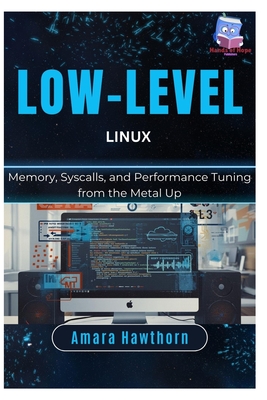
Low-Level Linux: Memory, Syscalls, and Performance Tuning from the Metal Up
暫譯: 低階 Linux:從底層到性能調優的記憶體與系統呼叫
Hawthorn, Amara
- 出版商: Independently Published
- 出版日期: 2026-02-01
- 售價: $960
- 貴賓價: 9.5 折 $912
- 語言: 英文
- 頁數: 170
- 裝訂: Quality Paper - also called trade paper
- ISBN: 9798244306668
- ISBN-13: 9798244306668
-
相關分類:
Linux
海外代購書籍(需單獨結帳)
商品描述
Modern applications live or die by performance, reliability, and efficiency - yet most developers never truly understand what happens after their code hits the kernel. Low-Level Linux takes you beneath abstractions and frameworks and into the machinery that actually runs your software.
This book is a practical, deeply technical guide to how Linux works from the metal up - from virtual memory and page tables to syscalls, scheduling, and performance tuning at scale.
Whether you're optimizing high-throughput systems, debugging impossible latency spikes, or preparing for kernel-level work, this book gives you the mental models used by elite systems engineers.
You will learn how Linux really behaves under load - not just how it's supposed to.
Inside you'll master:How Linux virtual memory actually works
(paging, MMUs, TLBs, NUMA, and page faults demystified)The full syscall lifecycle
from user space → kernel → hardware → back againHow context switching, scheduling, and interrupts impact latency
Memory allocation internals
(slab, slub, vmalloc, brk, mmap)CPU caches, false sharing, and cache-line-level optimization
Diagnosing real performance problems using
perf, ftrace, strace, bcc, and eBPFWhy "fast code" is often slow - and how to prove it
How to reason about performance using first principles, not guesswork
Software engineers ready to go beyond frameworks
Linux users who want to understand what their system is truly doing
Backend, infrastructure, and systems engineers
Performance engineers and SREs
Anyone who wants to think like the kernel does
No fluff. No hand-waving. Just real Linux internals explained clearly, visually, and practically.
商品描述(中文翻譯)
現代應用程式的成敗取決於性能、可靠性和效率,但大多數開發人員從未真正理解他們的程式碼在進入核心後發生了什麼。《Low-Level Linux》將帶您深入抽象層和框架,進入實際運行您軟體的機制。
這本書是一本實用且深入技術的指南,介紹 Linux 如何從底層開始運作——從虛擬記憶體和頁表到系統呼叫、排程和大規模性能調整。
無論您是在優化高吞吐量系統、調試無法解釋的延遲峰值,還是準備進行核心級別的工作,這本書都將提供精英系統工程師所使用的思維模型。
您將學習到 Linux 在負載下的實際行為——而不僅僅是它應該如何運作。
在書中,您將掌握:
- Linux 虛擬記憶體的實際運作方式
(頁面置換、記憶體管理單元 (MMUs)、轉換快取 (TLBs)、非一致性記憶體存取 (NUMA) 和頁面錯誤的解密)
- 完整的系統呼叫生命週期
從用戶空間 → 核心 → 硬體 → 再回來
- 上下文切換、排程和中斷如何影響延遲
- 記憶體分配的內部運作
(slab、slub、vmalloc、brk、mmap)
- CPU 快取、虛假共享和快取行級別的優化
- 使用 perf、ftrace、strace、bcc 和 eBPF 診斷實際性能問題
- 為什麼「快速程式碼」往往是慢的——以及如何證明這一點
- 如何使用第一原則而非猜測來推理性能
本書適合:
- 準備超越框架的軟體工程師
- 想要了解其系統實際運作的 Linux 使用者
- 後端、基礎設施和系統工程師
- 性能工程師和 SRE
- 任何想要像核心一樣思考的人
沒有多餘的內容。沒有空洞的說辭。只有清晰、直觀且實用的 Linux 內部運作解釋。