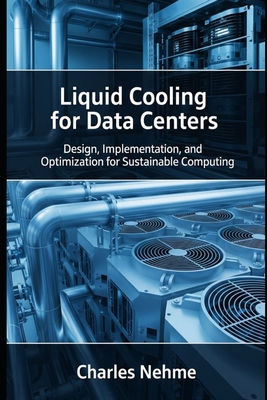
Liquid Cooling for Data Centers: Design, Implementation, and Optimization for Sustainable Computing (Paperback)
暫譯: 數據中心液冷技術:設計、實施與可持續計算的優化
Nehme, Charles
- 出版商: Independently Published
- 出版日期: 2025-06-12
- 售價: $1,650
- 貴賓價: 9.8 折 $1,617
- 語言: 英文
- 頁數: 128
- 裝訂: Quality Paper - also called trade paper
- ISBN: 9798287835095
- ISBN-13: 9798287835095
-
相關分類:
大數據 Big-data
立即出貨 (庫存=1)
買這商品的人也買了...
-
 Modeling and Simulation for Microelectronic Packaging Assembly: Manufacturing, Reliability and Testing (Hardcover)
$6,760$6,422 -
 Data Center Handbook: Plan, Design, Build, and Operations of a Smart Data Center, 2/e (Hardcover)
$6,670$6,336 -
 Theory and Practice of Thermal Transient Testing of Electronic Components (Hardcover)
$4,900$4,655 -
 Design, Modeling and Reliability in Rotating Machinery (Hardcover)
$2,050$2,009 -
 Design of Experiments for Reliability Achievement (Hardcover)
$1,880$1,842 -
 三維芯片集成與封裝技術
$1,134$1,077 -
 集成電路封裝可靠性技術
$1,188$1,128 -
 基於故障診斷的電機可靠性預測
$714$678
相關主題


商品描述
The digital world runs on data, and data centers are its beating heart. From streaming our favorite shows to powering the complex algorithms of artificial intelligence, these facilities are the unsung heroes of the information age. But as the demand for computing power skyrockets, so too does the challenge of keeping these powerful machines cool. For decades, air cooling has been the workhorse of data centers, an effective solution for the thermal loads of yesteryear. However, we've reached a pivotal moment. The relentless march of technological progress has led to an exponential increase in processor density and heat generation, pushing the boundaries of what traditional air-based cooling can efficiently handle.
We're now living in an era where a single server rack can demand tens, even hundreds, of kilowatts of power, transforming once manageable hot spots into veritable infernos that air alone struggles to tame. This escalating heat directly translates to spiraling energy consumption, soaring operational costs, and a significant carbon footprint. As organizations worldwide commit to sustainability goals, the inefficiency of outdated cooling methods becomes not just an operational hurdle, but an environmental imperative.
Enter liquid cooling. Once a niche solution for supercomputers and specialized applications, liquid cooling is rapidly becoming a mainstream necessity. This isn't just about managing heat; it's about fundamentally rethinking how we design, build, and operate data centers to be more efficient, sustainable, and future-proof. Liquid cooling offers a compelling array of benefits: dramatically lower Power Usage Effectiveness (PUE), the ability to support significantly higher rack densities, a substantial reduction in energy consumption, and even the exciting potential for waste heat recovery.
This book, "Liquid Cooling for Data Centers: Design, Implementation, and Optimization for Sustainable Computing," serves as a comprehensive guide for anyone navigating this transformative shift. Whether you're a data center architect grappling with new designs, an engineer optimizing existing infrastructure, an IT manager seeking to reduce operational costs, or a sustainability officer committed to green initiatives, this resource is for you.
We will delve into the fundamental principles of heat transfer, explore the diverse spectrum of liquid cooling technologies-from direct-to-chip to immersion cooling-and provide practical, actionable insights into planning, designing, implementing, and managing these advanced systems. We'll cover everything from plumbing and fluid management to leak detection and integration with Data Center Infrastructure Management (DCIM) tools. Looking ahead, we'll also examine the thrilling possibilities of waste heat re-use and the emerging trends that will shape the future of data center cooling.
Our aim is to demystify liquid cooling, providing you with the knowledge and confidence to make informed decisions and successfully integrate these cutting-edge solutions into your infrastructure. The future of data centers is cooler, literally, and it's powered by liquid. Join us on this journey to unlock greater efficiency, enhance reliability, and build a more sustainable digital future.
商品描述(中文翻譯)
數位世界運行在數據之上,而數據中心則是其跳動的心臟。從串流我們最喜愛的節目到驅動人工智慧的複雜算法,這些設施是資訊時代的無名英雄。然而,隨著對計算能力的需求急劇上升,保持這些強大機器冷卻的挑戰也隨之而來。數十年來,空氣冷卻一直是數據中心的主力軍,對於過去的熱負載來說是一個有效的解決方案。然而,我們已經達到了一個關鍵時刻。技術進步的無情推進導致了處理器密度和熱產生的指數增長,推動了傳統空氣冷卻所能有效處理的邊界。
我們現在生活在一個時代,單一的伺服器機架可能需要數十甚至數百千瓦的電力,將曾經可控的熱點轉變為空氣難以駕馭的真正火焰。這種不斷上升的熱量直接轉化為急劇上升的能源消耗、飆升的運營成本以及顯著的碳足跡。隨著全球各組織承諾可持續發展目標,過時冷卻方法的低效率不僅成為運營障礙,更成為環境上的迫切需求。
這時候,液體冷卻應運而生。曾經是超級計算機和專用應用的利基解決方案,液體冷卻正迅速成為主流的必要性。這不僅僅是管理熱量;而是從根本上重新思考我們如何設計、建造和運營數據中心,以使其更高效、可持續和未來-proof。液體冷卻提供了一系列引人注目的好處:顯著降低的電力使用效率(Power Usage Effectiveness, PUE)、能夠支持顯著更高的機架密度、大幅減少的能源消耗,甚至還有廢熱回收的激動人心的潛力。
本書《數據中心的液體冷卻:可持續計算的設計、實施與優化》作為一本全面的指南,適合任何在這一變革性轉變中摸索的人。無論你是面對新設計的數據中心架構師、優化現有基礎設施的工程師、尋求降低運營成本的IT經理,還是致力於綠色倡議的可持續發展官,這本資源都適合你。
我們將深入探討熱傳遞的基本原則,探索各種液體冷卻技術的多樣性——從直接到芯片的冷卻到浸沒冷卻——並提供實用的、可行的見解,幫助你規劃、設計、實施和管理這些先進系統。我們將涵蓋從管道和流體管理到漏水檢測及與數據中心基礎設施管理(Data Center Infrastructure Management, DCIM)工具的整合等各個方面。展望未來,我們還將探討廢熱再利用的激動人心的可能性以及將塑造數據中心冷卻未來的新興趨勢。
我們的目標是揭開液體冷卻的神秘面紗,為你提供知識和信心,以便做出明智的決策,並成功將這些尖端解決方案整合到你的基礎設施中。數據中心的未來將更涼爽,字面上來說,並且由液體驅動。加入我們的旅程,解鎖更高的效率、增強的可靠性,並建立一個更可持續的數位未來。